Lana Akmaluna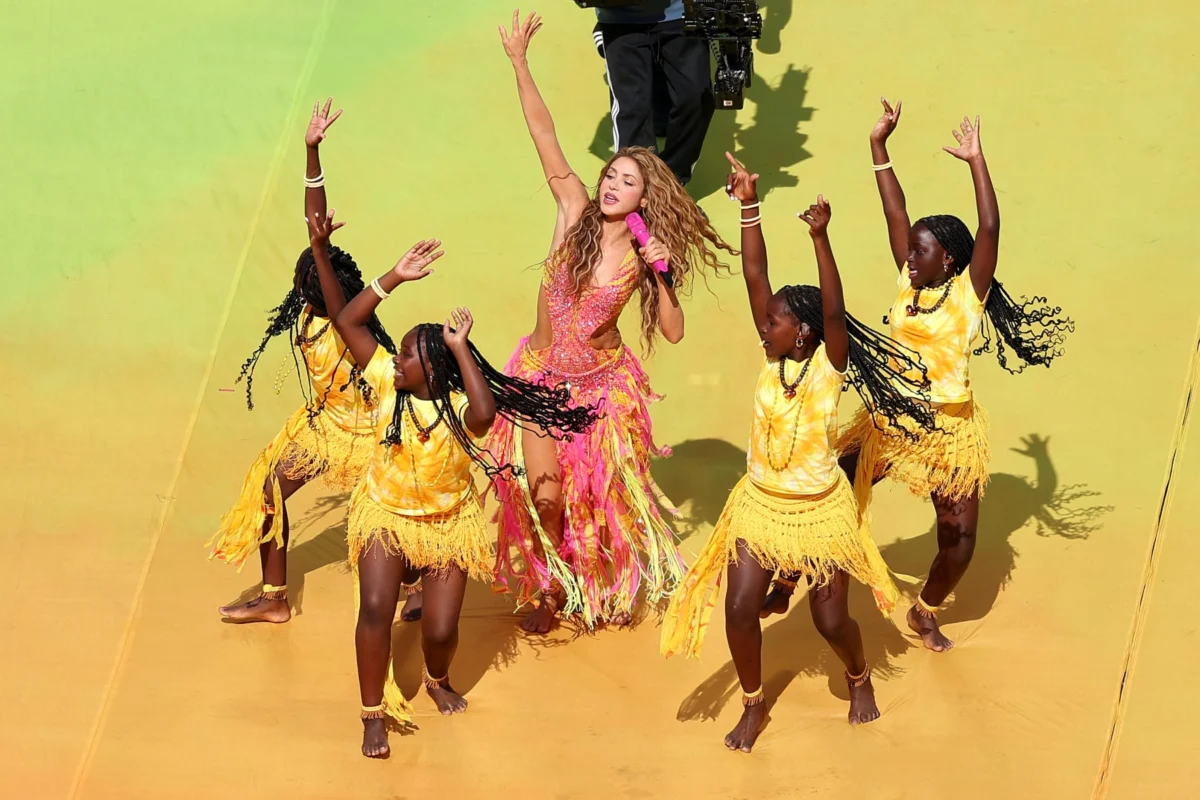
The 2026 FIFA World Cup reached its cultural and athletic zenith on July 19, 2026, as the first-ever championship halftime show transformed the New York New Jersey Stadium into a global stage for a high-octane musical production. While the match between Spain and Argentina held the world’s attention on the pitch, the 11-and-a-half-minute performance during the interval signaled a paradigm shift in how FIFA approaches the presentation of the World Cup Final. Produced in a style reminiscent of the American Super Bowl but tailored for a global audience of billions, the spectacle featured an international roster of talent including Madonna, BTS, Justin Bieber, Shakira, Burna Boy, and Coldplay’s Chris Martin.
The decision to implement a halftime show during the World Cup Final—a match traditionally reserved for tactical analysis and hushed anticipation—was a calculated move by FIFA to bridge the gap between sports and entertainment. Staged at the rebranded MetLife Stadium in East Rutherford, the event was designed to maximize the visibility of the tournament’s expansion to 48 teams and three host nations. The result was a densely packed, multi-genre performance that navigated the complexities of global pop culture while attempting to appease both long-time soccer purists and a newer generation of entertainment-focused viewers.

A Chronological Breakdown of the Performance
The production commenced immediately following the referee’s whistle for halftime, with a rapid-response crew assembling a modular stage on the pitch in under two minutes. The opening sequence featured pop icon Madonna, who arrived in a customized jeep driven by Brazilian soccer legends Ronaldo and Ronaldinho. The vehicle, bearing a "Maestro" license plate, circled the perimeter of the field as Madonna, accompanied by DJ Stuart Price, delivered a high-energy medley that set the tone for the production’s breakneck pace.
The show then transitioned into a classical-rock fusion segment led by Gustavo Dudamel. The renowned conductor directed a combined ensemble of the New York Philharmonic and the Simón Bolívar Symphony Orchestra of Venezuela. Their performance of The White Stripes’ "Seven Nation Army" served as a nod to global soccer culture, where the song’s riff has become a ubiquitous stadium anthem. This segment was further layered with appearances by characters from The Muppets, including Kermit the Frog and Miss Piggy, adding a surrealist element to the orchestral arrangement.
K-pop titans BTS followed, maintaining the momentum with a "turbocharged" rendition of their hit single "Dynamite." Dressed in red, motorcycle-inspired attire, the group utilized a sophisticated array of synchronized choreography and pyrotechnics. Their inclusion was a clear acknowledgment of the massive Asian market and the group’s role as global cultural ambassadors.

The intensity of the performance shifted briefly when actor Jason Sudeikis appeared on screen, reprising his role as Ted Lasso to introduce Justin Bieber. In contrast to the preceding acts, Bieber delivered a subdued, acoustic performance of "Everything Hallelujah." This moment provided a brief emotional reprieve before the show moved toward its climax.
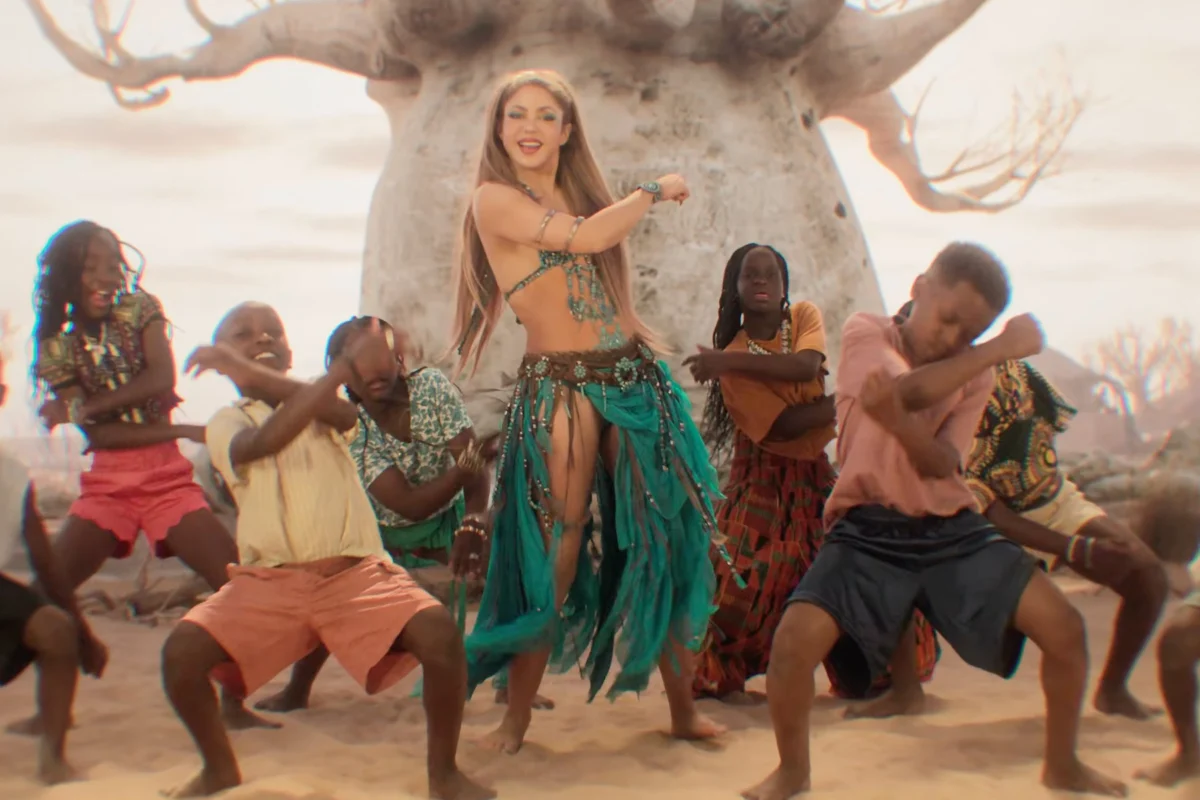
The final segments focused on the rhythmic and dance-heavy elements of global music. Shakira and Burna Boy took center stage to perform "Dai Dai," a track that had previously topped the Billboard Global 200. They were supported by the Ghetto Kids, a dance troupe from Uganda, whose presence emphasized the "Global South" influence on the 2026 tournament. The finale brought the entire cast together, alongside the PS22 Chorus and Chris Martin, for a massive tableau centered around the word "LOVE," punctuated by a synchronized firework display that illuminated the New Jersey skyline.
Production Logistics and Technical Data
The 2026 halftime show was a feat of logistical engineering. According to internal production figures, the event utilized over 3,000 local staff members and specialized technicians to manage the transition from grass pitch to performance stage. To protect the integrity of the playing surface for the second half of the Spain-Argentina match, FIFA employed a specialized protective flooring system that was deployed and retracted within a six-minute window.

Key technical specifications of the show included:
- Audio Infrastructure: A 360-degree immersive sound system was installed specifically for the halftime show, utilizing 150 independent speaker clusters to ensure uniform audio distribution throughout the 82,500-seat stadium.
- Lighting and Pyrotechnics: The production featured over 2,000 intelligent lighting fixtures and a pyrotechnic display that used 5,000 individual effects, timed to the millisecond via GPS synchronization.
- Broadcast Reach: Initial data suggests the halftime show was broadcast to over 200 territories, with an estimated live global audience exceeding 1.2 billion viewers, making it one of the most-watched musical events in history.
The inclusion of the Topps brand as a primary sponsor for the "Final Halftime Show" highlights the commercial evolution of the tournament. Sponsorship revenue for the 2026 World Cup is projected to exceed $7 billion, a record for the organization, driven in part by these new high-profile entertainment segments.
Cultural Significance and the Global Lineup
The selection of artists was a deliberate attempt to represent the diverse regions involved in the first-ever 48-team World Cup. By featuring BTS (South Korea), Burna Boy (Nigeria), Shakira (Colombia), Madonna and Justin Bieber (North America), and Chris Martin (United Kingdom), FIFA curated a lineup that mirrored the internationality of the sport itself.

Shakira’s participation marked her continued legacy with the tournament, following her iconic performances of "Hips Don’t Lie" in 2006 and "Waka Waka (This Time for Africa)" in 2010. Her presence acted as a bridge between the tournament’s history and its new, more commercialized future. Similarly, Burna Boy’s inclusion reflected the rising global dominance of Afrobeats, a genre that has seen significant growth in North American and European markets since the 2022 World Cup in Qatar.
The use of Gustavo Dudamel and the orchestral elements provided a sense of "prestige" and "gravitas," attempting to balance the pop-centric performances with high-art elements. This was particularly important for the European and South American markets, where soccer is often viewed through a more traditionalist lens.
Critical Reception and Official Responses
Reaction to the halftime show was polarized, reflecting a divide in the global soccer community. FIFA President Gianni Infantino praised the event in a post-match statement, noting that "the World Cup is more than a tournament; it is a global festival of humanity. Today’s performance showed that music and football speak the same language."

However, several prominent soccer commentators expressed concerns that the spectacle distracted from the match itself. Traditionalists argued that the 15-minute interval should remain dedicated to the sport, fearing that the "Super Bowl-ification" of the World Cup could eventually lead to longer halftime breaks that disrupt player rhythm and tactical flow.
Music critics, conversely, largely lauded the production for its ambition. Early reviews highlighted the seamless integration of different genres and the high production value. The performance of "Seven Nation Army" by the New York Philharmonic was singled out as a highlight for its ability to connect with the existing stadium culture of the fans in attendance.
Broader Impact and Future Implications
The success of the 2026 halftime show likely sets a precedent for future FIFA tournaments. As the organization seeks to increase its revenue streams and compete with other major sporting events for viewership in the United States and other key markets, the integration of high-profile entertainment is expected to become a permanent fixture of the World Cup Final.

The event also demonstrated the growing importance of the New York-New Jersey corridor as a global sports hub. By hosting the final and its accompanying spectacle, the region solidified its capability to manage events of unprecedented scale. The economic impact for the local area, including tourism, hospitality, and transportation, is estimated to be in the hundreds of millions of dollars.
Ultimately, the 2026 FIFA World Cup Final halftime show served as a 11-minute microcosm of the modern sports world: a blend of high-level athletics, corporate sponsorship, and global pop culture. While the debate over the show’s place in soccer will likely continue, its status as a massive, memorable production is indisputable. As the fireworks faded and the players returned to the pitch for the second half of the Spain-Argentina clash, the landscape of the World Cup had been irrevocably altered.