Johan Budi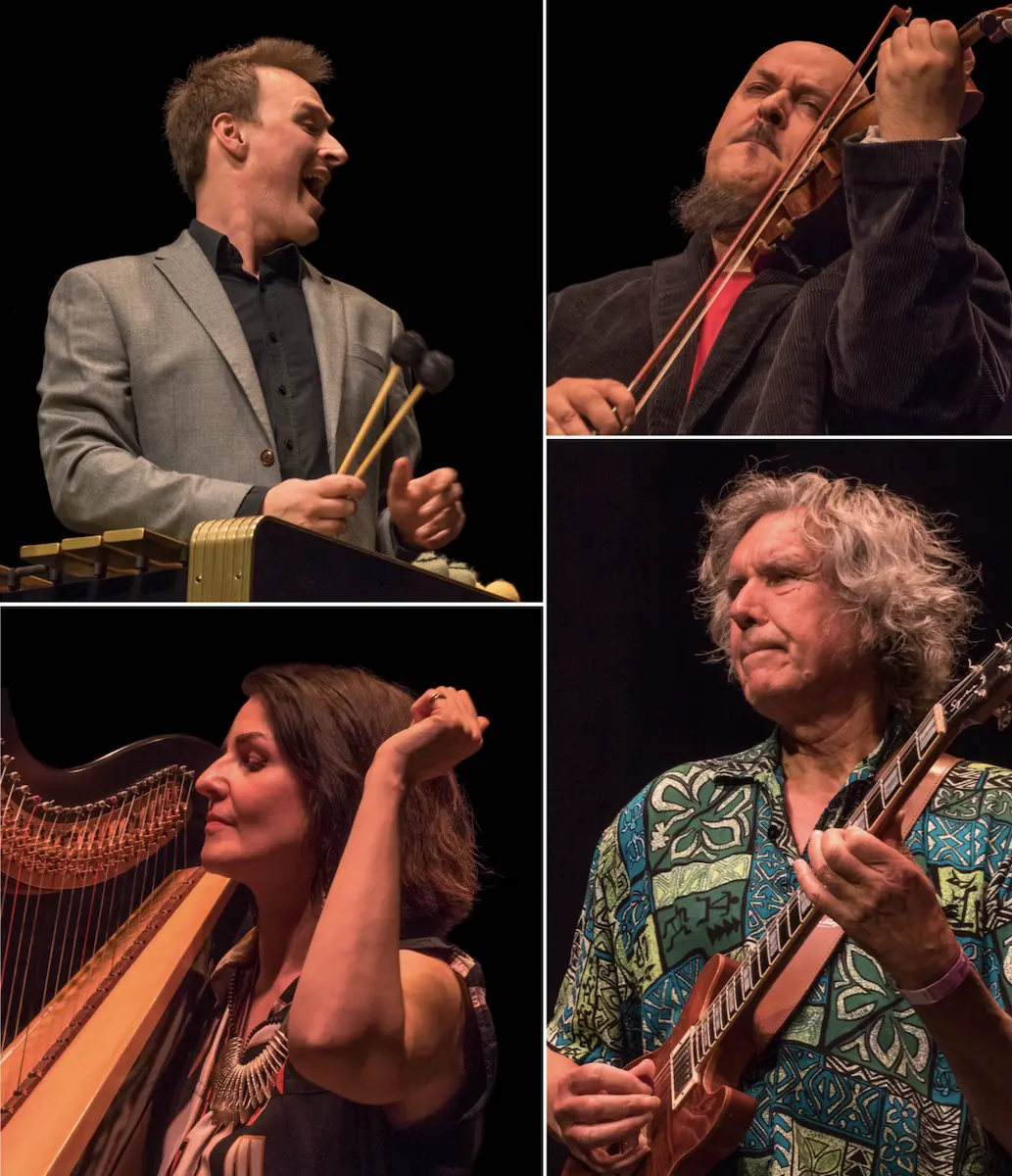
The historic Victorian coastal spa of South Bay played host to the 23rd annual Scarborough Jazz Festival from 25 to 27 September 2026, welcoming thousands of genre enthusiasts to the Yorkshire coast for a weekend-long celebration of improvised music. Over three packed days, the Grand Hall and surrounding venues presented an expansive international and domestic lineup spanning hard bop, contemporary neo-soul, avant-garde explorations, and unexpected genre crossovers. Established more than two decades ago as a cornerstone of the British jazz calendar, the festival once again proved its curatorial ambition by balancing legendary veterans with rising contemporary artists, despite encountering a handful of late lineup alterations due to illness.
Opening Salvos and Friday’s Soul-Jazz Foundations
The festival’s Friday morning proceedings inside the Grand Hall commenced with John Settle’s Vibe-ology, establishing an energetic benchmark for the weekend. Anchored by leader John Settle on vibraphone, alongside Al Morrison on guitar, Bob Birch on Hammond organ, and Joe England on drums, the ensemble navigated a repertoire rooted in the swinging soul-jazz canon of the 1960s. Highlights included spirited renditions of Big John Patton’s Let ’Em Roll, Wes Montgomery’s Jingles and Buddy Montgomery’s Bock To Bock, alongside Lalo Schifrin’s iconic cinematic theme to the 1968 film Bullitt. The group expanded its textural palette when multi-reedist Alan Barnes joined as a guest, contributing baritone saxophone to Buddy Montgomery’s tune and alto saxophone on Grant Green’s Jean De Fleur. Closing with Marcos Valle’s Batucada, the opening set provided a vibrant historical gateway into the weekend.
Following the morning’s traditional leanings, the afternoon introduced a distinctly modern generational shift with Orchard, a recently formed neo-soul octet whose members originally crossed paths at London’s Guildhall School of Music. Drawing clear aesthetic lineage from innovators such as Roy Hargrove and the London-centric collective Kokoroko, the group delivered a suite of original compositions. Fronted by vocalist Evie Hill, the ensemble featured Jemima Whyte on alto saxophone, Matt Hill on trumpet, Cat Eden on trombone, Calum Harrison on guitar, Diarra Walcott-Ivanhoe on piano, Joe Orme on bass, and Lewis Kentaro drums. Their performance of original material—including Honesty, Moonlight, and their imminent single release Towards The Sun—was warmly received by the Grand Hall audience, signaling the vibrant health of the UK’s emerging contemporary jazz pipeline.
Friday afternoon also addressed unforeseen circumstances regarding the Expansion: McCoy Tyner Project. Owing to recent illness, pianist Barry Green was unable to lead his quintet, prompting twenty-one-year-old Thomas Sladden—one of Green’s most promising students—to step into the formidable role. Supported by Gareth Lockrane on flute, Femke Mooren on alto saxophone, Oli Hayhurst on bass, and Darren Beckett on drums, Sladden navigated an intricate program of seldom-heard Tyner compositions. The set included Utopia, Three Flowers, Search For Peace, Fly With The Wind, and the opening track from Tyner’s 1962 debut album, Inception, alongside Geri Allen’s Unconditional Love.
Friday Evening: International Perspectives and Visual Frustrations
As Friday evening commenced, Shirley Smart’s Sextet returned to the festival following critical acclaim at the previous year’s event. Smart’s performance reflected her extensive ethnomusicological background, shaped by her years performing Arabic and North African music in Jerusalem and teaching cello at the conservatory in Ramallah. Performing alongside Alistair Martin (trumpet), James Arben (saxes and flute), John Crawford (piano), Marcus Penrose bass, and Demi Garcia Sabat (drums), Smart presented compositions laden with cross-cultural rhythms. These included Saba, Zricha, an Algerian rhythm transcribed from an impromptu van journey, and Midak Alley, inspired by Naguib Mahfouz’s literary examinations of Cairo.
The evening continued with David Newton’s trio, featuring Andy Cleyndert on double bass and Steve Brown on drums. While the musical execution remained characteristically polished, the performance drew notable audience critique regarding stage presentation. True to an introductory announcement that they would simply play without verbal introductions, pianist David Newton remained entirely obscured behind a Bösendorfer grand piano positioned end-on between the stage and the audience. The total visual block prompted logistical debate among attendees regarding performance transparency.
Closing Friday night, the London-based Levitation Orchestra sought to challenge conventional boundaries with an ethos inspired by Alice Coltrane, Sun Ra, Igor Stravinsky, and Maurice Ravel. Promoted as a visionary artistic collective, their late-night set divided opinion, with some audience members finding the avant-garde arrangements lacking in melodic accessibility and occasionally distracted by uncoordinated stage movement.
Saturday’s Progression: Hard Bop, Vocal Mastery, and Big Band Re-Workings
Saturday’s programming opened with jazz violinist Benet McLean and his newly configured quintet, featuring Liam Dunachie on piano, Ben Treacher on tenor saxophone, Wayne Matthews on fretless bass, and Gwilym Jones on drums. The ensemble moved seamlessly from McLean’s urban-inspired original Archway to classic arrangements by Stan Kenton and Tubby Hayes. The set culminated in a high-energy hard-bop collaboration with Alan Barnes, who guested on alto saxophone for Jackie McLean and Freddie Redd’s O.D.
Barnes remained on stage for the subsequent set alongside versatile vocalist Brigitte Beraha and stand-in pianist David Newton. Together, the trio traversed a delicate, emotionally resonant repertoire drawn from their recent collaborative album, Tea For Three. Highlights included Tom Jobim’s Wave, Beraha’s musical interpretation of a Tennessee Williams poem, We Have Not Long To Love—featuring Barnes on clarinet—and emotionally weighty interpretations of Duke Ellington’s Solitude and Irving Berlin’s The Best Thing For You.
Later in the afternoon, tenor saxophonist Xhosa Cole faced logistical challenges when pianist Pat Thomas was forced to withdraw due to illness. Performing as an exposed chordless trio alongside bassist Calum Gourley and drummer Tim Giles, Cole tackled a demanding set of Thelonious Monk compositions. Lacking a harmonic instrument and having flown overnight from professional engagements in Scotland, the performance struggled to capture the necessary depth, a vulnerability Cole candidly acknowledged to the room.
Saturday evening pivoted toward high-octane spectacle with Dark Side Of The Big Band, a joint venture led by guitarist Mark Roadnight and trumpeter Mark Armstrong. Merging a rock power trio with a full big band, the ensemble systematically re-imagined Pink Floyd’s 1973 landmark record The Dark Side Of The Moon. Fronted by Roadnight’s soaring rock vocals and supported by backing singers Sammy Mayne and Rebecca Grayson, the ambitious pastiche proved to be one of the festival’s most emotionally stirring crowd-pleasers.
Earlier in the day, the festival highlighted educational outreach through Rory Ingham’s involvement with a local school ensemble in the Spa’s Sun Court. Ingham subsequently took to the Grand Hall stage leading his Trombone Assembly. Backed by an all-star trombone front line—featuring Mark Nightingale, Trevor Mires, Kieran McLoud, and bass trombonist Andy Wood—alongside Liam Dunachie, Sam Quintana, and Kai MacRae, the ensemble delivered a masterclass in brass arrangement, performing works by Sonny Stitt, Ray Noble, Dexter Gordon, and Clark Terry.
The Saturday night headline slot belonged to Canterbury scene pioneers Soft Machine. Featuring guitarist John Etheridge—who celebrated 51 years of continuous tenure with the band during his stage banter—alongside Theo Travis (sax, flute, keys), Fred T. Baker (bass), and Asaf Sirkis (drums), the group delivered a transcendent retrospective. Spanning material from their 1968 debut US single to tracks from their contemporary release Thirteen, Soft Machine earned a rapturous standing ovation, underlining the enduring relevance of British progressive jazz-rock.
Sunday’s Climax: Groove, Harp, and Vocal Excellence
Sunday’s schedule commenced with trumpeter Bryan Corbett and his Instrumental Groove Unit, featuring Paul Deats (Fender Rhodes), Wayne Matthews (bass), and Luke Harris (drums). Diverging from traditional swing aesthetics, the quartet explored jazz-funk territory through original compositions drawn from their latest album, including IGU, Rubicon, and Aloelina.
Harpsichord and harp innovator Alina Bzhezhinska followed with her HipHarp Collective, featuring saxophonist Tony Kofi, Menelik Claffey on double bass, Matthew Holmes on drums, and Joel Prime on percussion. The ensemble delivered a deeply spiritual set honoring the legacies of John Coltrane, Dorothy Ashby, and Alice Coltrane, prompting spontaneous audience participation and dancing in the aisles.
Sunday afternoon also brought a recurrence of the visual staging criticisms raised earlier in the weekend, as vocalists Ian Shaw and Liane Carroll performed at a grand piano positioned end-on. Observers noted that the physical arrangement routinely left both performers visually inaccessible to sections of the room as they alternated at the keyboard.
Nevertheless, the festival rebounded with a triumphant performance by the American 3D Jazz Trio. Pianist Jackie Warren, bassist Amy Shook, and drummer Sherry Maricle charmed the Grand Hall with a masterclass in jazz, blues, and good-humored stagecraft, culminating in a surprising and joyous tribute to Dolly Parton via 9 to 5. Though a late festival set by Alan Barnes and an 11-piece ensemble was widely reported as a resounding success, it marked the conclusion of the main stage’s formal itinerary.
Festival Fringe and Economic Impact
Beyond the main auditorium, the 2026 Scarborough Jazz Festival maintained its reputation for holistic community and fringe programming. Multiple Carioca Soul sessions, intimate sets by the Tony Kofi Quartet in the Spa’s Jazz Lounge, and persistent interludes by the Al Morrison Trio ensured continuous musical engagement across the venue’s public spaces.
As the 23rd annual installment drew to a close, organizers reflected on a weekend that successfully navigated last-minute personnel changes while maintaining high artistic standards. The festival’s ability to draw capacity audiences to the Yorkshire coast reinforces its status as a vital economic and cultural anchor for the region’s shoulder-season tourism. Demonstrating confidence in the event’s ongoing viability, early bird weekend tickets for the 24th edition are already on sale through January via the Scarborough Spa official portal, ensuring that the Victorian spa will once again resonate with the sound of world-class improvisation in the autumn of 2027.