Johan Budi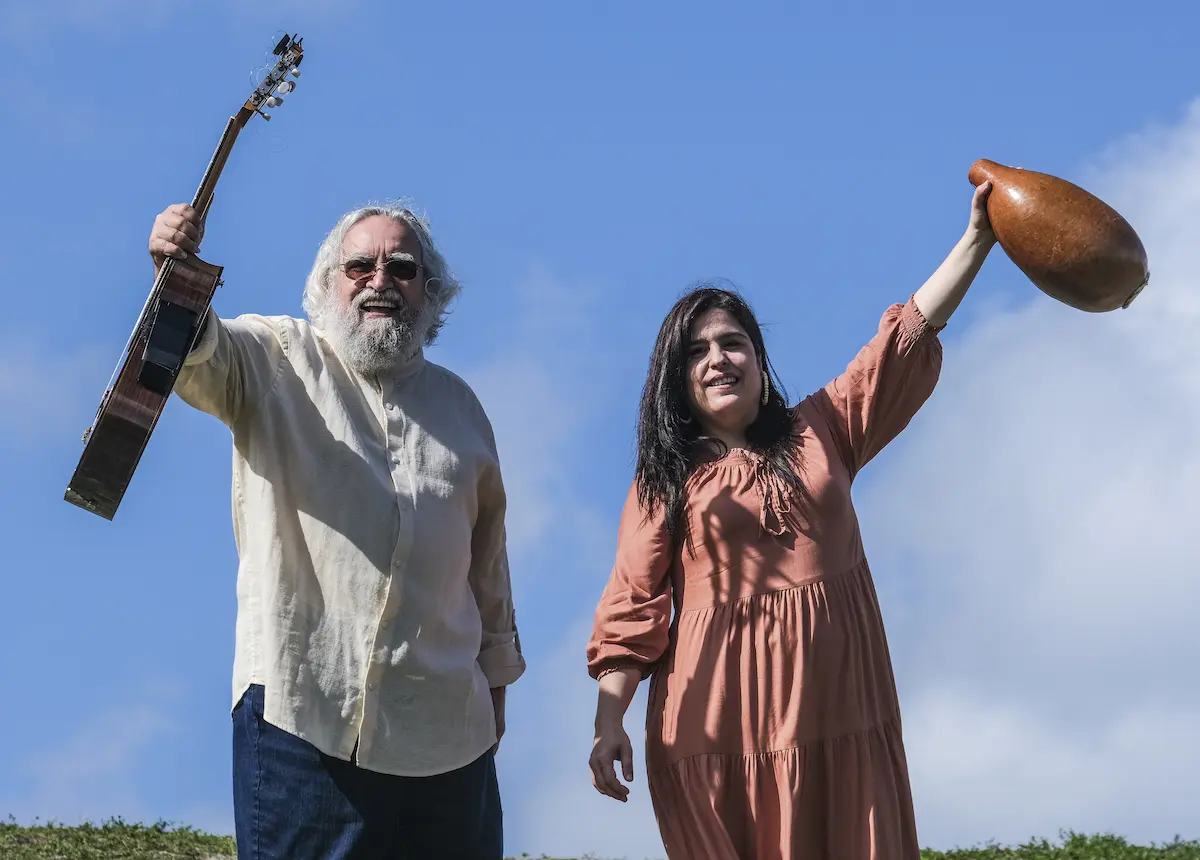
The modern global jazz landscape continues to demonstrate remarkable diversity, bridging the gap between archival historical recordings, contemporary sociopolitical and personal commentary, and traditional global folk aesthetics. Recent additions to the international jazz and world music catalogues highlight this expansive stylistic range, led by a newly surfaced 1999 live studio recording from Scottish saxophonist Tommy Smith, an introspective debut album addressing the lingering physical toll of the COVID-19 pandemic by London-based ensemble Onmo, and a playfully eccentric project from Cuban troubadour Pedro Luis Ferrer.
Together, these three distinct releases offer critics and audiophiles a comprehensive look at how contemporary artists navigate memory, personal trauma, and cultural heritage within the modern recording industry. As the distribution models for independent music increasingly rely on niche digital platforms, limited-run vinyl pressings, and specialized boutique labels, these projects underscore both the enduring vitality of acoustic improvisation and the shifting economic realities of the global music market.
Archival Discovery: Tommy Smith Quartet Revives 1999 Gateshead Performance
The contemporary release of archival jazz material often risks sounding overly calculated or digitally sanitized, yet Scottish saxophonist Tommy Smith has managed to bypass these pitfalls with his latest digital-only album, Four. Recorded over 25 years ago at the Gateshead Art Centre in 1999, the album captures Smith alongside pianist Steve Hamilton, bassist Orlando Le Fleming, and drummer Sebastian De Krom performing at a remarkably high standard of interplay and technical execution.
What distinguishes Four from standard live jazz recordings is its minimalist, direct-to-source production methodology. Captured entirely on a single microphone positioned directly in front of the ensemble and recorded straight to a MiniDisc device, the album consciously avoids the modern infrastructure of multi-tracking, mixing desks, public address systems, and traditional amplifiers. While this low-fidelity approach inevitably compresses the natural room acoustics, it imbues the performance with a palpable, unfiltered energy and immediacy that contemporary studio environments frequently struggle to replicate.
The sequencing of the album immediately establishes its artistic ambition. Opening with a sprawling, 15-minute exploration of Miles Davis’s signature composition Four, Smith showcases a level of dexterity and harmonic command in the upper register of the tenor saxophone that frequently mimics the lighter, more agile timbre of the alto sax. This high-octane introduction is subsequently balanced by more contemplative moments, such as Smith’s self-penned ballad When I’m All Alone. On this track, Smith deliberately channels the aesthetic of legendary saxophonist Ben Webster, employing a deliberate, warm vibrato on the lower registers that evokes the classic balladry of the 1950s golden era of jazz.
Musicologists and jazz historians analyzing the release note that while the performance officially dates to the cusp of the new millennium, the sonic profile and stylistic execution transport the listener directly to the legendary atmosphere of New York’s Birdland during the mid-20th century. Released via Spartacus Records (catalog number STS033) and distributed exclusively through Bandcamp, Four serves as a masterclass in spontaneous acoustic performance, demonstrating how a cohesive, well-drilled quartet can achieve telephonic musical communication without the safety net of modern post-production technology.
Sonic Resilience: Onmo Explores Long COVID on Debut Album In Time And Spirit
Shifting from archival preservation to contemporary sociopolitical and personal narrative, London-based jazz ensemble Onmo has made its recorded debut with In Time And Spirit. Led by composer, arranger, and guitarist Jean de Talhouet, the band’s inaugural full-length release functions not merely as an exercise in modern jazz composition, but as a visceral artistic processing of chronic illness.
The conceptual core of the album is rooted in Talhouet’s personal battle with the persistent and often debilitating physical effects of "long COVID." This harrowing medical experience is translated directly into music on the nine-minute opening track, Lapse. The composition serves as a sonic journey through the emotional topography of chronic illness, beginning with tentative, melodic guitar lines before descending into darker, more dissonant improvisational territory that incorporates the broader ensemble. Through shifting dynamics, the track explores a complex matrix of psychological states, including adaptability, sudden grief, burning anger, and cautious hope, ultimately reaching a fragile sense of resolution as the final notes fade.
Musically, Onmo’s palette is notably expansive, drawing upon an eclectic array of foundational influences. Talhouet explicitly incorporates the structural minimalism of composer Steve Reich, the modal intensity of John Coltrane, the harmonic dissonance of Eric Dolphy, and the rhythmic cadence of funk and hip-hop. This synthesis is displayed most clearly across the album’s centerpiece, In Time And Spirit—an extended three-part composition that is also presented in its continuous, full-length form on the digital edition of the record. Featuring a robust lineup including saxophonists Jonathan Chung and George Crowley, trumpeter Mike Soper, keyboardist Rupert Cox, bassists Huw V Williams and Flo Moore, and drummer Joost Hendrickx, the ensemble balances lyrical accessibility with avant-garde exploration.
In alignment with the physical ethos of the music, the physical packaging of In Time And Spirit has received meticulous artistic attention. The album artwork was created using an analog pinhole camera technique, capturing a four-hour long-exposure photograph of four candles rotating atop phonograph turntables. However, this striking visual artifact is reserved exclusively for purchasers of the limited vinyl LP edition via Clonmell Jazz Social (catalog number CJS012LP), as the project intentionally bypasses traditional compact disc manufacturing in favor of a hybrid physical-digital distribution model.
Cultural Paradox: Pedro Luis Ferrer Presents La Bunga
Rounding out this trio of diverse releases is La Bunga by veteran Cuban singer-songwriter, poet, and multi-instrumentalist Pedro Luis Ferrer. Having maintained an active presence in the Cuban music sphere since 1965, Ferrer is frequently cited by cultural chroniclers as an artist who embodies the folkloric heart and intellectual spirit of his homeland. Joined on this recording by his daughter, Lena Ferrer, the album presents a fascinating stylistic paradox: an ostensibly breezy, easy-listening collection of acoustic tracks that simultaneously evokes unease through its artificial production choices and eccentric lyrical content.
Across 14 concise tracks—none exceeding the four-minute mark—Ferrer explores an array of everyday themes, ruminating on human relationships, culinary traditions, personal regrets, and the simple pleasures of daily life. Yet, despite this thematic variety, the sonic arrangement of the album suffers from a noticeable uniformity. Both Pedro and Lena Ferrer deliver vocal performances that bear the hallmarks of heavy digital processing, imparting an unnatural, overly bright edge to upper registers and vocal harmonies that undercuts the organic warmth traditionally associated with Cuban folk and son traditions.
Furthermore, the lyrical content of La Bunga ventures into territory that defies straightforward categorization. Translated into English within the accompanying CD liner notes, the songs juxtapose philosophical observations with blunt domestic and dietary advice. Tracks such as Güirón Del Coco feature whimsical maxims regarding mental acuity and coconuts, while La Mandonga offers surprisingly explicit hygiene directives regarding physical perspiration.
Released via Dot Time Records (catalog number DT9196) and recorded across Havana, Cuba, and Miami, Florida, La Bunga resists serious critical engagement. Rather than presenting a profound sociological document of contemporary Cuban life, the album functions more as light, ephemeral background entertainment—evocative of the itinerant street musicians encountered outside a seaside café, whose well-meaning melodies are enjoyed momentarily before fading into the ambient noise of the afternoon.
Broader Industry Implications and Market Analysis
The simultaneous release of these three distinct albums—Tommy Smith’s archival 1999 live recording, Onmo’s contemporary pandemic-inspired suite, and Pedro Luis Ferrer’s idiosyncratic Cuban project—illustrates the shifting paradigms of the modern global music economy. As traditional physical retail spaces continue to contract, independent artists and boutique record labels are increasingly forced to adopt targeted distribution strategies.
Tommy Smith’s reliance on Bandcamp for a digital-only archival drop highlights the economic viability of direct-to-consumer digital platforms for legacy jazz catalogues, minimizing overhead while maximizing direct artist revenue. Conversely, Onmo’s decision to pair an avant-garde digital release with a high-concept, analog-crafted vinyl LP demonstrates the enduring power of physical collectibles within niche music markets, where tactile packaging serves as a primary marketing driver for vinyl enthusiasts. Meanwhile, traditional physical manufacturing persists in projects like Ferrer’s Dot Time Records release, catering to demographics that still favor physical liner notes and translations.
From an artistic perspective, these releases suggest that jazz and improvised music remain remarkably fertile grounds for personal and historical excavation. Whether capturing the raw acoustic thunder of a 1990s British jazz club, processing the psychological wreckage of a global health crisis through multi-genre orchestration, or playfully subverting folk tropes within Caribbean song structures, contemporary creators continue to push the boundaries of recorded sound while honoring the historical lineages that preceded them.