 Nayara Elvina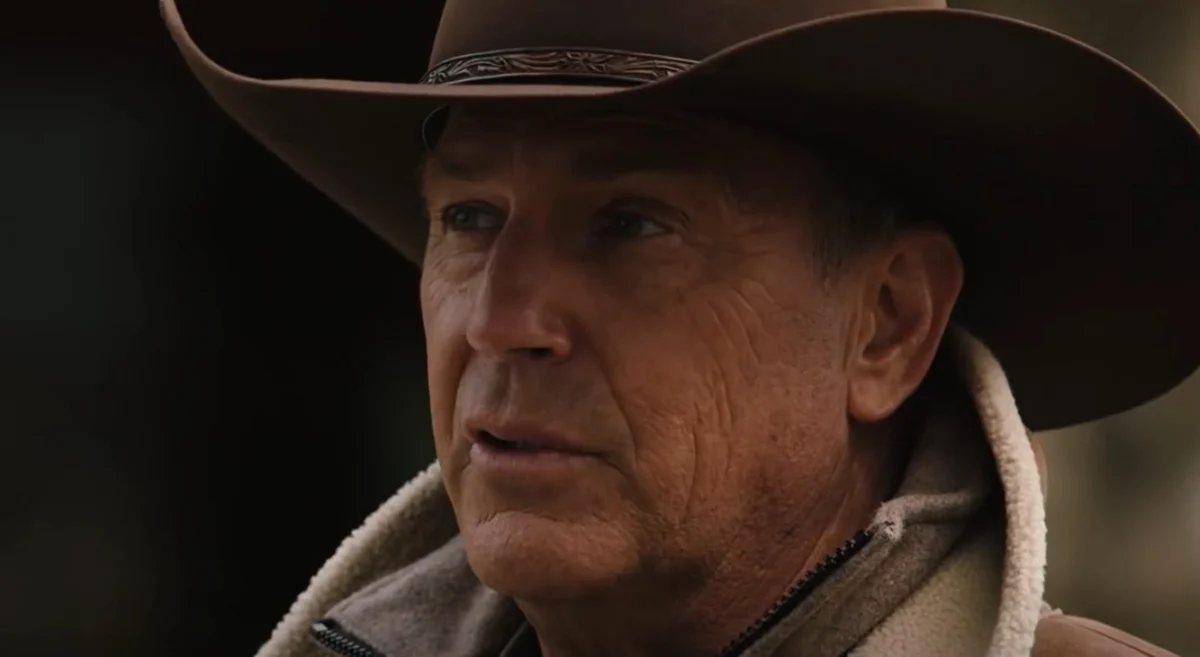
The television landscape underwent a seismic shift with the introduction of John Dutton III, the iron-willed protagonist of the Paramount Network series Yellowstone. Portrayed by Academy Award winner Kevin Costner, John Dutton emerged not merely as a fictional rancher but as a cultural archetype representing the collision between traditional Western values and the encroaching pressures of the modern world. As the sixth-generation patriarch of the Yellowstone Dutton Ranch, John’s narrative arc serves as a complex exploration of legacy, morality, and the lengths to which a leader will go to preserve a heritage that is both a gift and a burden. His recent departure from the series and the subsequent revelation of his character’s fate have sparked intense discourse regarding the show’s direction and the lasting impact of his rugged philosophy.
The Architect of the Yellowstone Empire: Context and Background
John Dutton’s character is defined by his stewardship of the largest contiguous ranch in the United States. Throughout five seasons, his primary motivation remained unwavering: the protection of the Dutton family land from external threats. These threats were multifaceted, ranging from the corporate machinations of Market Equities to the historical claims of the Broken Rock Indian Reservation and the aggressive expansion of land developers seeking to urbanize the Montana wilderness.
Dutton’s family life was equally fraught with conflict. As the father to Lee, Jamie, Beth, and Kayce, his parenting style was often as harsh as the landscape he managed. The death of his eldest son, Lee, in the series premiere set a somber tone for the family’s future, while his tumultuous relationship with his adopted son, Jamie, eventually devolved into a lethal rivalry. Conversely, his bond with his daughter Beth and son Kayce provided the emotional backbone of the series, illustrating a fierce, albeit often toxic, loyalty. His elevation to the office of Governor of Montana in the fifth season was not a pursuit of political power for its own sake, but rather a strategic maneuver to use the state’s executive authority as a shield for his property.
Chronology of a Downfall: The Death of John Dutton
The mid-season premiere of Season 5 marked a definitive turning point for the franchise. After months of off-screen speculation regarding Kevin Costner’s departure from the series due to scheduling conflicts and creative differences with showrunner Taylor Sheridan, the narrative addressed the patriarch’s fate. John Dutton was found dead from a gunshot wound in the Governor’s Mansion.
Initially presented to the public as a suicide—a narrative choice that shocked the fictional state of Montana—the truth was far more sinister. The series revealed that Dutton was the victim of a professional assassination. The hit was orchestrated by Sarah Atwood, a ruthless fixer for Market Equities, who manipulated Jamie Dutton’s resentment toward his father to facilitate the removal of the Governor. This plot point effectively ended the reign of John Dutton, shifting the focus of the series toward the fallout of his death and the inevitable war between his surviving heirs.
The transition from the original series to the sequel projects, including the upcoming Dutton Ranch, represents a new era for the franchise. While the sequel continues to explore the themes of land and legacy, critics and fans alike have noted the absence of John Dutton’s gravitas. His character provided a moral center—however skewed—that anchored the show’s high-stakes drama.
Analyzing the "Dutton Doctrine": Top 10 Philosophical Anchors
The enduring appeal of John Dutton lies in his dialogue, which often distilled complex survivalist philosophies into succinct, hard-hitting maxims. His words have transcended the screen, recently being cited by global icon Taylor Swift during her Songwriters Hall of Fame induction speech, where she referenced the "one constant in life" quote as a metaphor for the creative process and the protection of one’s work.
10. "This is America.. we don’t share land here."
This statement encapsulates the fundamental conflict of the series. It reflects a staunchly individualistic view of property rights that is central to the Western mythos, rejecting the notion of communal or public compromise in favor of absolute ownership.
9. "Learn to be meaner than evil and still love your family and enjoy a sunrise."
Dutton often preached a form of "necessary evil." This quote suggests that survival in a cutthroat world requires a level of ruthlessness that exceeds that of one’s enemies, provided one maintains a connection to beauty and kinship.
8. "All the angels are gone, son. There’s only devils left."
Spoken to his son Kayce, this line highlights John’s cynical worldview. It suggests a world devoid of pure intentions, where every actor is driven by self-interest, necessitating a defensive and often aggressive posture.
7. "Leverage is knowing that if someone had all the money in the world, this is what they’d buy."
This quote defines the intrinsic value of the Yellowstone Ranch. It isn’t just land; it is a finite, priceless resource that represents the ultimate aspiration of the wealthy, making it the ultimate leverage in any negotiation.
6. "There’s a saying out here. If your daughter’s riding a horse, no one’s riding her."
A reflection of his traditionalist and protective views on upbringing, this quote emphasizes the importance of independence and strength in the face of potential exploitation.
5. "Killing’s the one thing everything on this planet does to survive, Tate. It’s the one thing we all share. Now you share it, too."
During a hunting trip with his grandson, John explains the harsh reality of the natural order. He strips away the sanitization of death, presenting it as a universal, albeit somber, requirement of existence.
4. "No one will mourn your loss, son, because this isn’t losing your life… this is quitting it."
A scathing critique of Jamie’s perceived weakness, this quote illustrates John’s disdain for surrender. In his world, life is a battle that must be fought until the natural end; anything else is viewed as a dereliction of duty.
3. "It’s the one constant in life. You build something worth having, someone’s gonna try to take it."
This is perhaps the most famous of Dutton’s observations. It serves as the thesis statement for the entire series, framing the Dutton family’s actions not as aggression, but as a perpetual defense of their hard-won achievements.
2. "You think you’re winnin’ this game? You don’t even know the goddamned rules. But don’t worry, I’m gonna teach ‘em to ya."
This line showcases John’s confidence and his mastery of the power dynamics in Montana. It reinforces his role as a mentor and a formidable adversary who operates on a level of strategy that his opponents rarely grasp.
1. "How cute does an animal have to be before you care if it dies to feed you?"
In a confrontation with environmental activist Summer Higgins, John challenges the hypocrisy of modern urban sensibilities. It is a quintessential Dutton moment, forcing an opponent to confront the visceral realities of the food chain and the rural lifestyle.
Industry Impact and Audience Reception
The impact of John Dutton as a character is reflected in the unprecedented success of Yellowstone. According to Nielsen data, the Season 5 premiere drew over 12 million viewers, making it one of the most-watched scripted television events of the decade. The "Sheridan-verse," which includes prequels like 1883 and 1923, has built a massive audience by leaning into the rugged, uncompromising tone established by John Dutton.
Market analysts suggest that the character’s popularity stems from a growing cultural fascination with "Western-core" aesthetics and a yearning for clear, decisive leadership in an increasingly complex world. However, the decision to kill off the patriarch has met with mixed reactions. While some praise the boldness of the storytelling, others argue that the vacuum left by Costner’s departure is too vast to fill.
Broader Implications and the Future of the Franchise
The death of John Dutton marks the end of an era for prestige television. He was a character who occupied a moral gray area, often doing "bad" things for "good" reasons, a trope that has defined the Golden Age of TV. His absence leaves the Dutton children to grapple with his shadow, questioning whether the ranch is a legacy worth dying for or a curse that should be broken.
As the franchise moves forward with Dutton Ranch and other spin-offs, the "John Dutton wisdom" remains the foundation upon which these stories are built. The series has successfully commodified a specific brand of American stoicism, ensuring that while the man may be gone, his philosophy will continue to influence the genre for years to come. The transition of his quotes into the wider cultural lexicon—from Taylor Swift’s speeches to social media memes—underscores the fact that John Dutton was never just a rancher; he was a vessel for a specific, enduring American identity.