 Johan Budi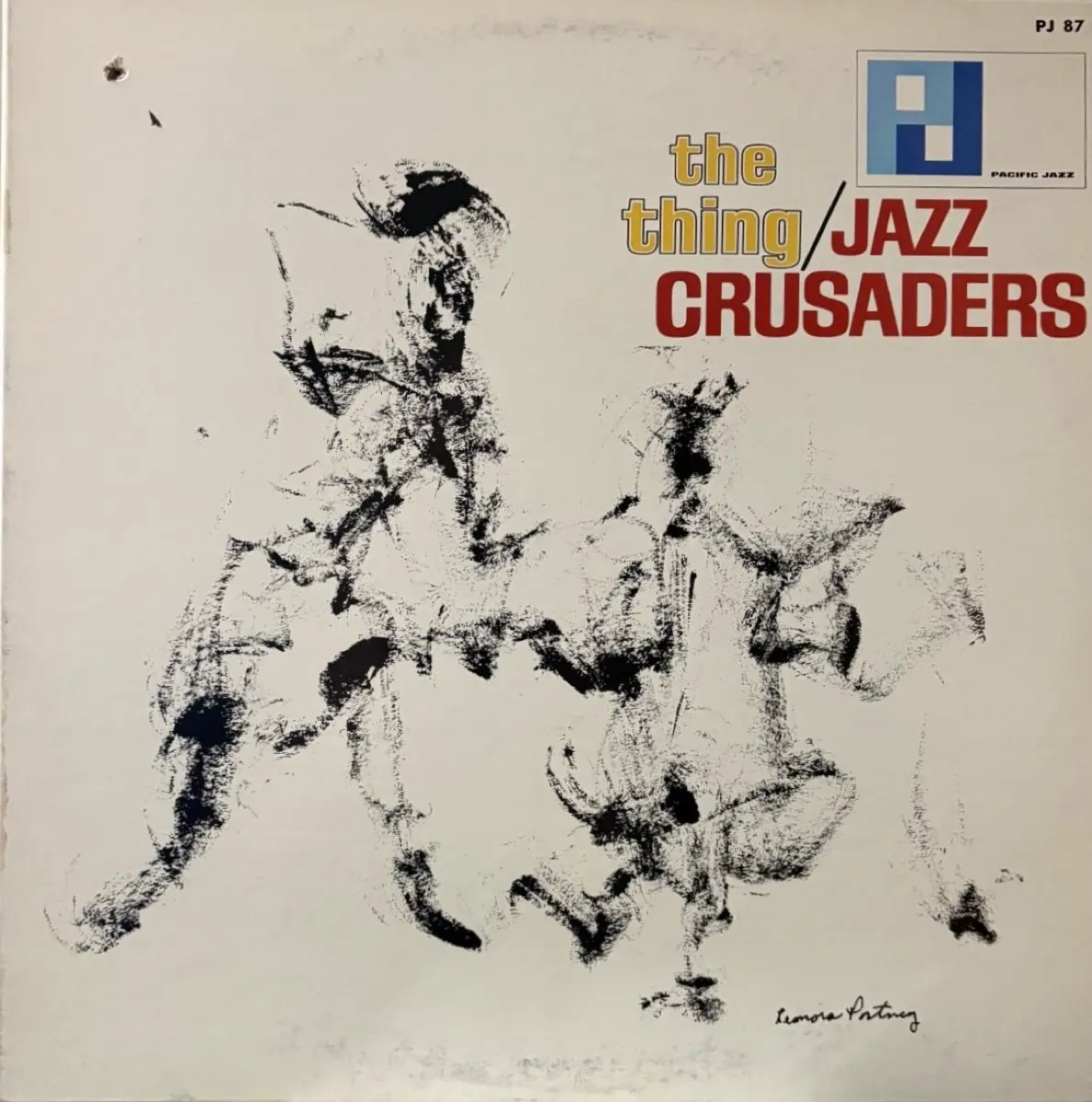
The mid-1960s marked a pivotal era for American jazz as the genre grappled with the rising dominance of rock and roll and the commercial juggernaut of the Motown sound. Amidst this shifting landscape, The Jazz Crusaders solidified their position as primary architects of the "soul-jazz" movement, a reputation further cemented by their mid-decade release, The Thing. Distributed internationally via the Fontana label, this recording captures the quintet at a crossroads, balancing their rigorous hard-bop foundations with the infectious, danceable grooves that would eventually lead them to drop "Jazz" from their name and become the funk-fusion powerhouse known simply as The Crusaders. The album serves as a document of a band navigating the tensions between artistic complexity and the pragmatic demands of a changing music market, spearheaded by the success of contemporaries like Ramsey Lewis.
The Composition and Personnel of The Thing
The recording sessions for The Thing featured the core lineup that had remained remarkably stable since the group’s migration from Houston to Los Angeles. The frontline consisted of Wilton Felder on tenor saxophone and Wayne Henderson on trombone and euphonium. The rhythm section was anchored by Joe Sample on piano and Nesbert "Stix" Hooper on drums. A notable variation in the lineup occurs within the bass chair; the tracks "Sunset In Mountains," "While The City Sleeps," "Para Mi Esposa," and "Soul Kosher" feature the legendary Monk Montgomery, a pioneer of the electric bass, while the title track "The Thing," "White Cobra," and "New Time Shuffle" feature Victor Gaskin.
This personnel configuration allowed the group to explore a wide tonal palette. Henderson’s work on the euphonium, in particular, added a darker, rounder texture to the brass arrangements that became a signature of the "Crusaders sound." The album’s discography is divided into two distinct sessions, with Side A clocking in at approximately 18 minutes and Side B at 17 minutes. The tracklist reflects an intentional diversification of styles:
- "The Thing" (Side B)
- "Sunset In Mountains" (Side A)
- "While The City Sleeps" (Side A)
- "White Cobra" (Side B)
- "New Time Shuffle" (Side B)
- "Para Mi Esposa" (Side A)
- "Soul Kosher" (Side A)
Historical Context: From Houston to the West Coast
To understand the significance of The Thing, one must look at the chronology of the ensemble. The Jazz Crusaders began as The Swingsters in Houston, Texas, during the 1950s. The founding members—Felder, Henderson, Sample, and Hooper—were childhood friends who developed a telepathic musical shorthand. Their transition to Los Angeles in the early 1960s coincided with a period where West Coast jazz was often perceived as "cool" and intellectual, yet the Crusaders brought a distinctly Southern, "hot" sensibility rooted in the blues and gospel traditions of the Gulf Coast.
By the time of this release, the group had already established a prolific recording schedule with Pacific Jazz Records. The mid-60s was a period of intense competition. The "soul-jazz" subgenre was proving to be a lucrative niche. Ramsey Lewis’s 1965 hit "The In Crowd" had demonstrated that jazz could achieve mainstream chart success if it maintained a heavy, rhythmic backbeat. The Jazz Crusaders, ever mindful of the business aspects of the industry, integrated these elements into The Thing, utilizing bossa nova rhythms and Latin-inflected percussion to appeal to the burgeoning lounge and dance hall markets.
Musical Analysis and Stylistic Critiques
The technical execution on The Thing highlights the individual strengths of the soloists while revealing the pressures of the era’s trends. Wayne Henderson’s trombone work on the album is frequently cited as a highlight. While his technical lineage can be traced directly to J.J. Johnson—the gold standard for modern jazz trombone—Henderson’s approach on this record favors a grittier, more expressive "blurring of the edges" reminiscent of older blues-based players. This stylistic choice provides a necessary counterpoint to the often-polished production values of the 1960s.
Wilton Felder’s tenor saxophone performance on the album continues his reputation for possessing a "big tone." Felder, a native Texan, carried the "Texas Tenor" tradition of big-sounding, blues-drenched horn playing. However, musicologists and critics of the era noted that his phrasing on The Thing began to reflect the overwhelming influence of John Coltrane. The "Coltrane cast-offs" mentioned by contemporary reviewers refer to the "sheets of sound" and specific harmonic substitutions that many tenor players adopted during the mid-60s. Despite these derivative moments, Felder’s innate sense of rhythm ensured the tracks remained grounded in the group’s soul-jazz identity.
The rhythm section’s contribution is characterized by a "merry old soul groove." Joe Sample, who would later become one of the most sampled keyboardists in hip-hop history, provides a sophisticated harmonic bed that bridges the gap between traditional jazz comping and the rhythmic "stabbing" chords of soul music. The inclusion of Monk Montgomery on bass is historically significant; as the brother of Wes Montgomery and the first jazz bassist to gain prominence on the Fender Precision Bass, his presence ensured a deep, resonant low end that facilitated the "party record" atmosphere of the album.
Market Dynamics and Official Responses
The release of The Thing through Fontana (catalog number 688 149 ZL) was a strategic move to capture the European market. At the time, American jazz labels frequently partnered with European distributors like Fontana (a subsidiary of Philips) to reach audiences in the United Kingdom and the continent, where jazz remained a high-status cultural export.
The commercial strategy behind the album was clear: accessibility. During this period, jazz was increasingly viewed as becoming too "difficult" or "avant-garde" for the average listener. The Jazz Crusaders deliberately moved in the opposite direction. By incorporating bossa nova and "soul" elements, they maintained a connection with the dancing public. This approach was not without its detractors. Purists argued that the band was "going stale" or prioritizing business over artistic exploration. However, the band’s internal philosophy remained consistent: they viewed themselves as entertainers as much as artists.
While formal statements from the band during this specific release were rare, later interviews with Joe Sample and Stix Hooper indicated that the group felt a responsibility to keep jazz relevant to the African American community. They saw the "funk bit" not as a commercial sell-out, but as a return to the roots of the music—the blues and the dance hall—which they felt some of their contemporaries had abandoned in favor of academic abstraction.
Broader Impact and Implications for the Genre
The Thing serves as a vital link in the chain that led to the jazz-funk explosion of the 1970s. The "fresh blood" and "challenging environment" that critics called for would eventually manifest in the group’s evolution into The Crusaders in 1971. The lessons learned during the recording of albums like The Thing—how to balance a sophisticated frontline with a heavy, groove-oriented rhythm section—became the blueprint for their multi-platinum success in the following decade.
Furthermore, the album’s emphasis on the "soul groove" helped sustain the economic viability of jazz clubs and labels during a lean period. By providing "excellent party records," the Jazz Crusaders ensured that jazz instruments remained audible in spaces where popular music was played. The implications of this were twofold:
- Genre Preservation: It kept the instrumentation of jazz (trombone, tenor sax, acoustic piano) in the public ear.
- Evolution of Fusion: It laid the groundwork for the crossover success of artists like Grover Washington Jr. and the Mizell Brothers’ productions for Donald Byrd.
In retrospect, the critique that the band was "losing contact with listening" in favor of "dancing" highlights a fundamental tension in 20th-century music. The Jazz Crusaders chose the path of movement. While some tracks on The Thing may have leaned heavily on the tropes of the day, the sheer technical proficiency of Henderson and Felder ensured the music remained several cuts above standard "mood music" or "easy listening."
Technical Specifications and Discographical Data
For collectors and historians, the Fontana release of The Thing represents a specific moment in vinyl manufacturing. The 33s. 1d. price point in the UK market positioned it as a premium product. The engineering of the record emphasized the mid-range, allowing the interplay between the trombone and saxophone to cut through the heavy bass lines of Montgomery and Gaskin.
Track Durations and Highlights:
- Side A (18 Minutes): Characterized by atmospheric pieces like "Sunset In Mountains" and the urban-themed "While The City Sleeps," which showcased the group’s ability to paint cinematic pictures with sound.
- Side B (17 Minutes): Focused more on the "shuffle" and "funk" elements, with "New Time Shuffle" serving as a precursor to the more rhythmic-heavy compositions the band would produce in the 1970s.
The Jazz Crusaders’ insistence on maintaining a "soul groove" during the mid-1960s was more than just a business policy; it was a stylistic manifesto. The Thing stands as a testament to a band that refused to let jazz become a museum piece, insisting instead that it remain a living, breathing, and dancing part of the cultural fabric. Through the contributions of Wilton Felder, Wayne Henderson, Joe Sample, and Stix Hooper, the album remains a significant chapter in the story of American music’s transition from the bebop era to the age of fusion.