Nayara Elvina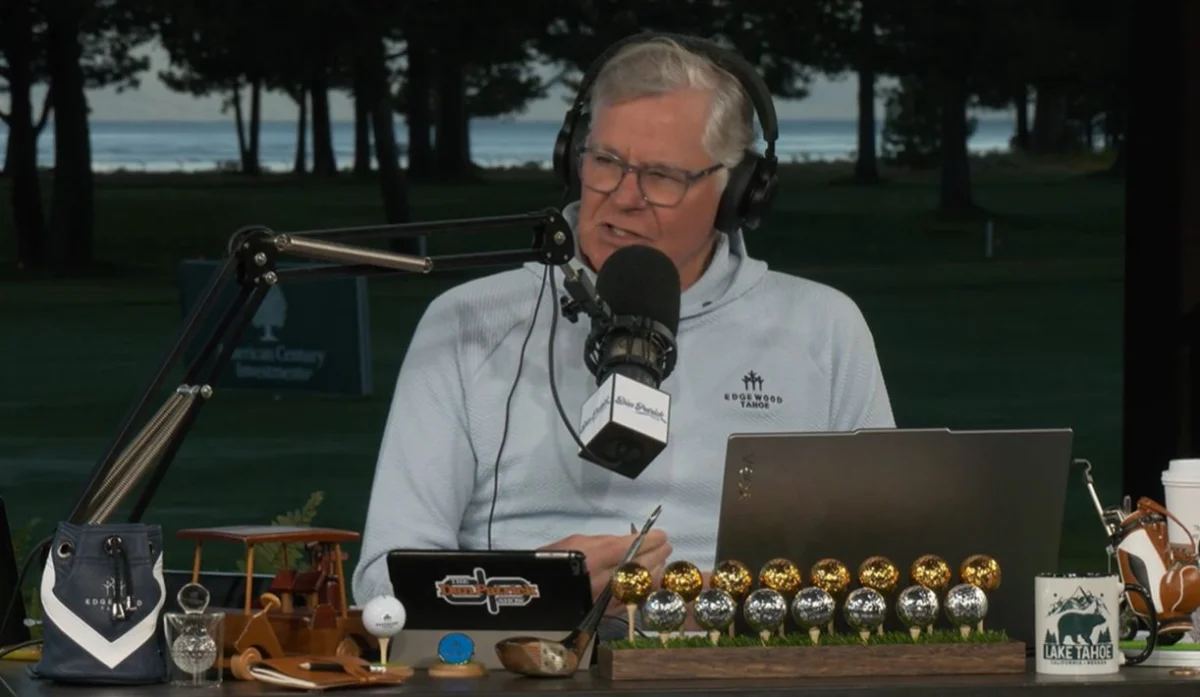
The Women’s National Basketball Association (WNBA) currently finds itself in the midst of a historic surge in popularity, driven by a generational rookie class and record-breaking television viewership. However, this period of rapid growth has also brought increased scrutiny regarding the league’s administrative handling of its newfound spotlight. A recent incident involving WNBA Commissioner Cathy Engelbert and veteran sports broadcaster Dan Patrick has highlighted what some critics describe as a disconnect between the league’s professional aspirations and its public relations execution. During the American Century Celebrity Golf Tournament in Lake Tahoe, Nevada, Engelbert reportedly withdrew from a scheduled interview with The Dan Patrick Show at the last minute, leading to a public rebuke from one of the industry’s most respected voices.
The American Century Championship is a high-profile event that attracts athletes, entertainers, and sports executives to the Edgewood Tahoe Resort. For sports media outlets, the tournament serves as a prime location for long-form interviews and candid discussions with figures who are often less accessible during their respective competitive seasons. Dan Patrick, whose show is a staple of sports talk radio and television, had traveled to the event to capitalize on this concentration of star power. Among the guests confirmed for his program was Cathy Engelbert, who was participating in the tournament.
A Detailed Chronology of the Cancellation
The sequence of events, as detailed by Patrick during his broadcast, began with a formal agreement for Engelbert to appear on the show. According to Patrick, the Commissioner had expressed personal interest in the sit-down, indicating she was looking forward to the conversation. Based on this confirmation, the show’s production team promoted the segment throughout their Tuesday broadcast, signaling to a national audience that the head of the WNBA would be addressing the current state of the league.
On the day of the scheduled interview, the situation took an unexpected turn. Patrick informed his audience that his crew waited for approximately two hours beyond the scheduled start time. The initial delay was attributed to a conference call and a hotel meeting that Engelbert needed to attend. However, as the window for the interview narrowed, communication from the Commissioner’s camp became sparse.
The situation reached a breaking point when the show finally received word that the interview would not take place. Patrick reported that the justification provided was not a scheduling conflict on Engelbert’s part, but rather an intervention by the WNBA’s public relations department. "We got word that the commissioner said that the WNBA PR staff said that she’s not allowed to do this," Patrick explained. The host noted the irony of a league commissioner being restricted by her own PR team, especially after she had already personally agreed to the appearance.
The frustration for the production team was compounded by the physical proximity of the Commissioner. Patrick noted that while his staff was unable to secure a final response or an apology, Engelbert was visible only a short distance away on the practice range. This lack of direct communication, despite being in the same vicinity, was characterized by Patrick as a sign of disrespect toward a media outlet that has consistently provided a platform for the league.
The "Caitlin Clark Factor" and Unanswered Questions
The timing of the canceled interview is particularly significant given the narratives currently surrounding the WNBA. The league is grappling with several complex issues that have sparked intense debate among fans and analysts alike. Chief among these is the "Caitlin Clark effect." Since being drafted first overall by the Indiana Fever, Clark has become a lightning rod for discussion regarding player popularity, physical play, and the internal dynamics of the league.
The interview was intended to touch upon several sensitive but vital topics:
- League Expansion: The WNBA has recently announced plans for expansion, including a new franchise in the San Francisco Bay Area (the Golden State Valkyries) set to begin play in 2025, and a Toronto-based team scheduled for 2026. Fans are eager for details on the logistics and the long-term vision for a 14 or 16-team league.
- Player Sentiment and Peer Recognition: Recent reports and player surveys have suggested a divide in how veteran players view the influx of attention surrounding rookies like Clark and Angel Reese. A recent anonymous poll of WNBA players even ranked Clark as only the 11th-best guard in the league, a result that sparked widespread conversation about whether the league’s stars are fully embracing the new face of the franchise.
- Media Rights Negotiations: The WNBA is currently part of the broader NBA media rights negotiations, which are expected to fetch billions of dollars. The Commissioner’s role in maximizing the WNBA’s share of this revenue is a point of immense interest for the league’s financial future.
By avoiding the interview, Engelbert missed an opportunity to address these topics in a controlled, professional environment. Patrick emphasized that his intention was not "gotcha journalism" but rather to provide a "fair platform" for the Commissioner to speak directly to a broad sports audience.
Statistical Context: The WNBA’s Unprecedented Growth
The refusal to engage with major media outlets comes at a time when the WNBA’s data suggests it should be more visible than ever. The 2024 season has seen a meteoric rise in every measurable metric of success. According to league data and Nielsen ratings:
- Viewership: WNBA games across ESPN, ABC, and CBS have seen triple-digit percentage increases compared to the previous year. For example, the 2024 WNBA Draft drew a record 2.45 million viewers, a 307% increase over the 2023 draft.
- Attendance: Average attendance across the league is at its highest point in over two decades. Several teams, including the Indiana Fever and the Los Angeles Sparks, have moved games to larger NBA arenas to accommodate ticket demand, frequently selling out venues with capacities exceeding 18,000.
- Merchandise: Sales of WNBA merchandise on the official league site have increased by over 500% year-over-year, with Caitlin Clark’s jersey becoming the top-selling item in the history of Fanatics’ WNBA collection.
Given these statistics, sports business analysts suggest that the league is no longer a niche product but a mainstream sporting entity. With that transition comes the expectation that league leadership will engage with the same level of media scrutiny as the commissioners of the NBA, NFL, or MLB.
The Commissioner’s Role and Public Relations Strategy
Cathy Engelbert, who took over as the WNBA’s first Commissioner in 2019 (the role was previously titled "President"), brought a formidable corporate background to the league. As the former CEO of Deloitte, she was the first woman to lead a "Big Four" professional services firm. Her tenure has been marked by significant financial stabilization, including a $75 million capital raise in 2022.
However, the transition from a corporate environment to the highly emotive and public-facing world of professional sports has presented challenges. The incident with The Dan Patrick Show suggests a PR strategy that favors risk aversion over engagement. While PR departments often shield executives from potentially hostile questioning, Patrick argued that his show has historically been a respectful venue for league officials.
The decision to block the Commissioner from speaking may have been intended to avoid "agenda-ized" questions, but the resulting fallout has created a new, perhaps more damaging, narrative of a league leadership that is "ghosting" the media. This perceived lack of transparency can be detrimental when a league is attempting to court new sponsors and broadcast partners who value stability and professional communication.
Broader Implications for the League’s Reputation
The reaction from the sports media community to Patrick’s comments has been largely supportive of the host. The consensus among many commentators is that the WNBA cannot demand to be treated as a "major league" while its leadership avoids the responsibilities that come with that status.
"If you want to be treated as a serious league, this is what happens," Patrick stated during his broadcast. "These are tough questions, but this is a fair outlet for you… I will treat you with respect."
This sentiment touches on a critical juncture for the WNBA. For years, the league and its advocates have fought for more media coverage and better time slots. Now that the coverage has arrived, the league’s administrative arm appears to be struggling with the intensity of the glare. The failure to fulfill a scheduled interview with a high-profile outlet not only damages the relationship with that specific show but also sends a signal to other journalists that the league may be difficult to work with.
Furthermore, the incident highlights a potential internal conflict between the Commissioner’s personal willingness to engage and the PR department’s restrictive protocols. For a league that prides itself on the authenticity and outspokenness of its players, a perceived "muzzling" of its Commissioner creates a dissonant image.
Conclusion: The Path Forward for WNBA Leadership
As the WNBA heads toward the Olympic break and the subsequent push for the playoffs, the demand for clear, authoritative voices from the league office will only increase. The "Caitlin Clark problem"—which is essentially the "problem" of managing unprecedented success and the friction it causes—requires a Commissioner who is present and communicative.
The missed opportunity in Lake Tahoe serves as a case study in the growing pains of a league in transition. While the WNBA’s on-court product has never been stronger, its off-court administrative and PR maneuvers are currently under the microscope. To maintain its upward trajectory and solidify its place in the top tier of American professional sports, the league’s leadership may need to reconsider its approach to media engagement, moving away from a posture of avoidance and toward one of active, transparent participation.
As of the time of publication, the WNBA has not issued a formal statement regarding the cancellation of Commissioner Engelbert’s appearance on The Dan Patrick Show. However, the dialogue sparked by the incident continues to resonate across the sports landscape, serving as a reminder that in the world of professional sports, silence is often as loud as any official statement.