Nayara Elvina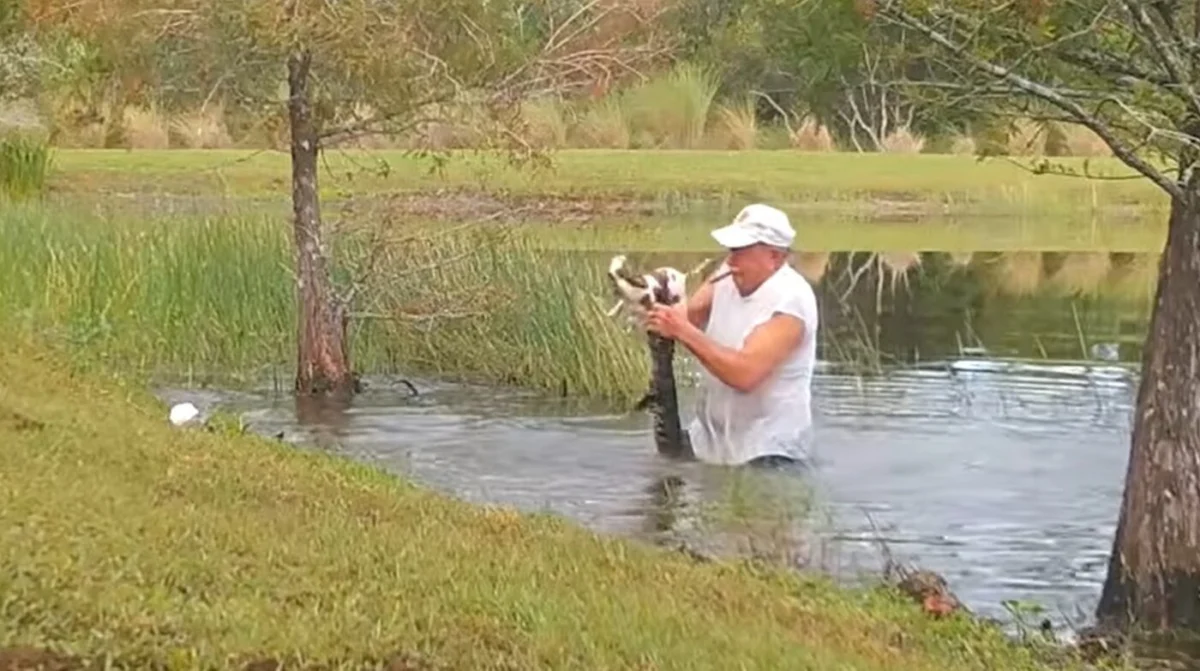
The intersection of suburban expansion and natural wildlife habitats in Florida recently garnered international attention following a dramatic rescue operation involving a 74-year-old resident and a juvenile American alligator. Richard Wilbanks, a resident of Estero, Florida, became the subject of widespread media coverage after a surveillance camera captured him leaping into a backyard pond to rescue his three-month-old Cavalier King Charles spaniel, Gunner, from the jaws of a predator. The incident, which occurred in Lee County, serves as a poignant case study in the biological capabilities of the American alligator (Alligator mississippiensis) and the escalating frequency of human-wildlife encounters in the Southeastern United States.
Chronology of the Encounter
The event took place during a routine walk near a retention pond adjacent to the Wilbanks’ property. According to Wilbanks, the environment appeared calm until the moment of the strike. The puppy, Gunner, had approached the water’s edge when a juvenile alligator, estimated to be approximately three to four feet in length, launched an ambush attack. Wilbanks described the speed of the reptile as "missile-like," noting that there was no perceptible warning before the alligator breached the surface, clamped its jaws onto the puppy, and retreated into the water.
In a reflexive display of the "fight or flight" response, Wilbanks did not hesitate to enter the pond. Surveillance footage captured by a Browning trail camera—installed as part of a joint project between the Florida Wildlife Federation and the fSTOP Foundation—shows Wilbanks submerging his arms to locate the predator beneath the surface. He successfully apprehended the alligator, maintaining his grip as he waded back toward the shoreline.
The struggle intensified on the bank, where Wilbanks was required to use significant physical force to pry the alligator’s mandibles apart. A notable detail of the footage, which contributed to its viral status on social media, was Wilbanks’ ability to maintain his composure—and his cigar—throughout the duration of the rescue. Once the jaws were sufficiently widened, the puppy was able to escape the predator’s grasp and flee to a safe distance.
Biological Analysis of the Predator
To understand the gravity of the situation, one must consider the physiological engineering of the American alligator. These reptiles are apex predators that have remained virtually unchanged for millions of years. Their hunting strategy relies on camouflage and explosive bursts of speed. While the alligator involved in the Wilbanks incident was a juvenile, it possessed the characteristic bite force that makes the species formidable.
Adult American alligators are documented to have one of the strongest bite forces in the animal kingdom, measured at upwards of 2,125 pounds per square inch (PSI). While a juvenile’s force is lower, it is more than sufficient to puncture the skin and crush the delicate bones of a small mammal or bird. The anatomy of an alligator’s jaw is optimized for closing; while the muscles used to shut the mouth are incredibly powerful, the muscles used to open them are relatively weak. However, as Wilbanks noted in his post-incident interviews, prying the jaws open remains an "extremely hard" task for a human due to the sheer mechanical resistance and the reptile’s defensive thrashing.
Statistical Context of Alligator Attacks in Florida
The incident in Estero is reflective of a broader trend in Florida, a state with an estimated population of 1.3 million alligators. As residential developments continue to encroach upon wetlands and marshlands, the buffer zone between human activity and alligator habitats has diminished.
According to data provided by the Florida Fish and Wildlife Conservation Commission (FWC), unprovoked alligator bites on humans are statistically rare, but they do occur with regularity. Between 1948 and 2022, Florida recorded 453 unprovoked bite incidents, 26 of which were fatal. However, the risk to domestic pets is significantly higher. Small dogs and cats are often perceived as natural prey items by alligators due to their size and movement patterns. The FWC receives thousands of "nuisance alligator" calls annually, leading to the removal of approximately 7,000 to 8,000 alligators each year through the Statewide Nuisance Alligator Program (SNAP).
Official Guidelines and Safety Protocols
In the wake of the Wilbanks incident, wildlife experts and state officials have reiterated the importance of coexisting safely with Florida’s native reptiles. The FWC maintains strict guidelines for residents living near bodies of water:
- Maintain Distance: Residents are advised to keep a distance of at least 60 feet from any alligator.
- Pet Supervision: Pets should never be allowed to swim or walk near the edge of fresh or brackish water, especially during dawn or dusk when alligators are most active.
- Avoid Feeding: Feeding alligators is illegal in Florida (Florida Administrative Code 68A-25.001). Feeding causes alligators to lose their natural fear of humans and associate people with food, which leads to aggressive behavior.
- Leash Requirements: Keeping dogs on short leashes reduces the likelihood of them wandering into a "strike zone" at the water’s edge.
Wilbanks himself acknowledged that the encounter changed his perspective on his surroundings. While he successfully saved his pet, he emphasized that the alligator was simply acting on its natural instincts. "We do need to be aware they are wild animals," Wilbanks stated. "They’re not here for our benefit. We’re very lucky to share the space with them."
The Role of Surveillance Technology in Wildlife Conservation
The footage of the rescue was made possible by a specific initiative aimed at fostering a better understanding of urban wildlife. The Florida Wildlife Federation and the fSTOP Foundation utilize trail cameras in residential areas to document how animals navigate human-dominated landscapes.
This technology serves a dual purpose. First, it provides researchers with data on wildlife corridors and behavior in suburban settings. Second, as seen in the Wilbanks case, it provides the public with a visceral look at the realities of living in an ecosystem shared with apex predators. The "Sharing with Wildlife" project aims to move away from sensationalism and toward a more informed coexistence. By seeing these animals in their natural state—or in high-stress encounters—the public can better appreciate the need for proactive safety measures.
Medical Aftermath and Recovery
Following the struggle, both Wilbanks and Gunner required medical attention. Gunner suffered a single puncture wound to his abdomen, which was treated by a veterinarian. Given the bacterial load often found in an alligator’s mouth, such wounds carry a high risk of infection and require thorough sanitization and antibiotic treatment.
Wilbanks sustained more extensive injuries to his hands, which he described as being "chewed up" during the process of prying the alligator’s mouth open. Human skin is particularly vulnerable to the sharp, conical teeth of an alligator, which are designed for gripping rather than shearing. Wilbanks underwent a series of treatments to ensure the wounds did not become septic. Despite the physical toll, the 74-year-old remained steadfast in his decision to intervene, citing the deep emotional bond between a pet and its owner.
Broader Implications and Analysis
The viral nature of the Wilbanks video highlights a cultural fascination with the "Florida Man" archetype—a term often used to describe individuals involved in bizarre or high-stakes situations in the state. However, beneath the viral headlines lies a serious discussion about environmental management.
As Florida’s human population continues to grow—adding hundreds of thousands of new residents annually—the pressure on natural habitats increases. This leads to "habituated" wildlife. Alligators in residential retention ponds may become accustomed to human presence, making them more bold. This incident underscores the necessity of community-wide education regarding water safety.
Furthermore, the incident raises questions about the ethics of intervention. While Wilbanks was hailed as a hero for saving his dog, wildlife officers generally discourage citizens from physically engaging with alligators. The risk of serious injury or death to the human is high, and in many cases, such interventions can lead to the mandatory euthanasia of the alligator if it is deemed a threat to public safety. In this specific instance, the alligator was not removed, as the incident occurred in a private pond and was viewed as a natural predatory act, though the Wilbanks family has since taken greater precautions to avoid the water’s edge.
Conclusion
The rescue of Gunner the puppy by Richard Wilbanks stands as a remarkable testament to the lengths individuals will go to protect their animals. It also serves as a vivid reminder of the raw power of the natural world that exists just beyond the manicured lawns of suburban Florida. Through the lens of a trail camera, the world witnessed a rare moment of interspecies conflict, providing valuable lessons on the importance of vigilance, the mechanics of reptilian predation, and the ongoing challenge of human-wildlife coexistence in the 21st century. As Wilbanks and his wife Louise continue to enjoy their home in Estero, they do so with a renewed respect for the ancient predators that share their backyard, advocating for a balance between human lifestyle and the preservation of Florida’s unique biological heritage.