Mia Khoirunisa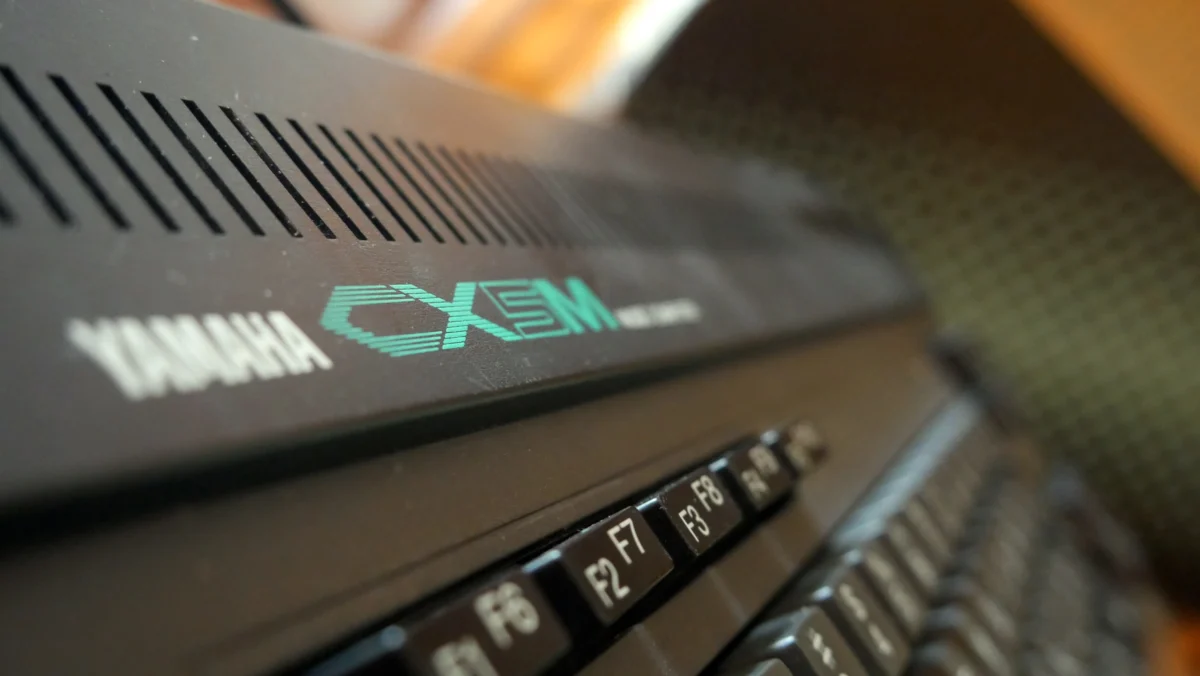
The landscape of software instrument emulation is currently crowded with countless plug-ins attempting to recreate vintage analog gear. Yet, true hardware modeling requires an extraordinary depth of research, physical restoration, and circuit-level accuracy. Plogue, a developer renowned for its uncompromising historical preservation of retro sound architectures, has achieved a new benchmark with its latest release: the chipsynth OPMZ. This software instrument meticulously emulates the legendary Yamaha FM synthesis chips that defined the sonic landscape of 1980s commercial music production, home computing, and coin-operated arcade cabinets. Far from being a mere nostalgic novelty, chipsynth OPMZ functions simultaneously as a powerful, modern software synthesizer and an ultra-authentic playback engine for classic video game soundtracks, bridging the gap between vintage hardware preservation and contemporary music production.
The Genesis of Yamaha Phase Modulation Architecture
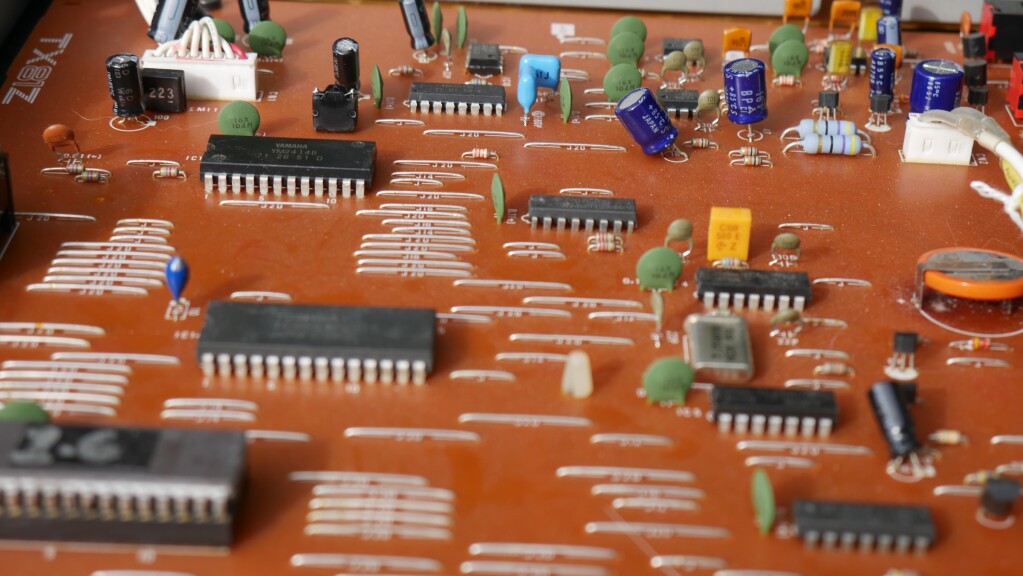
To understand the cultural and technological significance of chipsynth OPMZ, one must examine the lineage of Yamaha’s proprietary FM (Frequency Modulation) synthesis chips, specifically the OPP (YM2164), OPM (YM2151), and OPZ (YM2414) series. Developed during the late 1970s and 1980s, these chips revolutionized how electronic instruments and video game systems generated audio. Unlike subtractive analog synthesizers that sculpt sound using filters and oscillators, Yamaha’s phase modulation chips utilized complex mathematical algorithms to modulate sine waves against one another, yielding glassy bells, biting brass tones, aggressive leads, and complex metallic textures that felt remarkably organic despite their digital origin.
These specific silicon cores formed the beating heart of some of the most celebrated hardware instruments of the 1980s. Yamaha utilized the YM2151 and YM2164 in synthesizers such as the DX21, DX100, TX81Z, and the lesser-known CX5M music computer. Furthermore, Yamaha licensed or collaborated on architectures that found their way into iconic Korg synthesizers like the DS8, the 707 workstation, and the Z3 guitar synthesizer.
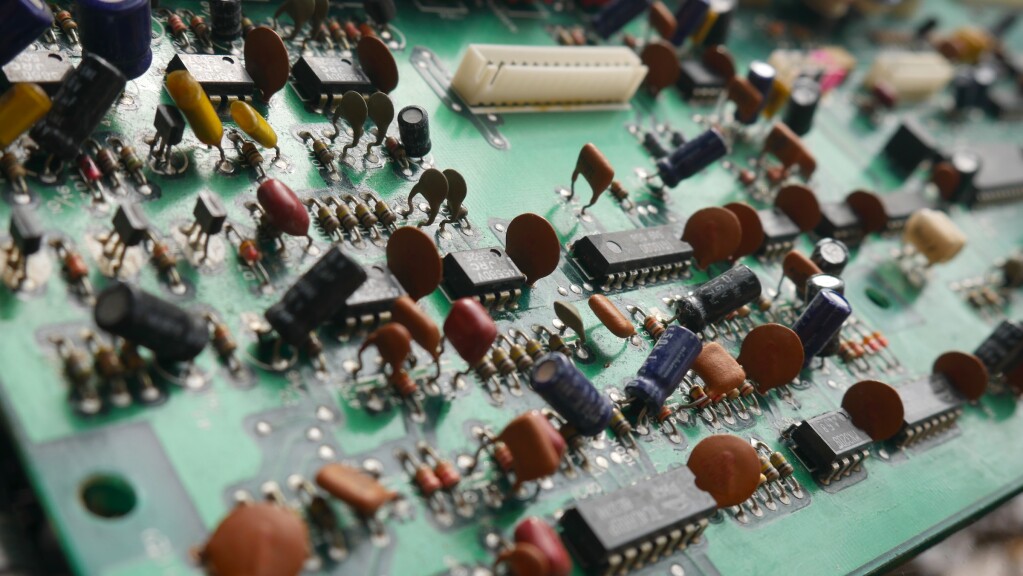
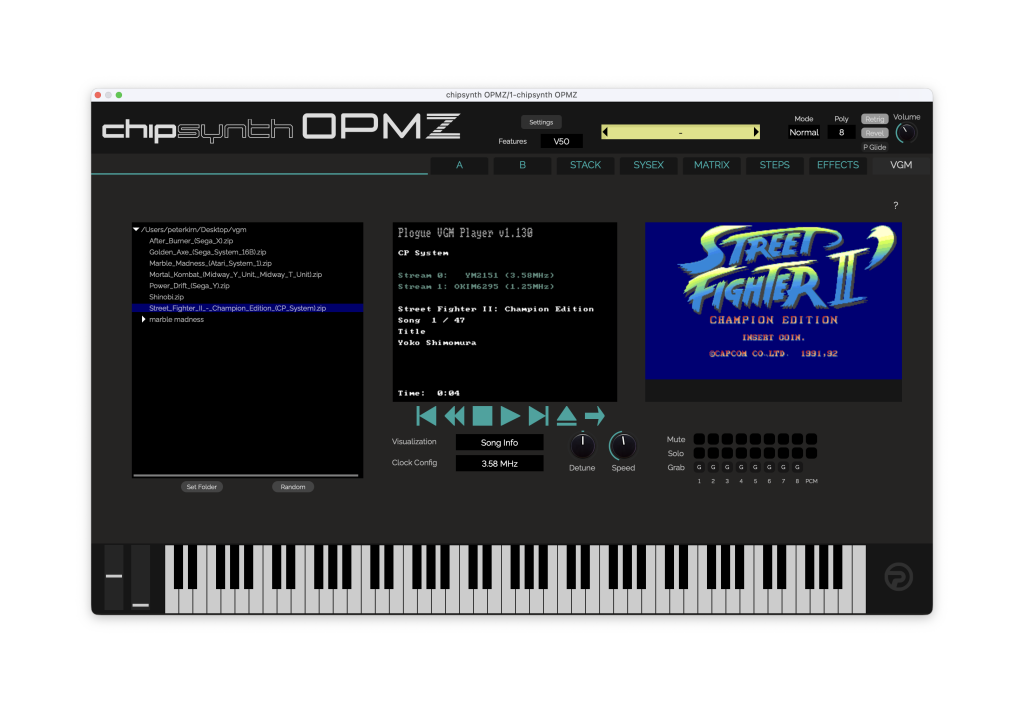
Simultaneously, these exact semiconductor chips were deployed inside arcade motherboards and home gaming consoles. Because arcade developers were restricted by strict hardware limitations, composers had to squeeze maximum expressive power out of a limited number of FM channels. Consequently, composers such as Yoko Shimomura and other industry pioneers leveraged the Yamaha OPM architecture to compose legendary soundtracks for arcade and console classics, including Street Fighter II, Mortal Kombat, Shinobi, After Burner, Marble Madness, and Power Drift. The resulting audio defined the auditory youth of an entire generation, cementing the intersection of chip music and professional synthesis.
From Workbench to Bitstream: The Rigorous Hardware Modeling Process
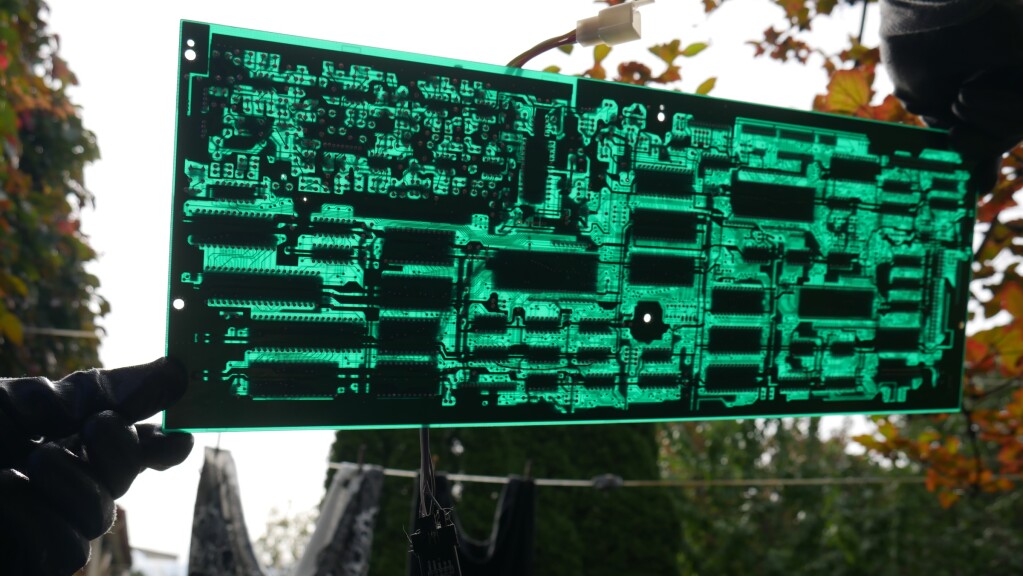
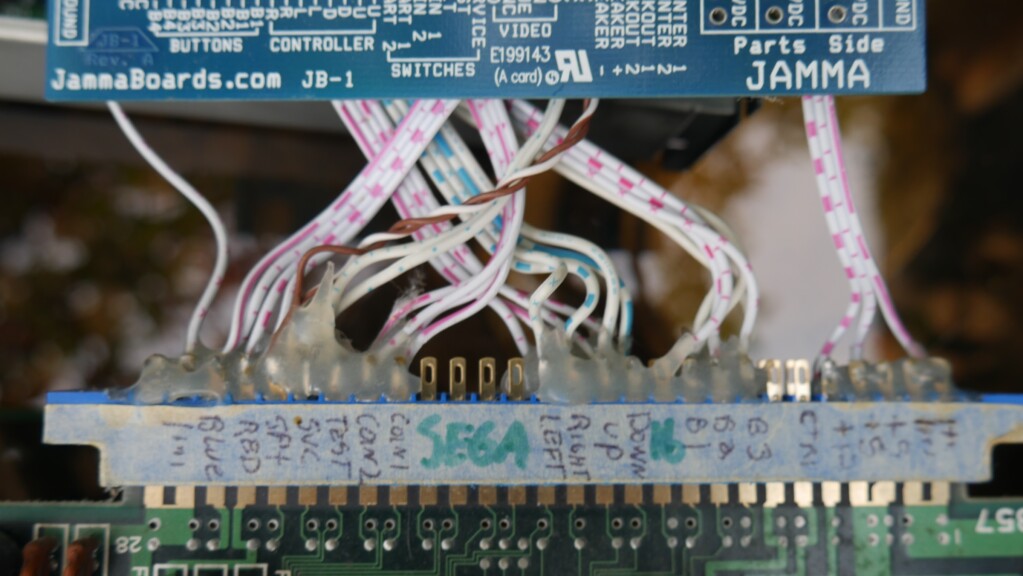
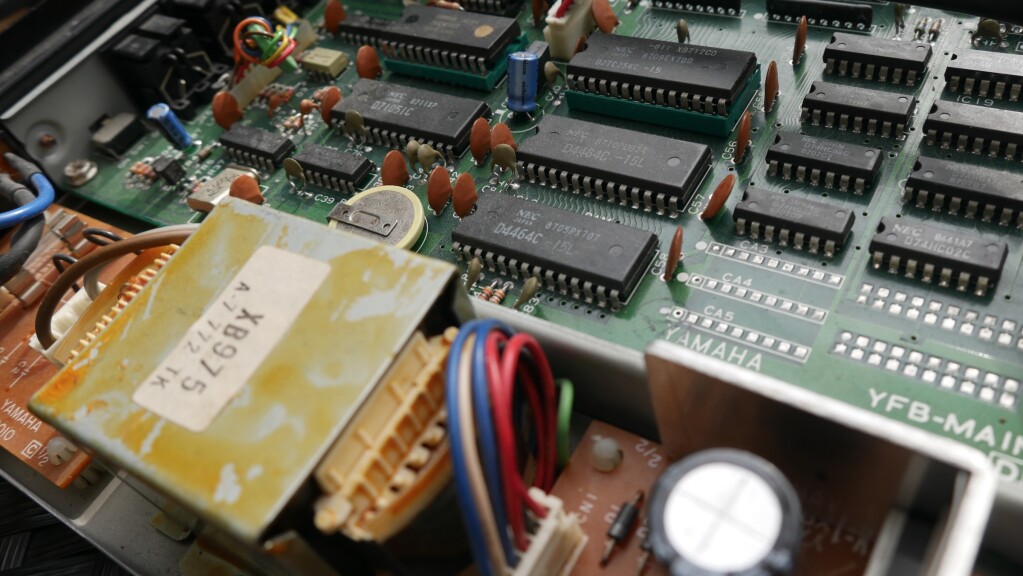
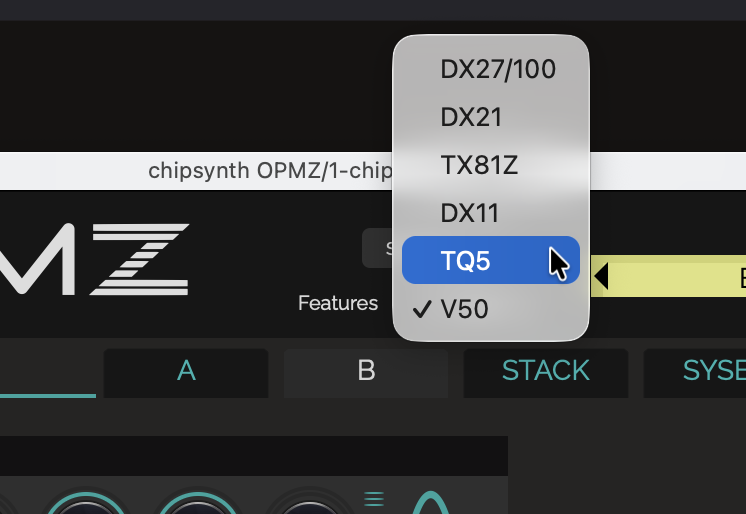
Unlike many software developers who rely on idealized mathematical abstractions or generic DSP templates, Plogue’s approach to chipsynth OPMZ began on a physical workbench. The development team undertook extensive hardware acquisition, schematic analysis, and oscilloscope measurements, sourcing vintage circuit boards, decaying capacitors, and rare instruments like the Yamaha V50 synthesizer and its elusive OPZII/YM2424 core.
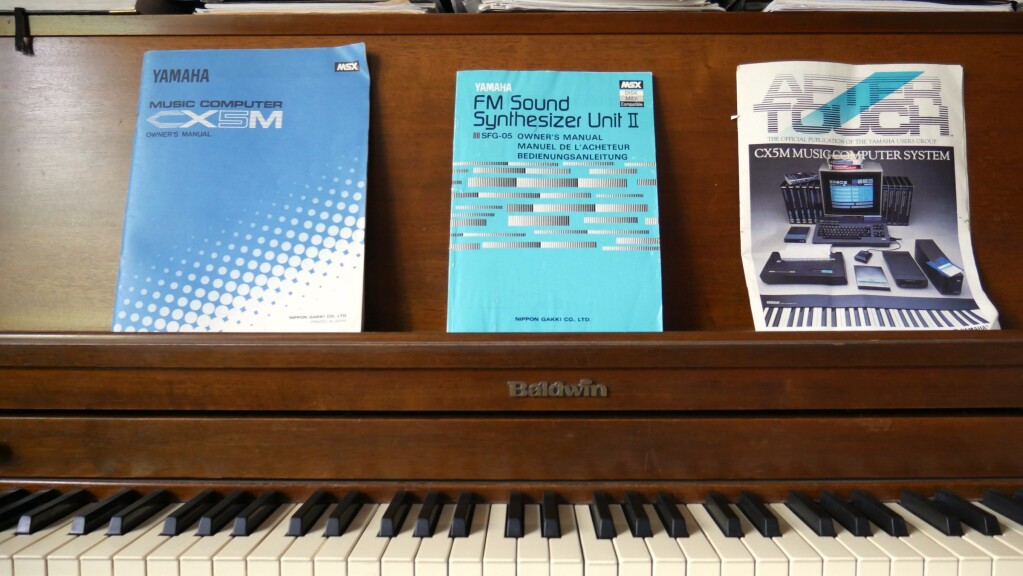
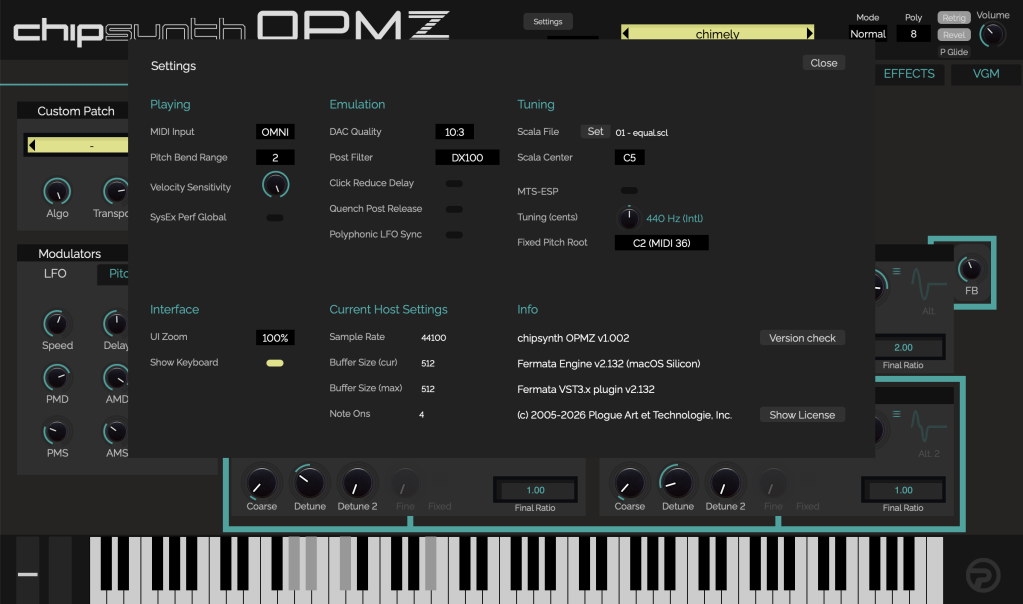
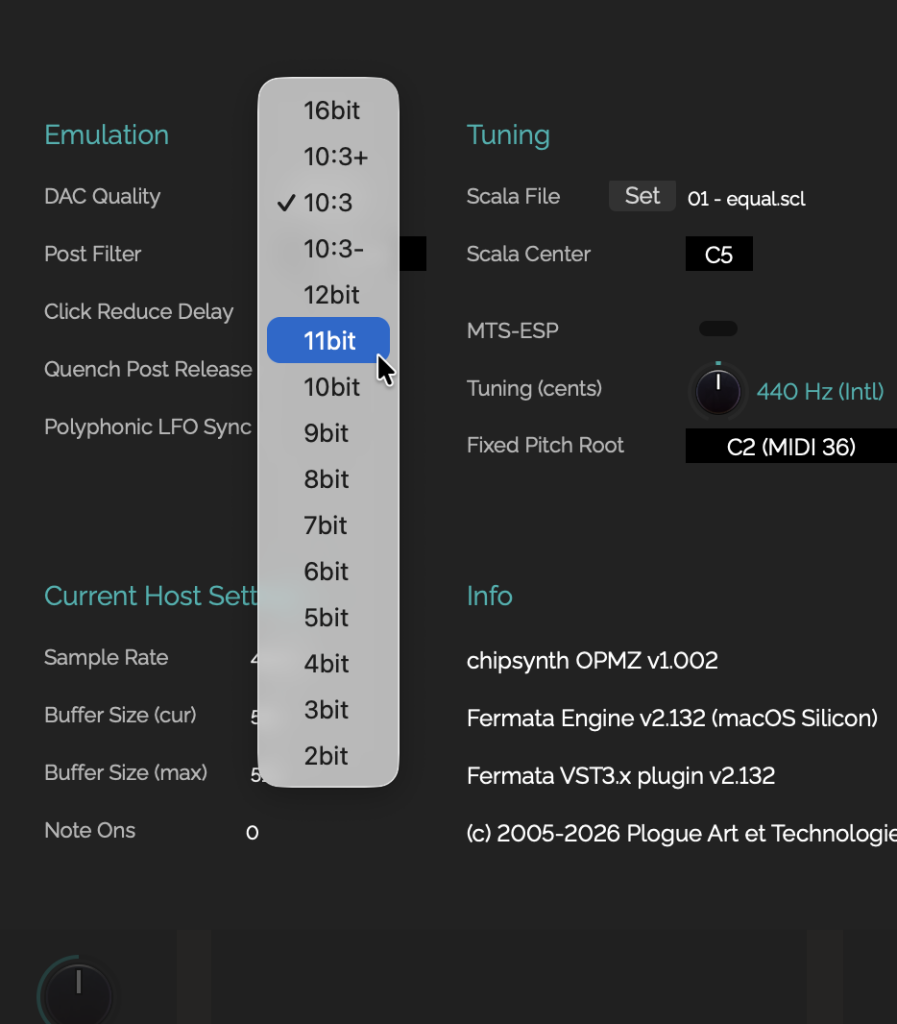
David Viens of Plogue spearheaded the exhaustive documentation process, dissecting how individual hardware components—including specific Digital-to-Analog Converters (DACs)—behaved under various load conditions. In vintage hardware, imperfections such as non-linear DAC quantization, clock jitter, and specific analog filtering stages contributed heavily to the characteristic grit and warmth of the final output. By modeling these minute hardware discrepancies parameter by parameter, Plogue avoided the sterile, lifeless precision that often plagues digital emulations. The resulting plug-in allows users to select different DAC profiles and hardware models, directly mirroring the exact electrical characteristics of the original vintage units, complete with historical operational quirks.
Comprehensive Synthesizer Capabilities for Modern Production
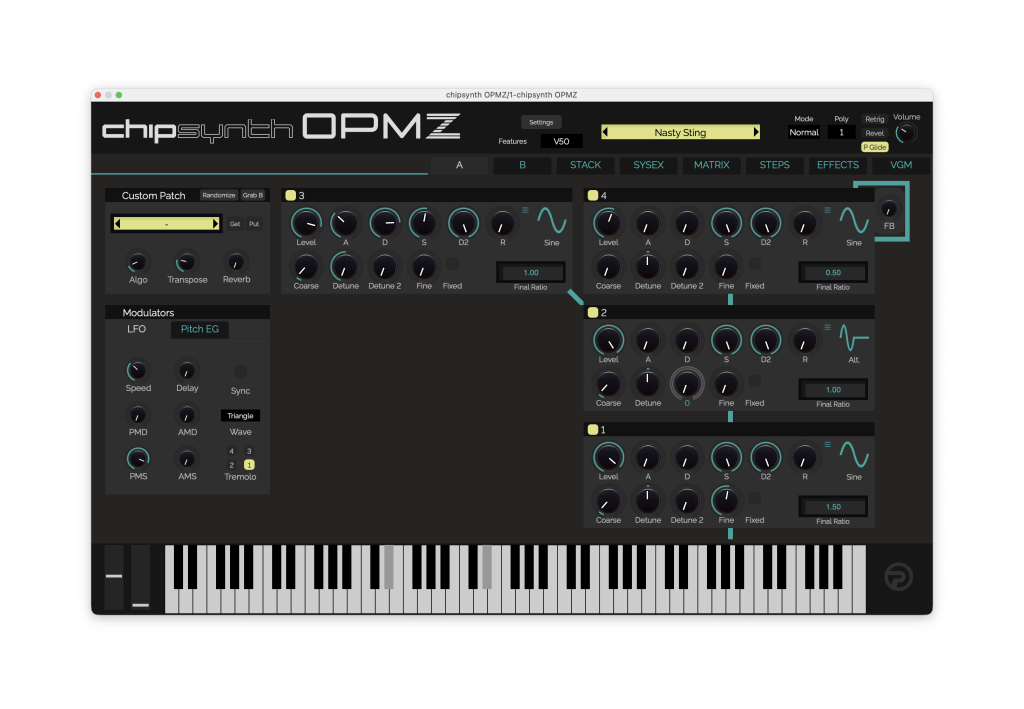
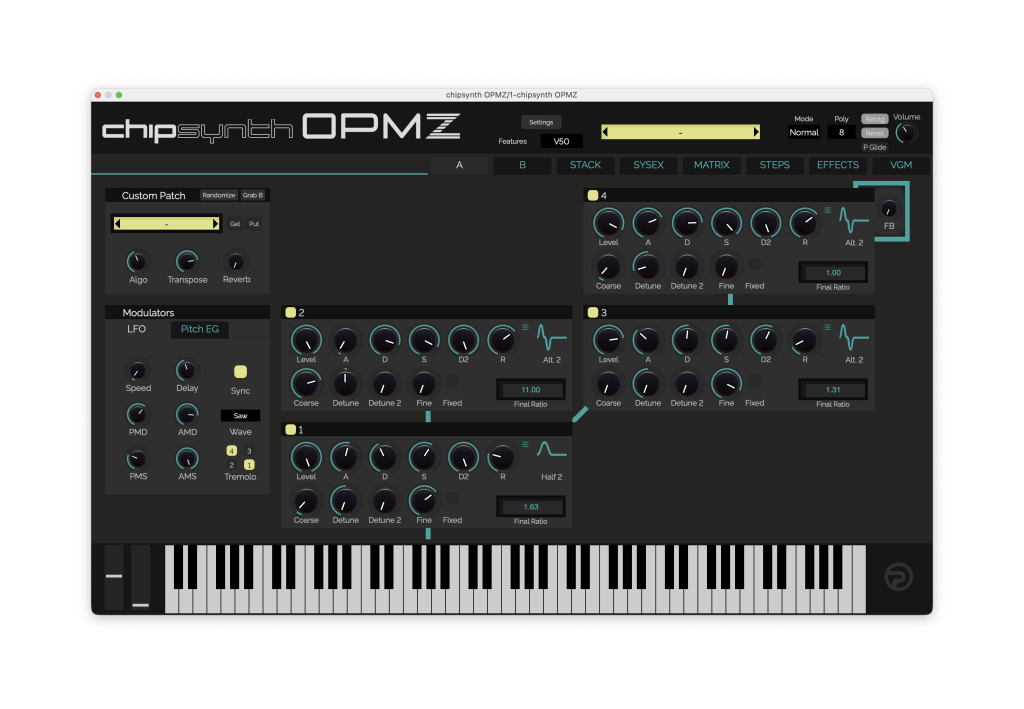
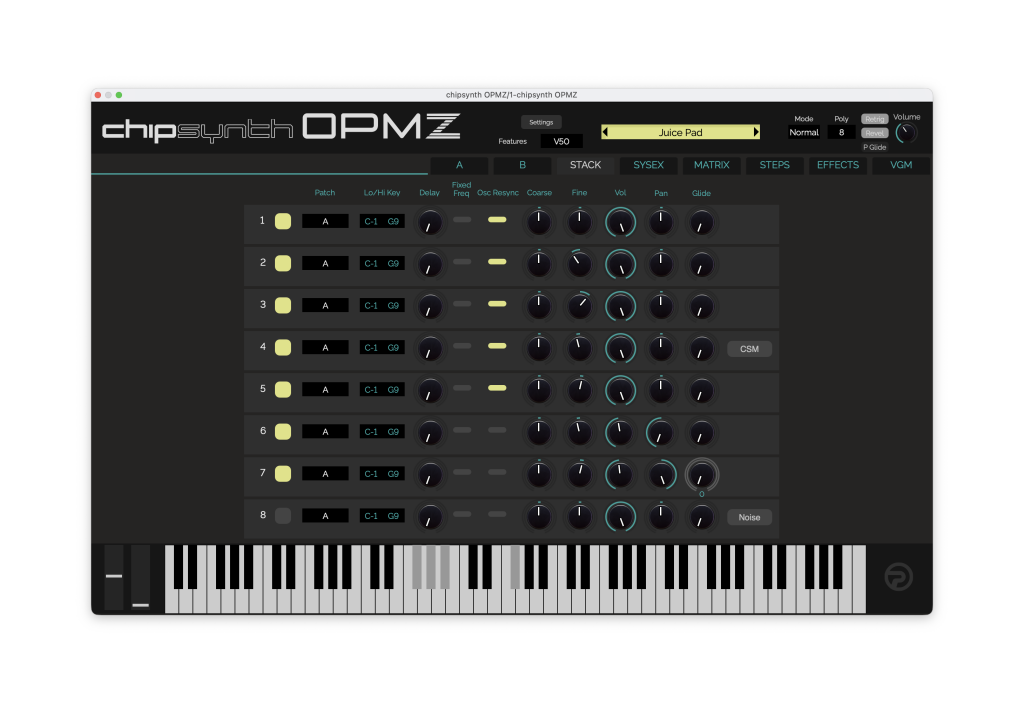
While its historical pedigree will attract retro enthusiasts, chipsynth OPMZ is designed to compete directly with contemporary software instruments in a professional production environment. The plug-in features a robust 9-voice OPM core architecture, incorporating Yamaha’s distinct multi-algorithm operator configurations and characteristic amplitude envelopes.
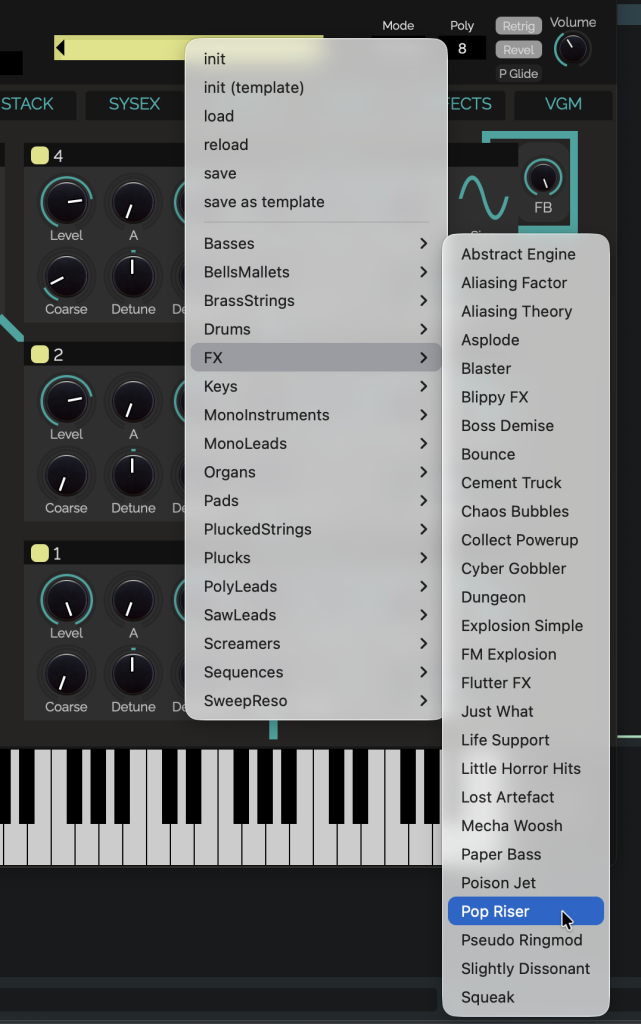
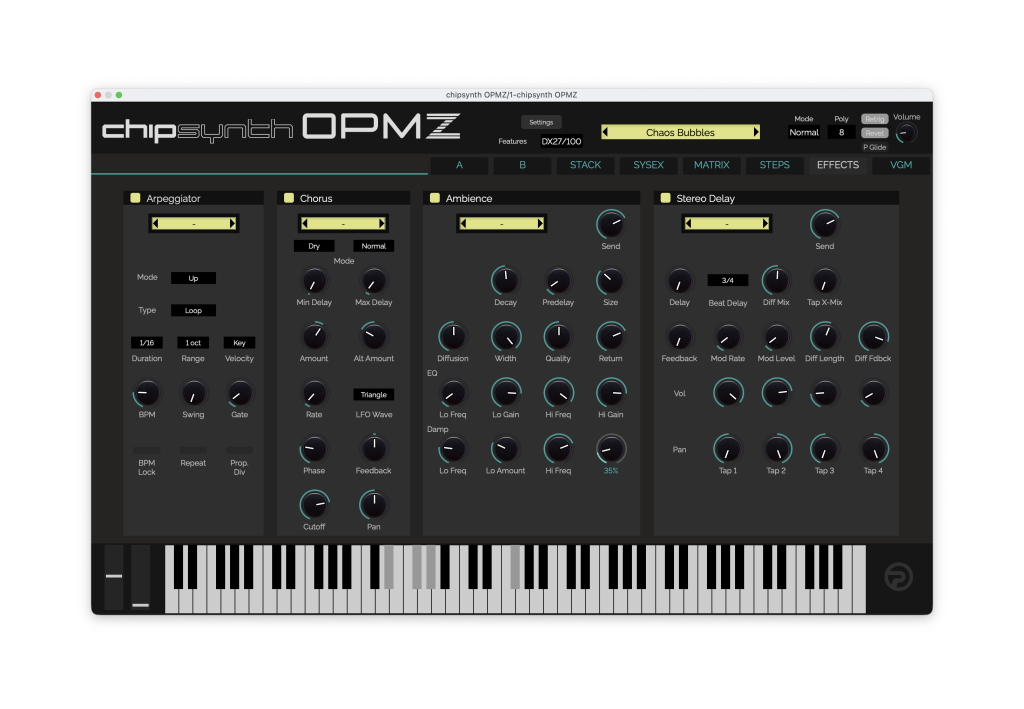
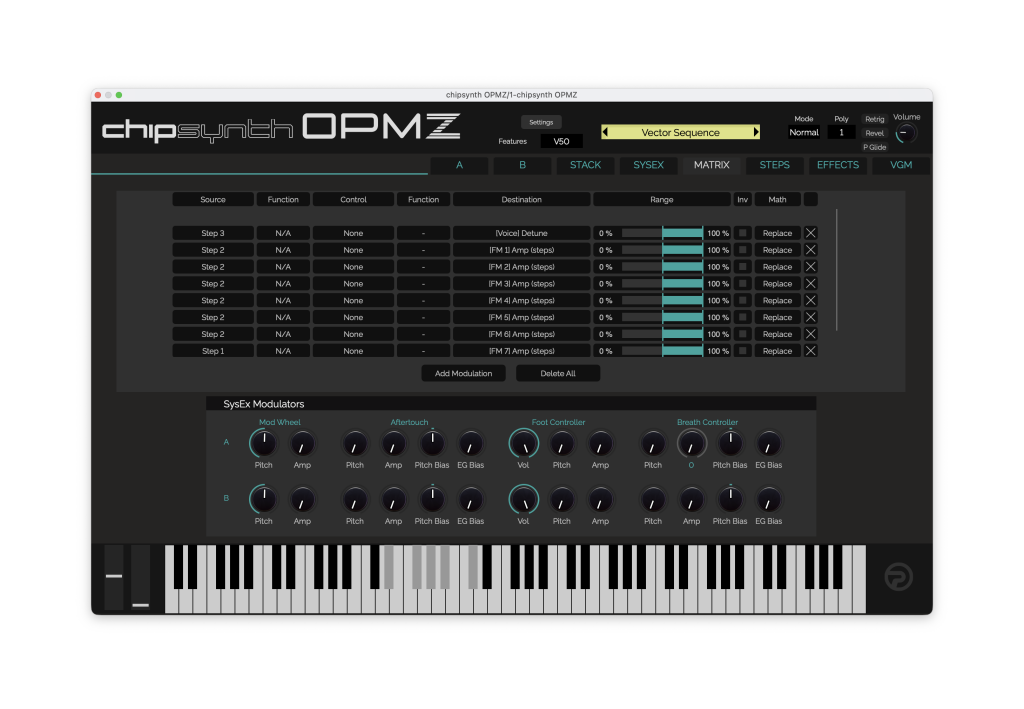
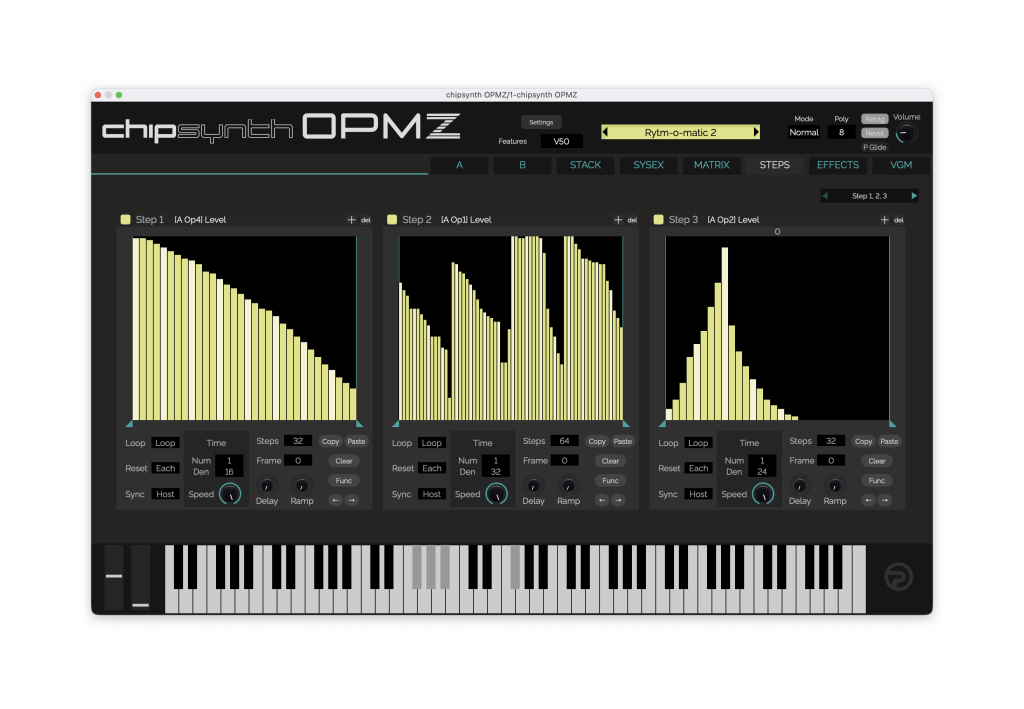
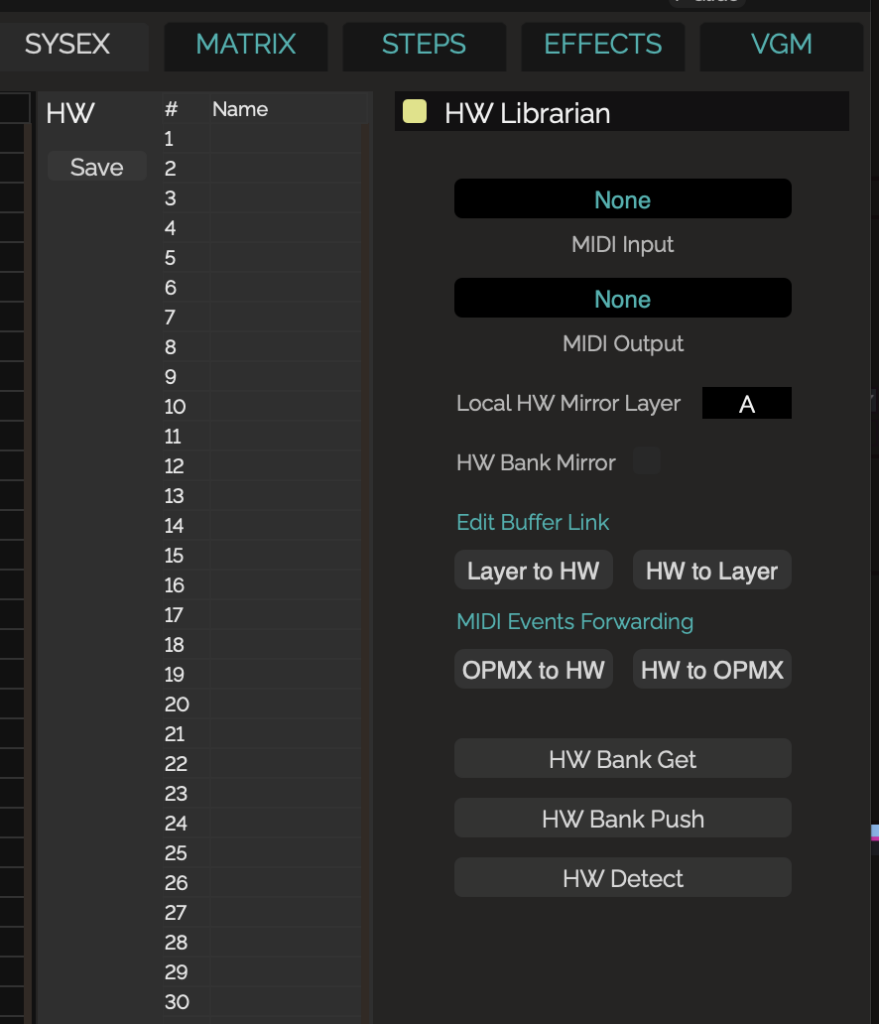
For sound designers, the software offers deep modulation capabilities that extend far beyond the limits of the original hardware. It includes a comprehensive modulation matrix, an integrated multi-effects section, a flexible step editor, and a built-in arpeggiator. Modern production workflows are fully supported through comprehensive MIDI mapping, MPE (MIDI Polyphonic Expression) integration, and microtuning capabilities via Scala and MTS-ESP standards. Furthermore, for producers who still maintain physical vintage gear, chipsynth OPMZ doubles as a hardware librarian with full SysEx support, allowing users to send and receive patches directly to and from original Yamaha synthesizers.
An Advanced Media Player for Video Game Archaeology
In addition to functioning as a standalone instrument and a VST3, CLAP, AU, and AAX plug-in within major Digital Audio Workstations (DAWs), chipsynth OPMZ continues Plogue’s tradition of serving as an immersive video game soundtrack player. Following in the footsteps of their previous releases dedicated to the Commodore 64, SNES, and Sega Genesis sound chips, the OPMZ player allows users to load standard VGM (Video Game Music) files directly into the software.
By dragging compressed soundtrack archives into the application and selecting the "Registers" option under the visualization menu, users can inspect real-time register data, wave parameters, and channel activity as classic arcade compositions play back with absolute bit-exact fidelity. This dual nature transforms the software from a pure studio tool into an interactive museum of digital audio history, enabling enthusiasts to experience classic compositions exactly as their creators intended them to sound on original arcade hardware.
The Technological Legacy of the Yamaha CX5M Computer
A fascinating chapter in the history encapsulated by OPMZ is the 1984 Yamaha CX5M computer. Built upon the Zilog Z80 microprocessor architecture and conforming to the MSX home computer standard, the CX5M featured a built-in eight-voice FM synthesizer module alongside native support for the then-nascent MIDI standard. It represented one of the earliest commercial attempts to merge personal computing with professional music production hardware, offering specialized software tools like the Yamaha Voice Editor and Music Composer. Though largely eclipsed by subsequent desktop computers and dedicated workstations, the CX5M remains a fascinating milestone in music technology history—one that is now fully accessible within modern computer systems via the OPMZ emulation layer.
Broader Implications for Digital Preservation and Audio Software
The release of chipsynth OPMZ arrives at a critical juncture in the technology sector. While major corporations increasingly turn toward automated artificial intelligence models and generalized machine-learning datasets—frequently bypassing the preservation of physical literature and hardware—developers like Plogue demonstrate the enduring value of hands-on reverse engineering and empirical physical archiving.
By physically rescuing, restoring, and analyzing vintage circuit boards, manuals, and custom silicon, Plogue has preserved a vital segment of audio engineering heritage. chipsynth OPMZ proves that digital emulation, when executed with rigorous scientific methodology and artistic dedication, is not merely a commercial product, but an act of historical preservation. It ensures that the unique sonic signatures of 1980s synthesis remain vibrant, playable, and evolving instruments for current and future generations of music producers.