Mia Khoirunisa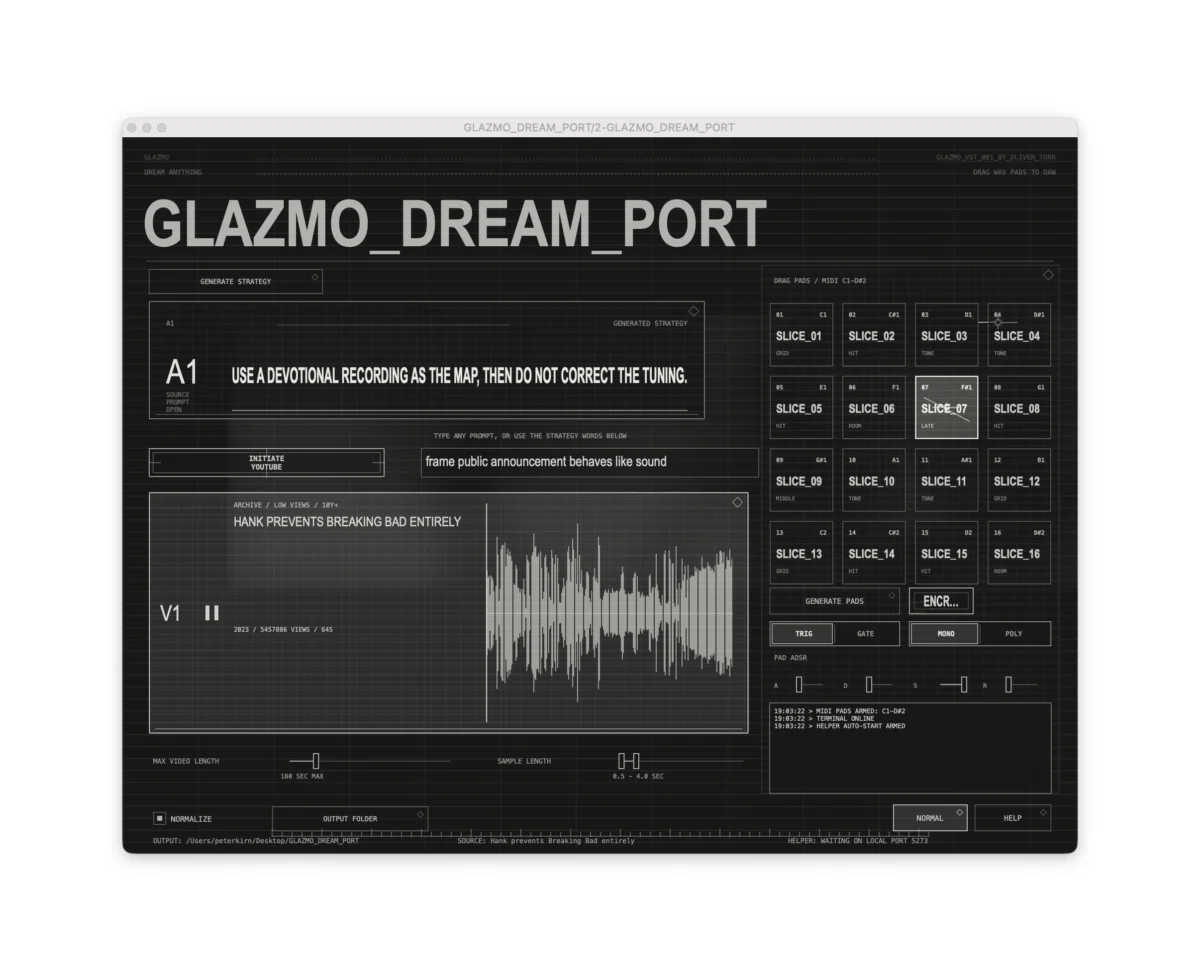
Electronic music production has long thrived at the intersection of technology, chaos, and human ingenuity, and few figures currently embody this ethos as profoundly as sound designer and Glazmo Network founder Oliver Torr. Operating from Athens following his foundational work with Bastl Instruments, Torr—alongside the experimental duo MIRA新伝統—has released two groundbreaking audio utilities: Agitator and GLAZMO_DREAM_PORT. These tools challenge conventional digital audio workstation (DAW) paradigms by introducing systemic uncertainty, dynamic tempo manipulation, and AI-driven sample extraction into modern music workflows.
Main Facts and Technological Overview
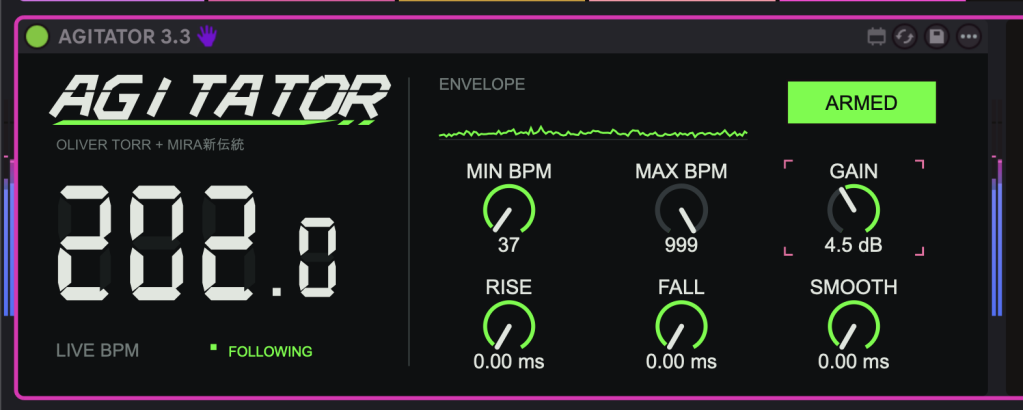
The newly introduced tools cater explicitly to producers specializing in glitch, ambient, and experimental electronic music. Agitator, developed in collaboration with Coriolis Lab and MIRA新伝統, is a Max for Live device designed for Ableton Live 12 and higher. Unlike standard envelope followers that modulate parameters such as filter cutoff or volume, Agitator directly targets and dynamically alters the overall project tempo based on incoming audio signals. Featuring adjustable slew controls for smoothing, rise, and fall, alongside user-defined minimum and maximum tempo boundaries, the device transforms static multitrack sessions into breathing, reactive soundscapes.
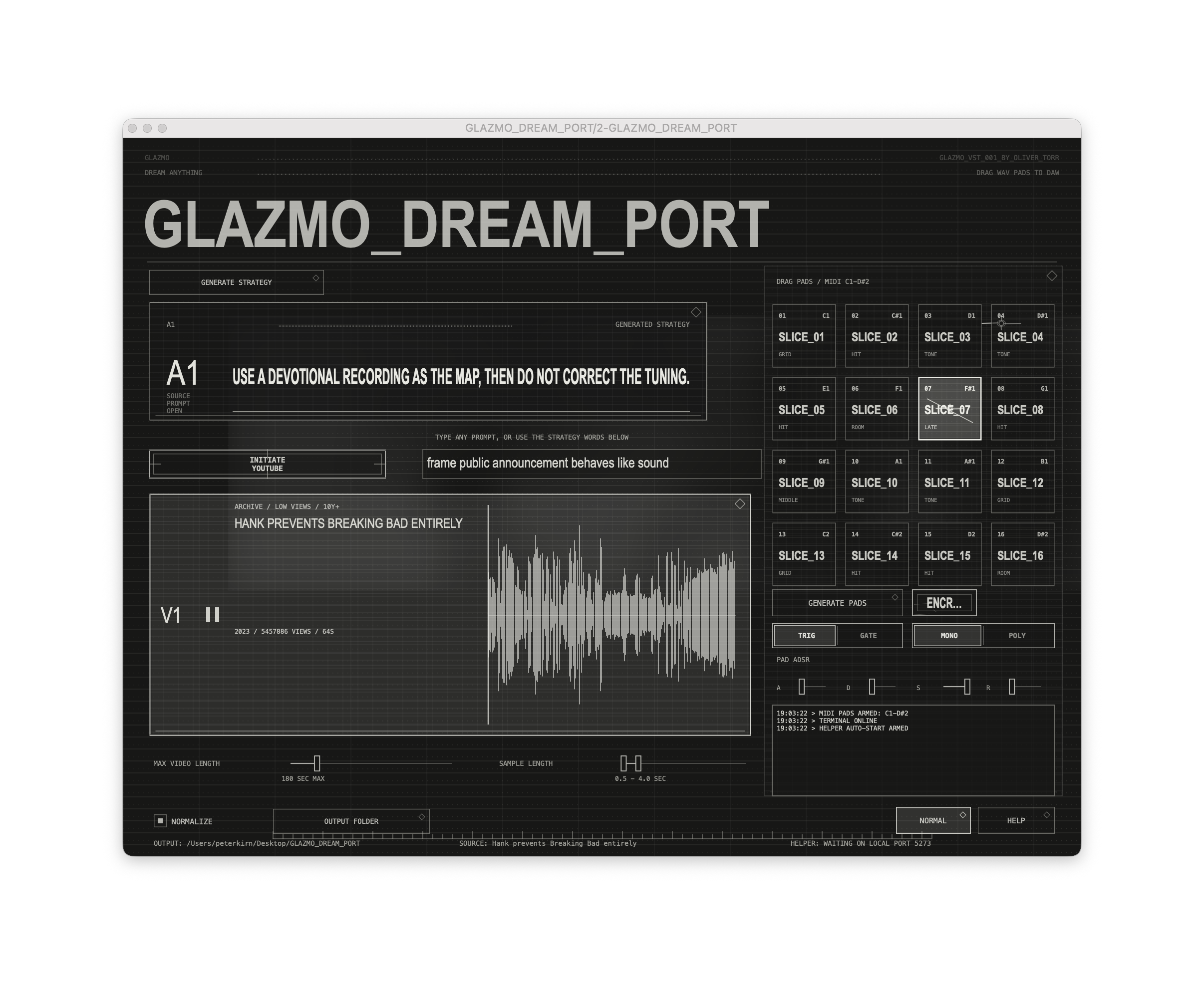
Simultaneously, the macOS-compatible VST3 plugin GLAZMO_DREAM_PORT offers a novel approach to sample generation. Eschewing standard predictive text models, the plugin generates abstract koans via an artificial intelligence prompt framework. These text snippets are automatically translated into YouTube search queries, retrieving publicly available audio that is subsequently sliced into atmospheric pads and rhythm kits. To mitigate legal and copyright concerns regarding sample usage, the plugin includes a built-in text generation utility to assist with clearance documentation. Furthermore, an "Encrypt" function allows producers to distort and transform the retrieved audio into more heavily degraded, dreamlike sonic iterations.
Chronology and Development of the Glazmo Ecosystem
The genesis of these tools traces back through Torr’s trajectory within the European experimental hardware and software communities. After gaining recognition through his association with Czech boutique instrument manufacturer Bastl Instruments, Torr transitioned into independent sound design, cementing his reputation for archaic and non-traditional processing methods. The establishment of the Glazmo Network Discord server served as an open-source collaborative hub where Torr shared experimental routing strategies and DSP philosophies with a global community of sound designers.
The collaborative pipeline solidified following the release of MIRA新伝統’s critically acclaimed Max for Live device, HyperSplash, which introduced algorithmic foley and glitch percussion generation. Building upon HyperSplash’s granular percussion engine, Torr and MIRA新伝統 expanded their scope toward macroeconomic project controls, culminating in Agitator. Concurrently, Glazmo Research developed GLAZMO_DREAM_PORT, merging internet-scale archival scavenging with localized digital signal processing. This culminated in public demonstrations showcasing simultaneous jamming with both plugins, illustrating a cohesive workflow where automated tempo instability meets generative YouTube sampling.
Background Context and Musical Implications
The release of Agitator and GLAZMO_DREAM_PORT arrives at a time when producers are increasingly seeking alternatives to the hyper-quantized, grid-locked nature of modern DAW environments. While technologies like Ableton Live’s native Envelope Follower provide automation pathways, they remain limited in their ability to manipulate core project timelines natively. By routing audio-reactive voltage directly to the global master tempo, Agitator revives the humanized drift characteristic of live ensemble performances within a programmed environment.
Conversely, GLAZMO_DREAM_PORT addresses the paradox of modern digital sampling. While traditional digital audio workstation sampling requires meticulous crate-digging or royalty-free library subscriptions, GLAZMO_DREAM_PORT leverages the vast, chaotic architecture of internet video hosting as a living archive. The tool transforms the internet into an unpredictable modular sound source, aligning with Torr’s broader academic and artistic exploration of "sonic mythologies."
These utility releases closely parallel the artists’ recent full-length musical outputs, notably MIRA新伝統’s Mythoplaxy and Oliver Torr’s Headstock Comforts. Both albums serve as functional testbeds for the software, characterized by intricate digital psychedelica, dense audio degradation, and deep-space atmospheric structures. Rather than keeping these compositional methods proprietary, the creators’ decision to distribute the tools commercially—with Agitator priced nominally at three euros—reflects an open-source ethos that encourages end-users to forge unique sonic identities rather than replicate existing ones.
Broader Industry Impact and Future Outlook
The introduction of tools like Agitator and GLAZMO_DREAM_PORT highlights a growing sub-sector within music software development: anti-deterministic utilities. As artificial intelligence and machine learning become deeply integrated into creative software, developers face mounting criticism for creating homogenized, predictable results. By intentionally weaponizing AI to retrieve chaotic YouTube artifacts and destabilizing the foundational clock of the DAW, Torr and MIRA新伝統 offer a counter-narrative.
Industry analysts note that such experimental Max for Live devices and boutique plugins cater to a dedicated niche of electronic musicians willing to embrace generative unpredictability. While commercial DAW manufacturers prioritize workflow streamlining and time-saving automation, independent creators continue to champion friction, error, and algorithmic serendipity as creative catalysts.
As the Glazmo Network continues its research into alternative digital processing, the broader electronic music community awaits further developments from Torr and his collaborators. Whether these tools will influence mainstream commercial plugin developers to incorporate global tempo modulation and chaotic web-sampling remains to be seen. However, their immediate adoption among experimental producers underscores a persistent demand for software that actively disrupts, rather than merely assists, the creative process.