 Johan Budi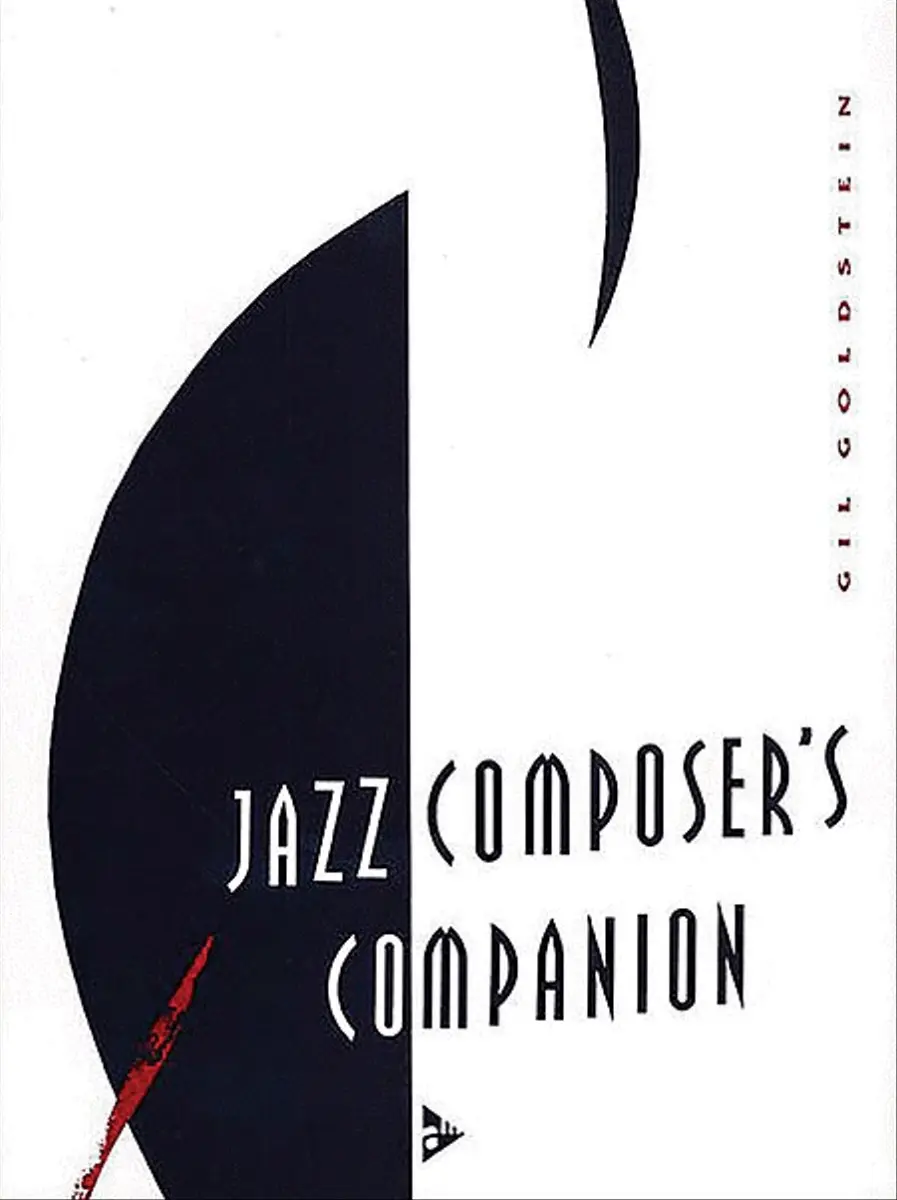
Gil Goldstein, a figure long recognized by contemporary jazz enthusiasts as a formidable keyboardist, accordionist, and arranger, has consolidated his decades of professional expertise into a comprehensive pedagogical volume titled the Jazz Composer’s Companion. Published by the pioneering German house Advance Music, the handbook serves as both a theoretical roadmap and a practical guide for musicians seeking to navigate the complexities of modern jazz composition. Goldstein’s reputation is deeply rooted in his stylistic kinship with the legendary Gil Evans, a connection that has informed his approach to orchestration and harmonic density. His recent work, including the album Zebracoast where he prominently features the accordion, demonstrates a versatility that he now applies to the written word, offering a bridge between traditional jazz foundations and the avant-garde or contemporary fusion movements.
The Structural Framework of Modern Composition
The Jazz Composer’s Companion is organized into three primary pillars: melody, harmony, and rhythm. While these categories are the standard components of any musical treatise, Goldstein’s treatment of them is distinctly modern, moving beyond the bebop-centric focus of earlier 20th-century instructional texts. The author meticulously breaks down complex concepts such as intervallic composition, which prioritizes the distance between notes rather than traditional scale-wise motion, and the application of twelve-tone techniques within a jazz context. This inclusion of dodecaphonic principles reflects a broader trend in jazz education where the boundaries between "classical" modernism and improvised music continue to blur.
In the harmonic section, Goldstein explores diatonic harmony but quickly pivots to more advanced territories, including modal structures, pedal points, and the pervasive use of slash chords. Slash chords—triads played over a bass note that is not the root—have become a hallmark of the modern jazz sound, particularly in the works of artists like Wayne Shorter and Herbie Hancock. By providing a clear exposition of these elements, Goldstein demystifies the "European" influence on American jazz harmony, making it accessible to students and professionals alike. The book’s layout, provided by Advance Music, utilizes a clean, professional aesthetic that facilitates ease of study, though academic reviewers have noted occasional typographical errors common to the publisher’s prolific output.
Historical Context and the Evolution of Jazz Pedagogy
To understand the significance of Goldstein’s work, one must look at the chronology of jazz education. In the early to mid-20th century, jazz was largely taught through apprenticeship and oral tradition. It was not until the 1970s and 1980s that formal jazz curricula began to dominate the landscape, with institutions like Berklee College of Music and the New School providing structured environments for learning. Goldstein’s book arrives at a pivotal moment when the "standard" repertoire was expanding to include the innovations of the 1960s post-bop and 1970s fusion eras.
The timeline of Goldstein’s own career provides the necessary context for his authority on these subjects. Having worked closely with the Gil Evans Orchestra, Goldstein inherited a legacy of "tone color" and atmospheric arrangement that defined the Third Stream movement. His ability to translate these abstract concepts into a handbook format represents a significant contribution to the preservation of these techniques. The Jazz Composer’s Companion does not merely teach how to write a lead sheet; it teaches how to conceptualize sound in a three-dimensional space, a skill essential for the modern big band or chamber jazz ensemble.
Analytical Insights: From Theory to Practice
One of the most distinctive features of the Jazz Composer’s Companion is its departure from purely abstract theory in favor of empirical evidence from the field. The final third of the book is dedicated to a series of deep-dive discussions and interviews with a "who’s who" of modern jazz innovators. Contributors include Carla Bley, Richie Beirach, Randy Brecker, Chick Corea, Bill Evans (the saxophonist), Michael Gibbs, Pat Metheny, George Russell, Horace Silver, Steve Swallow, and Herbie Hancock.
These interviews provide a rare glimpse into the "dirty hands" phase of composition—the moment when ink meets manuscript. For example, the inclusion of George Russell is particularly noteworthy. Russell, the author of the Lydian Chromatic Concept of Tonal Organization, was perhaps the first to provide a comprehensive theoretical basis for jazz that was independent of Western classical functional harmony. By including Russell’s perspective alongside the more melodic approach of Pat Metheny or the minimalist tendencies of Carla Bley, Goldstein provides a pluralistic view of what "composition" means in the 21st century.
Supporting Data and Technical Sub-headings
The book’s technical depth is evidenced by its focus on several key areas that have defined the sound of contemporary jazz over the last four decades:
Intervallic and Scalar Innovation
Goldstein emphasizes the use of non-traditional scales, moving beyond the major/minor paradigms into synthetic scales and symmetric modes. This data-driven approach to melody allows composers to create "angular" lines that are characteristic of modern players like Dave Liebman or Steve Coleman.
Rhythmic Complexity and Time Signatures
While early jazz was almost exclusively in 4/4 or 3/4 time, the Jazz Composer’s Companion addresses the shift toward odd meters (5/4, 7/8, 11/4) and polyrhythms. This reflects the influence of world music and progressive rock on the jazz idiom, providing composers with the tools to write across the bar line.
Tone Color and Orchestration
Building on the Gil Evans tradition, Goldstein treats "tone color" as a primary compositional element rather than an afterthought. This involves the specific blending of instruments—such as the accordion, flutes, and muted brass—to create a specific "vibe" or atmosphere. This section is particularly relevant for arrangers working in film scoring or large ensemble settings.
Industry Implications and Market Presence
The publication of this book by Advance Music, based in Rottenburg, Germany, highlights the international nature of the jazz industry. While jazz is an American art form, much of its academic and archival support now comes from European institutions and publishers. In the United Kingdom, the book is distributed via Jazzwise, a central hub for jazz media and education based in London. This distribution network ensures that Goldstein’s insights reach a global audience of students, educators, and professional musicians.
The broader impact of the Jazz Composer’s Companion lies in its ability to standardize "modern" techniques. Just as the "Real Book" standardized the repertoire of the 1940s and 50s, Goldstein’s work provides a common language for the innovations that followed. By documenting the methods of Steve Swallow (known for his unique approach to the electric bass and composition) and Michael Gibbs (an influential figure in British jazz and orchestral arrangement), the book ensures that these specific stylistic nuances are not lost to history.
Professional Perspectives and Final Analysis
While the book has been praised for its clarity, some academic critics have pointed out the inherent difficulty of teaching "creativity." However, the consensus among music educators is that Goldstein’s approach is not prescriptive; rather, it provides a "palette" from which a composer can choose. The inclusion of "literals" or minor errors in the text, as noted in the original review, is a minor detraction from what is otherwise a monumental effort in musicology.
The reaction from the jazz community has been largely positive, with many noting that the book fills a gap between basic theory and professional-level orchestration. In an era where digital software and MIDI have made the act of writing music easier, the Jazz Composer’s Companion serves as a reminder of the rigorous intellectual work required to create lasting art. It reinforces the idea that great jazz composition is a balance between mathematical precision (12-tone technique, interval sets) and emotional expression (tone color, melodic phrasing).
In conclusion, Gil Goldstein’s Jazz Composer’s Companion stands as a vital resource for the contemporary musician. It bridges the gap between the legendary innovators of the mid-20th century and the practitioners of today. Through its detailed breakdown of modern theory and its invaluable collection of primary-source interviews, the book provides a comprehensive map of the jazz landscape. As the genre continues to evolve, incorporating elements of electronic music, global folk traditions, and contemporary classical music, the foundational principles outlined by Goldstein will undoubtedly remain a cornerstone of jazz pedagogy for years to come.
Publication Details:
- Jazz Composer’s Companion
- Author: Gil Goldstein
- Publisher: Advance Music, D-7407 Rottenburg N., Germany
- Format: Paperback, 116 pages, illustrated
- UK Distribution: Jazzwise, 2b Gleneagle Mews, Ambleside Avenue, London SW16
- Contact: 0181 769 7725 (Historical reference)