Johan Budi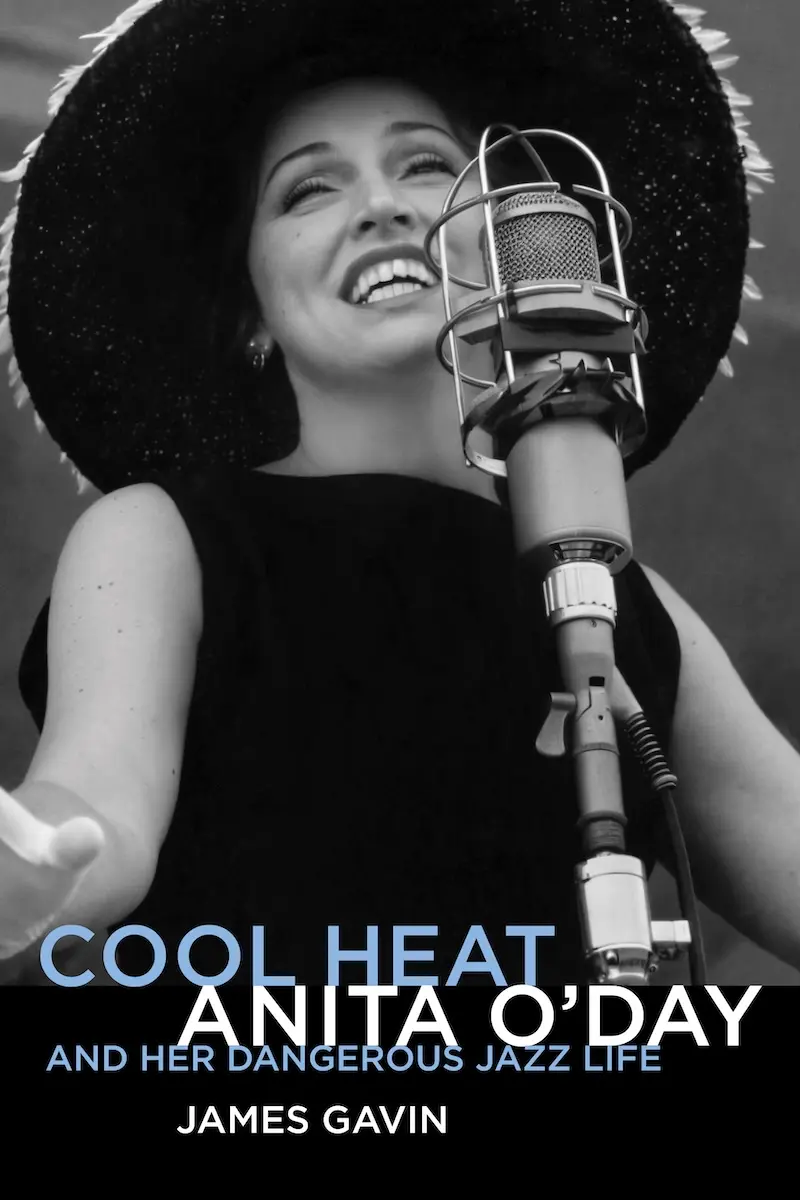
The Architecture of a Jazz Icon
Born Anita Belle Colton in Chicago in 1919, the woman who would become Anita O’Day was forged in the fires of the Great Depression. Gavin’s biography meticulously explores these formative years, illustrating how a lack of familial affection, the absence of her father, and the grinding poverty of the 1930s created the "hard-boiled" persona that O’Day would wear like armor for the rest of her life.
One of the most significant technical details Gavin highlights is the accidental medical mishap that defined her sound. During a childhood tonsillectomy, O’Day’s uvula was accidentally severed. This left her unable to produce a traditional vibrato, forcing her to develop a percussive, horn-like style of singing. This limitation became her greatest strength, allowing her to compete with the loud, aggressive brass sections of the big band era. It also aligned her perfectly with the burgeoning bebop movement, where she treated her voice as an improvisational instrument rather than a vehicle for sentimental lyrics.
O’Day’s rise to prominence began in earnest when she joined Gene Krupa’s band in 1941. Her collaboration with trumpeter Roy Eldridge on the hit "Let Me Off Uptown" broke racial and gender barriers, showcasing a playful, egalitarian chemistry that was rare for the time. This period earned her accolades from DownBeat and Esquire, cementing her status as the premier "canary" who refused to act like one. Unlike her contemporaries who wore glamorous gowns, O’Day often performed in a band jacket and skirt, signaling her desire to be viewed as "one of the boys"—a musician first and a female vocalist second.
A Chronology of Triumph and Turmoil
The trajectory of O’Day’s career, as mapped by Gavin, is a study in extreme peaks and valleys. Following her success with Krupa, she moved to Stan Kenton’s orchestra in 1944, where she recorded the hit "And Her Tears Flowed Like Wine." However, the grueling schedule of the big band circuit, combined with her "streetwise" attitude, led to an early reliance on alcohol and marijuana to cope with the pressures of the road.
The 1950s represented O’Day’s artistic zenith. Signing with Norman Granz’s Verve Records, she produced a series of albums—such as Anita Sings the Most and Anita O’Day Sings the Winners—that remain benchmarks of vocal jazz. This era culminated in her legendary appearance at the 1958 Newport Jazz Festival. Captured in the documentary Jazz on a Summer’s Day, O’Day appeared on stage in a large feathered hat and white gloves, delivering high-speed, flawlessly executed versions of "Tea for Two" and "Sweet Georgia Brown." Gavin notes that while she appeared the picture of elegance and control, she was, in reality, high on heroin at the time—a fact that underscores the "cool heat" of her performance style.
The 1960s and 70s saw a sharp decline as her addiction took center stage. Gavin details the legal troubles that followed her, including a jail sentence resulting from her association with pianist Al Haig and various drug-related arrests. Her relationship with drummer and manager John Poole is a central pillar of the narrative. Poole, who served as her confidant and supplier for decades, is depicted as a polarizing figure. While he was responsible for facilitating her addiction, he was also the primary force keeping her career afloat during her darkest periods.
The 1981 Autobiography and Its Aftermath
A significant portion of Gavin’s work is dedicated to the period following the publication of High Times, Hard Times in 1981. Co-authored by George Eells, the memoir was shockingly candid about O’Day’s heroin use and abortions, earning her the nickname "The Jezebel of Jazz." Gavin reveals that O’Day eventually came to regret the book’s focus on her "notoriety" over her musicianship.
Cool Heat fills the historical gap between the early 1980s and O’Day’s death in 2006. During these years, O’Day experienced a late-career renaissance, fueled by a growing "gay icon" status and a resurgence of interest in jazz in Europe and Japan. Gavin documents her 1985 Carnegie Hall concert, which celebrated her 50th anniversary in show business. While the concert was an artistic triumph, Gavin’s research reveals the behind-the-scenes reality: the event was a financial disaster for John Poole, illustrating the constant friction between O’Day’s talent and the chaotic management of her affairs.
Critical Analysis of Technical Mastery and Decline
Gavin does not merely recount anecdotes; he provides a nuanced analysis of O’Day’s vocal health and cognitive state in her later years. By the late 1980s, the years of substance abuse began to manifest as "cognitive decline." Gavin describes performances where O’Day would forget lyrics or lose her place in a song, yet her innate sense of rhythm and phrasing often allowed her to mask these lapses from all but the most discerning listeners.
Critics of the era, such as Ronald Atkins of The Guardian, noted that even when O’Day could no longer hit the high notes, her timing remained impeccable. Gavin’s biography argues that O’Day’s influence can be heard in the work of later vocalists like Amy Winehouse and Annie Ross, who adopted her unsentimental, rhythmically driven approach to the Great American Songbook.
Relationships and Industry Clashes
The book provides a "litany" of O’Day’s professional and personal clashes, offering insight into the difficult environment of mid-century jazz. She famously sparred with industry heavyweights including Benny Goodman, Oscar Peterson, Billy May, and Frank Sinatra. Her refusal to conform to the expectations of a "subservient" female vocalist often led to her being labeled as "difficult" or "mouthy."
Gavin’s research into her relationship with John Poole is particularly revealing. After a near-death overdose in the late 1960s, Poole briefly left her for Hawaii, only to return when she needed him most to kick-start her career. This "mutually beneficial" yet destructive partnership is presented as the defining relationship of her life, surpassing her failed marriage to Carl Hoff.
Broader Impact and Historical Significance
The publication of Cool Heat arrives at a time of renewed interest in the "Dangerous Life" of jazz musicians. Gavin’s work serves as a cautionary tale about the cost of genius and the lack of support systems for artists during the mid-20th century. By placing O’Day’s addiction in the context of her early trauma and the systemic pressures of a male-dominated industry, Gavin moves beyond the sensationalism of her 1981 autobiography to provide a more empathetic, yet objective, portrait.
O’Day’s legacy is defined by her survival. She outlived almost all of her contemporaries, continuing to perform into her 80s. Her final album, Indestructible!, recorded just before her death, serves as a fitting title for a woman who endured the Depression, the collapse of the big band era, and a fourteen-year heroin addiction.
Conclusion
James Gavin’s Cool Heat: Anita O’Day and Her Dangerous Jazz Life is an essential addition to the jazz canon. It provides a rigorous, fact-based account of a musician who refused to be categorized. Through extensive interviews and a deep understanding of the jazz landscape, Gavin captures the essence of a woman who was both a victim of her circumstances and a fierce architect of her own destiny. The book stands as a testament to O’Day’s enduring influence, proving that while her life was indeed dangerous, her contribution to the art of jazz remains safe and unassailable. For scholars and fans alike, this biography offers the most complete picture to date of the "Jezebel of Jazz," stripping away the hat and gloves to reveal the vulnerable, brilliant artist underneath.