Aveline Kirana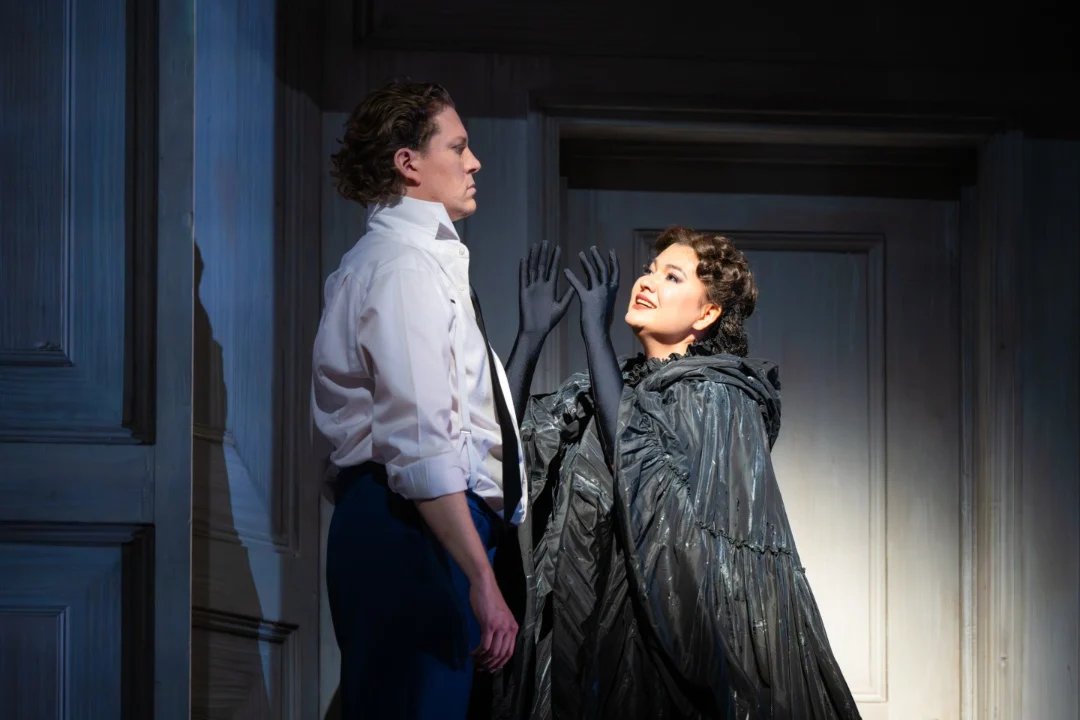
The Royal Opera House’s latest revival of Mozart’s Don Giovanni, directed by Greg Eldridge and based on the original 2014 vision of Kasper Holten, stands as a complex meditation on the nature of morality, hubris, and the psychological decay of an aristocratic libertine. Technically classified as an opera buffa, Mozart and his librettist Lorenzo Da Ponte famously designated the score a dramma giocoso—a "joking drama"—an apt categorization for a work that oscillates between slapstick comedy and existential terror. Set against the backdrop of the 19th-century Victorian era rather than the original 18th-century Spanish setting, this production utilizes a revolving set design by Es Devlin to mirror the chaotic, fractured psyche of its titular protagonist.
Historical Context and Narrative Framework
The narrative of Don Giovanni has served as a cornerstone of the Western operatic canon since its 1787 premiere in Prague. It chronicles the final days of a narcissistic nobleman whose relentless pursuit of romantic conquest culminates in his supernatural demise. The story begins in the aftermath of an illicit encounter between Giovanni and Donna Anna, leading to a duel in which Giovanni murders Anna’s father, the Commendatore. This act of violence serves as the moral anchor of the opera, establishing the trajectory of a man who refuses to repent even as his life unravels.
The plot is characterized by its rapid shifts in tone. Following the murder, Giovanni continues his predatory behavior, evading his former lover, Donna Elvira, while simultaneously attempting to seduce the peasant bride Zerlina on her wedding day. The resolution, which features the return of the Commendatore as a spectral figure to drag Giovanni to hell, serves as a traditional didactic warning against the consequences of unbridled hubris.
Production Design and Technical Innovation
The visual identity of this revival is anchored by Es Devlin’s rotating mansion facade. This structure, featuring intricate balconies, doors, and a central spiral staircase, serves as a physical representation of a "Pandora’s box," revealing the hidden, compartmentalized lives of the characters. The set’s fluidity allows for seamless transitions between the public and private spaces of the story.
The technical execution is further bolstered by the work of video designer Luke Halls. By projecting digital imagery directly onto the rotating architecture, the production creates a visual manifestation of Giovanni’s internal state. These graphics include the extensive, handwritten names of his past lovers—a digital interpretation of the "little black book" central to the character—as well as animated sequences of swirling corridors and, at the climax, visceral blood spattering. This integration of technology creates a sense of claustrophobia that underscores the inevitable collapse of the protagonist. Complementing this is the lighting design by Bruno Poet, which utilizes isolated spotlights to create sharp, dramatic shadows, emphasizing the tension between truth and deception. Anja Vang Kragh’s costumes serve a dual purpose: they are historically informed while utilizing specific textures and colors that allow performers to blend into the projected visuals, effectively turning the characters into part of the scenery.
Performance Analysis and Vocal Execution
The titular role is performed by Canadian bass-baritone Gordon Bintner, who brings a distinct authority and haughty temperament to the character. Bintner’s portrayal avoids the caricature of a mustache-twirling villain, opting instead for a performance grounded in arrogance and fearless entitlement. His vocal delivery in the "Champagne aria" (Fin ch’han dal vino) showcases a robust, malt-rich timbre, which contrasts effectively with the lyrical, melodic sensitivity he demonstrates during the canzonetta Deh, vieni alla finestra.
Roberto Tagliavini, portraying the servant Leporello, provides the necessary counterbalance to Bintner’s Giovanni. His performance is marked by a stentorian vocal quality and deep resonance, particularly in the opening scene, Notte e giorno faticar. Tagliavini’s comedic timing in the famous Madamina, il catalogo è questo serves as a highlight, grounding the opera’s more fantastical elements in human frustration.
Soprano Rachel Willis-Sørensen, as Donna Anna, brings technical precision and emotional weight to the role. Her performance of Or sai chi l’onore effectively communicates the character’s transition from grief to a thirst for vengeance. Her mastery of coloratura and control in the higher registers is particularly evident in the final act aria, Non mi dir, bell’idol mio. However, the production’s directorial choice to have Anna engage in intimate contact with Giovanni during Don Ottavio’s aria Dalla sua pace has sparked debate. By introducing this ambiguity, the production challenges traditional interpretations of victimhood and desire, though critics note that it risks undermining the character’s stated motivations for revenge.
Don Ottavio, often portrayed as a passive or "wimpish" character, is given a resolute, grounded interpretation by tenor Bogdan Volkov. His performance of Il mio tesoro was met with significant audience appreciation, as he navigated the role with a restrained, moral clarity that elevated the character beyond a mere supporting figure.
The Role of Donna Elvira and Musical Highlights
Aigul Akhmetshina’s performance as Donna Elvira serves as a study in emotional volatility. As she navigates the conflicting currents of rage and infatuation, Akhmetshina demonstrates a unique vocal beauty that has solidified her standing as a prominent mezzo-soprano. Her interpretation of Mi tradì quell’alma ingrata was perhaps the most compelling musical moment of the evening, showcasing her ability to handle complex emotional shifts within a single piece.
The supporting cast is equally strong, with Giulia Semenzato offering a nuanced performance as Zerlina. Her rendition of Batti, batti, o bel Masetto highlights the character’s manipulative but charming nature, while her second-act aria, Vedrai, carino, is delivered with tenderness. Dingle Yandell, as Masetto, provides a formidable physical presence and a command of his bass-baritone instrument, effectively capturing the frustration of a man caught in the machinations of the upper class. Andreas Bauer Kanabas, as the Commendatore, provides the necessary gravity for the supernatural conclusion, his vibrant bass voice lending an appropriate sense of finality to the moral arc of the opera.
Musical Direction and Orchestral Integrity
The Orchestra of the Royal Opera House, under the baton of Stefano Montanari, delivers a technically proficient performance. The choice of tempo throughout the evening was notably brisk, reflecting a modern approach to Mozartian speed. While the energy of the playing was undeniable, some observers noted instances where the synchronization between the pit and the stage felt slightly strained—a common challenge in productions that prioritize rapid, dramatic momentum over traditional, measured phrasing.
Implications and Broader Impact
The success of this revival underscores the enduring relevance of Don Giovanni. By updating the visual language and challenging the traditional dynamics between characters, the Royal Opera House has demonstrated how 18th-century compositions can be re-contextualized for contemporary audiences without losing their original power. The focus on the "psychological grey areas" of the characters suggests a shift in how modern opera houses approach classic repertoire, moving away from archetypes and toward a more layered, humanized narrative structure.
As opera continues to grapple with its own historical legacy, productions like this one provide a blueprint for how to bridge the gap between traditional operatic technique and modern, multidisciplinary theater. While the directorial deviations—specifically the reimagining of the relationship between Anna and Giovanni—may provoke discussion regarding artistic license, the high quality of the vocal performances and the technical sophistication of the staging ensure that this Don Giovanni remains a significant entry in the current performance season. The production effectively reinforces the notion that while the music of Mozart is timeless, the lens through which it is viewed is constantly evolving, reflecting the shifting social and psychological priorities of the audience it serves.




![Watch Carl Cox spotlight his favourite disco records ahead of Louie Vega b2b set at [UNVRS] Ibiza](https://empire-music.net/wp-content/uploads/2026/09/watch-carl-cox-spotlight-his-favourite-disco-records-ahead-of-louie-vega-b2b-set-at-unvrs-ibiza.webp)