Muhammad Ibadurrohman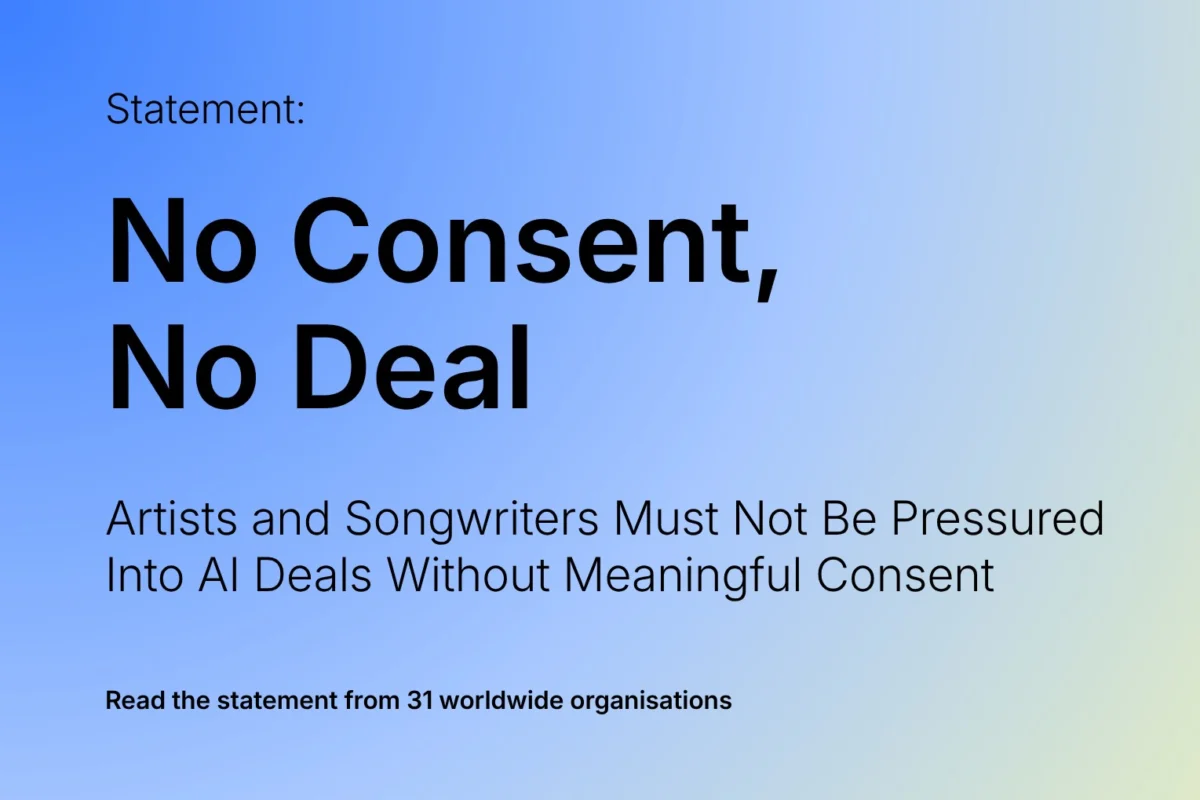
On Monday, June 22, a formidable worldwide coalition comprising hundreds of thousands of artists, songwriters, and managers’ groups united to release a pivotal letter addressed directly to record labels and publishers engaging in AI music licensing deals. The letter emphatically states: “Stop the misuse of [our] rights in AI deals.” A press release accompanying this critical communication underscored the coalition’s outrage, labeling the current practices as “hypocrisy and an injustice which needs to stop now.” The core of their grievance lies in a perceived double standard: while labels and publishers rightly assert the necessity of permission for AI companies to train on their vast music catalogues, they are allegedly failing to extend the same fundamental rights of consent and remuneration to the very artists and songwriters whose creative works form the basis of these catalogues. This collective action marks a significant escalation in the ongoing dialogue and increasingly contentious negotiations surrounding artificial intelligence’s integration into the music industry, signaling a unified stand from creators who feel their intellectual property and livelihoods are at risk.
The Genesis of the Conflict: A Surge in AI Licensing Deals
This powerful industry-wide protest does not emerge in a vacuum. It directly follows a rapid proliferation of high-profile licensing deals inked over the past year between major music publishers, record labels, and a growing array of AI music technology companies. These AI firms, including notable players like Suno, Udio, ElevenLabs, and Klay, are at the forefront of generative AI, specializing in areas such as text-to-music creation, voice synthesis, and algorithmic composition. The accelerating pace and expanding scope of these agreements have ignited alarm bells across the creative community, who fear being sidelined in a technological revolution that directly leverages their art.
Among the prominent deals that have drawn scrutiny are:
- Warner Music Group’s comprehensive agreements with AI platforms such as Suno, Klay, and Udio. These partnerships aim to explore new avenues for music creation and distribution using AI, often involving the licensing of Warner’s extensive sound recording catalog.
- Universal Music Group’s (UMG) equally robust engagements, including deals with Udio, Klay, and a notable licensing arrangement with Spotify specifically for AI covers and remixes. UMG, one of the largest music corporations globally, has been proactive in establishing frameworks for AI use, though not without controversy.
- Sony Music’s strategic partnership with Klay, another move to integrate AI capabilities into its creative and commercial strategies.
- Merlin and Kobalt’s collaborative deals with Udio and ElevenLabs. Merlin, representing a vast network of independent labels and distributors, and Kobalt, a leading music publishing company, have also sought to navigate the AI landscape, highlighting the industry-wide reach of these new technological frontiers.
These agreements, while hailed by some as progressive steps towards embracing innovation, have concurrently sparked deep concerns among artists and songwriters. The central issue revolves around the terms of these licenses, particularly regarding the training data for AI models. While these deals often stipulate conditions for how AI outputs might use an artist’s name, image, or likeness, the more opaque area of AI training – where vast amounts of existing music are ingested by algorithms to learn patterns and styles – remains a significant point of contention. Artists argue that their contributions to these catalogues, the very foundation upon which AI models learn, should not be exploited without their explicit consent and equitable compensation.
Legal Loopholes and Contractual Coercion: The Opt-In Dilemma
A critical aspect highlighted by the coalition’s letter, and previously corroborated by investigative reporting from Billboard in April, pertains to the potential for existing contractual language to be leveraged by labels and publishers. According to Billboard‘s findings, multiple top talent attorneys have become aware that common clauses within U.S. record deals – specifically those related to blanket licensing and the broad exploitation of works – could be interpreted to allow labels to opt in artists’ works for AI model training without seeking individual artist approval.
Jason Boyarski, a founding partner at Boyarski Fritz, commented on this evolving legal landscape at the time, stating, “Some of the labels have already taken the position that they technically don’t need special approvals to train.” This assertion underscores a significant legal gray area, where legacy contract language, drafted long before the advent of generative AI, is being reinterpreted to fit new technological realities. The implication is that artists, through their existing agreements, may unknowingly be granting rights for their entire creative output to be used in training AI systems, often without any direct say or additional compensation.

Further complicating the issue is the distinction between how AI inputs (training data) and outputs (generated content) are treated. Audrey Benoualid, a partner at Myman Greenspan Fox Rosenberg Mobasser Younger & Light, observed this growing differentiation to Billboard. While many AI deal announcements might offer artists an option regarding the use of their name, image, or likeness in AI-generated outputs, the process of AI training – the ingestion and analysis of their music – is frequently omitted from these discussions. This creates a scenario where artists might have some control over how their persona is represented by AI, but virtually none over how their art is consumed and processed by these powerful algorithms during their learning phase.
The coalition’s letter explicitly addresses this imbalance, noting, “We are increasingly concerned that artists and songwriters in existing recording and publishing agreements are receiving letters from major labels and publishers informing them that they will be opted in to AI-related uses by default, with little actual choice offered.” This "default opt-in" mechanism is seen as a coercive tactic, effectively placing the onus on artists to actively opt-out of a system they may not fully understand or agree with, under potential threat of professional repercussions.
Moreover, for artists signing new agreements, the situation is even more stark. The letter reveals that "artists and songwriters signing new agreements are being presented with AI rights clauses as a standard condition of signing." This means that consenting to AI usage, often in broad and far-reaching terms, is becoming a non-negotiable prerequisite for entering into new deals. Billboard previously reported on examples of such new contractual language. For instance, clauses from companies like BMG, Sony, and Believe have been identified. One particularly telling provision from Sony-owned dance label B1 Recordings granted "unlimited, exclusive rights" to "use the recording in models and systems of generative artificial intelligence and applications based thereon, including generative AI, including [but] not limited to the analysis of the Recording for the purpose of extracting information on patterns, trends and correlations (AI training)." Such clauses leave little room for artist autonomy, effectively transferring expansive rights for AI training and usage to the labels as a standard business practice.
A Unified Voice: The Coalition’s Core Principles and Demands
The unprecedented letter, signed by a vast array of influential organizations, represents a united front demanding fundamental shifts in how the music industry approaches AI. Key signatories include the Music Artists Coalition, Songwriters of North America (SONA), The Ivors Academy, Black Music Action Coalition (BMAC), Artists Rights Alliance (ARA), European Music Managers Alliance (EMMA), and many other national and international artist and manager associations. Their collective message is clear: the current framework fosters a "serious imbalance" where artists and songwriters "are being asked to give permission without sufficient information, clear terms or guaranteed remuneration."
To rectify this, the coalition outlines three non-negotiable core principles that they insist must be respected by all stakeholders: record companies, publishers, policymakers, AI companies, and digital platforms. These principles are:
-
Consent & Control: This principle asserts that artists and songwriters must provide active and specific consent before their works, voice, performance, likeness, or creative identity is used in connection with AI. This consent must be transparent, clearly detailing what is being approved and how it will be used. Crucially, the coalition demands that such consent cannot be "buried in broad catch-all contract language or include rights in perpetuity." It must not be imposed through default opt-ins, nor should it be a mandatory condition for signing a new deal. Artists and songwriters, the letter emphasizes, "must be able to say no without fear of penalization." This directly challenges the current trend of presumptive consent and forced clauses, advocating for genuine artist autonomy.
-
Fair Compensation: Where artists and songwriters choose to participate in AI-related uses, they must receive "fair and meaningful remuneration." The coalition argues that the value created by their works through AI training and usage cannot be considered a "general label asset." Instead, artists and songwriters must explicitly "share in the value created by their works." This principle calls for clear consultation with creators and transparent disclosure of "which percentage of revenue goes to the creator, to the label and to the AI company," ensuring that the economic benefits of AI integration are equitably distributed and not disproportionately captured by intermediaries.
-
Clarity & Transparency: This principle demands that all requests for AI-related uses be "purpose-specific." Artists, songwriters, and their managers must be provided with "clear, timely and understandable information" about any AI-related deal or proposal affecting their rights. This comprehensive information should encompass the specific rights being licensed, the permitted uses, any safeguards in place to protect their identity or work, the duration of the permission, and a clear mechanism for how consent can be withdrawn. The goal is to empower creators to make genuinely informed decisions, moving away from opaque agreements and broad, undefined grants of rights.

Building upon these core principles, the coalition issues a direct call to action, demanding that all companies engaging in AI music deals make a "clear and public commitment" to specific guidelines:
- No default opt-ins.
- No forced AI clauses.
- No use of artists’ work, voice, performance, likeness or creative identity without meaningful consent, fair remuneration and full transparency.
The letter concludes with a powerful statement encapsulating their vision for the future: "The future of music must be built with artists, songwriters and their representatives, not imposed on them." This declaration positions artists not merely as content providers but as indispensable partners in shaping the technological evolution of their industry.
Broader Implications and the Future of Music
The collective stand taken by this global coalition carries significant weight, signaling a pivotal moment for the music industry. The rapid advancements in generative AI present both unprecedented opportunities for creative innovation and existential threats to the traditional models of artistic creation and compensation. If unchecked, the current trajectory of AI licensing could fundamentally alter the relationship between creators and the companies that manage their rights, potentially leading to a devaluation of human artistry and a consolidation of power in the hands of major corporations and AI tech giants.
The issue extends beyond immediate financial compensation; it touches upon moral rights, creative control, and the very definition of authorship in the digital age. Artists are concerned about AI models mimicking their unique styles, voices, and creative identities without attribution or compensation, potentially saturating the market with AI-generated content that dilutes the value of original human works. The ability to control how one’s artistic legacy is utilized, and to prevent its unauthorized replication by machines, is increasingly becoming a central battleground.
This controversy is also unfolding against a backdrop of ongoing legislative and regulatory discussions worldwide. Policymakers in numerous countries are grappling with how existing copyright laws apply to AI training and output, and whether new legal frameworks are needed. The coalition’s letter serves as a potent reminder to these policymakers that the protection of artists’ and songwriters’ rights, voices, and remuneration is "not negotiable" in the review of copyright rules. The structures and precedents established now, during this nascent phase of AI integration, will undoubtedly shape the music ecosystem for decades to come.
The unified message from this global coalition underscores a critical demand for equity and respect. It highlights the urgent need for a collaborative approach where technological innovation proceeds hand-in-hand with robust protections for creators. As the music industry navigates this transformative era, the call for meaningful consent, fair compensation, and absolute transparency from the very artists and songwriters who define its essence cannot be ignored. The outcome of this struggle will not only determine the economic future of countless creators but also the ethical and artistic direction of music itself in an increasingly AI-driven world.