Nayara Elvina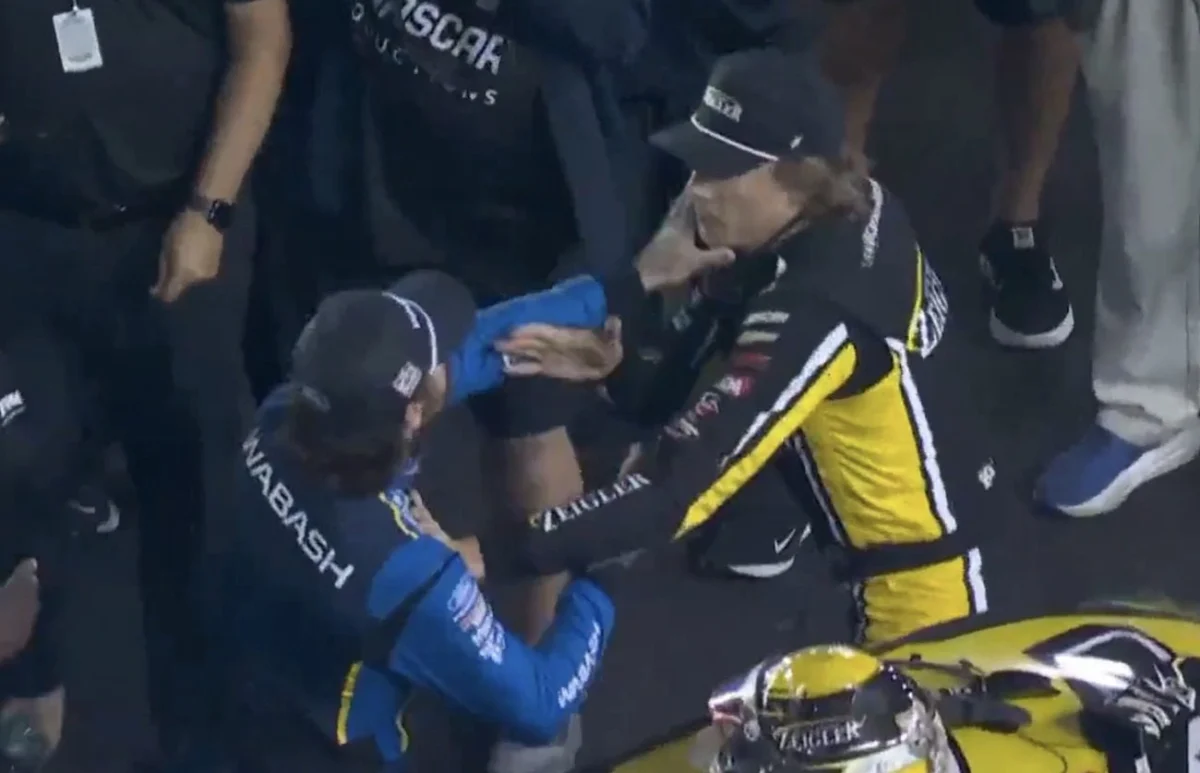
The National Association for Stock Car Auto Racing has officially confirmed that no disciplinary action or post-race penalties will be levied against Cup Series drivers Ryan Blaney and Carson Hocevar following their physical altercation on pit road. The confrontation occurred immediately after the conclusion of the Bass Pro Shops Night Race at Bristol Motor Speedway, following a late-race collision that prematurely ended Blaney’s dominant run.
The decision by sanctioning body leadership highlights a growing philosophical shift within NASCAR toward permitting drivers to settle disputes organically. While officials continue to discourage fighting, the promotion of authentic emotion and accountability among competitors has taken precedence, marking a departure from stricter officiating eras of the past.
The Incident at Bristol Motor Speedway
The catalyst for the post-race altercation took place during the closing laps of a characteristically chaotic short-track race at the historic 0.533-mile concrete oval in Bristol, Tennessee. Ryan Blaney, piloting the No. 12 Team Penske Ford, had established himself as the class of the field for much of the evening. Blaney led a race-high 202 laps, maintaining position at the front of the pack and running inside the top three throughout the duration of the event.
However, the complexion of the race shifted dramatically on Lap 457. Having just executed a pass on Carson Hocevar, the driver of the No. 77 Spire Motorsports Chevrolet, for the second position, Blaney attempted to defend his line. As Hocevar dove to the inside groove entering the corner in an effort to reclaim the position, Blaney initiated a block to disrupt his momentum.
True to his aggressive driving reputation, Hocevar refused to lift off the throttle. The No. 77 machine made contact with the rear bumper of Blaney’s car, turning the No. 12 sideways and sending it hard into the outside retaining wall. The heavy impact inflicted terminal damage on Blaney’s vehicle, extinguishing what had been a flawless performance and relegating him to a DNF (Did Not Finish) classification in the closing stages of the race.
Escalation and Pit Road Confrontation
The tension generated by the Lap 457 crash spilled over almost immediately after the checkered flag waved. During his post-wreck television interview, Blaney expressed obvious frustration, hinting that a face-to-face conversation with the 23-year-old rookie was imminent.
Less than 50 laps later, once the race concluded and drivers brought their vehicles to pit road, Blaney wasted no time addressing the incident. The veteran driver exited his car, strode directly to Hocevar’s stall, and approached the No. 77 machine. As Blaney reached into the cockpit to confront his rival, Hocevar responded by throwing punches from inside the car. A physical struggle ensued as crew members and officials rushed to separate the combatants, creating a viral scene that quickly dominated sports media cycles.
Public and Industry Reaction
Reactions to the pit road altercation were sharply divided across the racing community and social media platforms. A segment of fans and analysts placed the primary blame on Blaney, arguing that the defensive block thrown on Lap 457 was overly aggressive and left Hocevar with nowhere to go.
Conversely, a significant portion of the fanbase—along with many garage insiders—viewed the confrontation as a long-overdue check on Hocevar’s driving style. Hocevar has drawn considerable scrutiny throughout the season for a series of aggressive on-track maneuvers that have alienated several competitors. For many observers, Blaney’s willingness to confront the younger driver was seen as a necessary application of garage-area accountability. Despite the polarization of opinions regarding the on-track contact, a broad consensus emerged among fans and pundits alike: neither driver should face regulatory sanctions for settling a personal dispute face-to-face.
Official NASCAR Stance and Leadership Commentary
NASCAR’s leadership addressed the incident directly days later. Speaking on Kevin Harvick’s Happy Hour podcast, NASCAR Chief Operating Officer Steve O’Donnell provided definitive clarity regarding the sanctioning body’s stance on the altercation.
O’Donnell emphasized that while fighting is not actively promoted by the organization, officials make a clear distinction between unsportsmanlike conduct using a vehicle as a weapon and competitors resolving personal grievances outside of the car.
"Don’t use your car as a weapon, so to speak," O’Donnell stated during the podcast. "We’ve been on record, drivers need to handle their business outside of the car. If drivers are going to handle their own business, the way we looked at that, how it played out, we’re not going to encourage fighting, but what we are going to encourage is passion, right? And those are two guys—Blaney’s showing his passion, showing his fire. So no, there’s nothing coming from us in terms of—we’ll obviously watch what happens the rest of the way, but nothing in terms of post-race penalties."
While Blaney and Hocevar escaped personal fines or points deductions, NASCAR officials confirmed that the review of the video footage remains ongoing. The focus of this continued evaluation is strictly centered on ensuring that no pit crew members or auxiliary personnel crossed the line to join the physical altercation. O’Donnell reiterated that while drivers are permitted a degree of leeway to police themselves, the involvement of mechanics and crew members remains strictly prohibited to prevent escalating brawls.
Broader Implications and Historical Context
The decision to withhold penalties from Blaney and Hocevar reflects a calculated evolution in NASCAR’s enforcement policies. In previous years, particularly under stringent corporate governance models, post-race altercations involving thrown punches typically resulted in mandatory fines, probations, or even point penalties for the combatants.
However, modern NASCAR leadership has actively sought to align the sport closer to its traditional, grassroots identity. By encouraging authentic displays of emotion and allowing drivers to police aggressive driving standards organically, the sanctioning body hopes to resonate more deeply with its core fan base.
This policy pivot acknowledges the high-stress, high-stakes nature of modern stock car racing, where split-second decisions at speeds exceeding 100 miles per hour frequently result in wrecked equipment and dashed championship aspirations. By permitting drivers to address grievances face-to-face without immediate bureaucratic intervention, NASCAR allows the human element of competition to take center stage.
As the Cup Series season progresses toward its climax, the relationship between Blaney and Hocevar will undoubtedly remain under intense scrutiny from both competitors and fans. With no official penalty hindering either driver, any future on-track interactions between the two will be watched closely, ensuring that the rivalry sparked at Bristol continues to influence the competitive landscape of the championship battle.