Mia Khoirunisa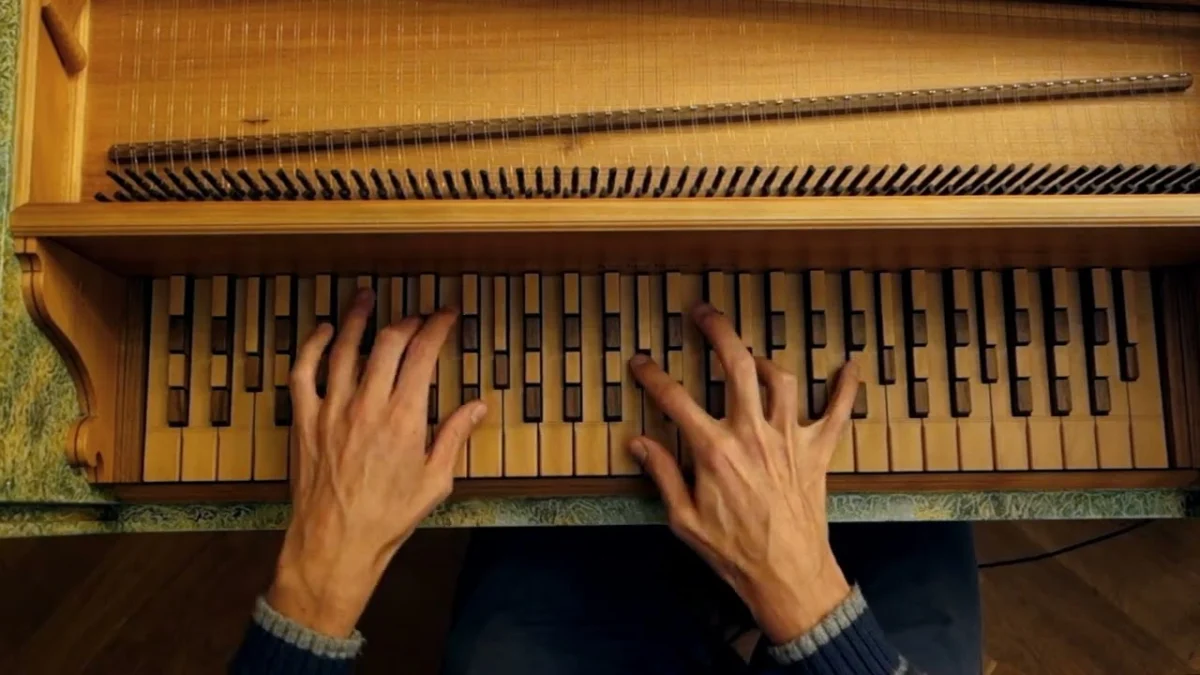
The intricate world of musical tuning, often perceived as a dry academic pursuit, has a rich and often surprising history. At its forefront stands Nicola Vicentino, a Renaissance theorist and composer whose radical explorations into microtonality, particularly his development of the 31-equal temperament (31-EDO), continue to resonate centuries later. Vicentino’s audacious project, exemplified by his custom-built Archicembalo, was not merely an intellectual exercise but a bold attempt to expand the expressive palette of music, a pursuit that finds modern echoes in contemporary digital music production and avant-garde compositions. This exploration into Vicentino’s work offers a crucial lens through which to understand the enduring appeal and evolving landscape of microtonality.
The Renaissance Quest for Expanded Sound
The 16th century was a period of intense intellectual curiosity, and music was no exception. Composers and theorists were deeply engaged with the rediscovery of ancient Greek musical modes and genera. This fascination with antiquity, however, often intersected with contemporary musical practices, leading to innovative, and sometimes controversial, theoretical frameworks. Nicola Vicentino, born in Vicenza around 1511, was a prominent figure in this intellectual milieu. His magnum opus, L’antica musica ridotta alla moderna prattica (Ancient Music Reduced to Modern Practice), published in 1555, laid out his theoretical principles and advocated for a return to the expressive richness of ancient Greek music.
Vicentino argued that the prevailing tuning systems of his time, largely based on Pythagorean tuning or meantone temperament, were insufficient to capture the full spectrum of human emotion and musical expression. He believed that these systems, with their reliance on perfect intervals and limited harmonic possibilities, failed to reflect the ancient Greek concepts of ethos – the idea that music could directly influence the character and emotions of the listener. To achieve this broader expressive range, Vicentino proposed the division of the octave into 31 equal steps. This was a radical departure from the 12-note diatonic and chromatic scales that formed the bedrock of Western music.
The Archicembalo: A Monument to Microtonal Ambition
To bring his theoretical concepts into audible reality, Vicentino commissioned the construction of a groundbreaking instrument: the Archicembalo. This keyboard instrument was designed to accommodate his 31-equal temperament. Unlike modern harpsichords or organs, the Archicembalo featured a complex keyboard with numerous additional keys, allowing for the execution of intervals smaller than a semitone. The exact specifications of the Archicembalo have been the subject of scholarly debate, but reconstructions suggest a highly intricate design, capable of producing a vast array of microtonal pitches.
The theoretical underpinning of 31-EDO is its mathematical elegance. By dividing the octave into 31 equal logarithmic steps, Vicentino aimed to create a system where many intervals, including approximations of pure thirds and fifths, could be sounded simultaneously with greater harmonic coherence than in some other microtonal systems. This was a significant departure from the strict adherence to pure intervals found in some earlier tuning experiments, and it allowed for a richer polyphonic texture.
However, it is crucial to contextualize Vicentino’s work within his era. While he drew inspiration from ancient Greek theory, his approach was also a pragmatic response to the musical developments of the Renaissance. The burgeoning complexity of polyphony and the desire for greater expressive nuance in vocal and instrumental music created a fertile ground for such experimentation. His theories, while rooted in historical scholarship, were also an attempt to provide a theoretical framework for the evolving musical landscape.
The Legacy and Resonance of Vicentino’s Work
Vicentino’s compositions, though not widely performed in his time, demonstrate the practical application of his microtonal theories. Pieces like "Madonna, il poco dolce" and "Musica prisca caput" showcase his ability to weave intricate polyphonic lines using the expanded intervallic possibilities of 31-EDO. These works, when performed by ensembles skilled in intonation, such as the vocal group Exaudi, reveal a haunting and often dizzying sonic landscape that challenges conventional Western listening habits. The subtle shifts in pitch and the complex harmonic relationships create a unique emotional resonance, underscoring Vicentino’s belief in the expressive power of microtonality.
The performance of Vicentino’s music by groups like Exaudi, under the direction of conductors like Patrick Allen, highlights the essential role of skilled musicians in realizing microtonal compositions. The inherent challenge of precisely controlling intonation in microtonal music means that vocalists and instrumentalists must possess a keen ear and exceptional control. The recordings of these performances offer listeners a direct encounter with Vicentino’s sonic vision, demonstrating that his experiments were far from mere theoretical abstractions.
Microtonality’s Contemporary Resurgence
The resurgence of interest in microtonality in the 21st century can be attributed to several factors. One significant driver is a perceived need to escape the perceived "sameness" of commodified musical culture, which often relies on standardized tuning systems. The ubiquity of 12-tone equal temperament, while practical for modern instrumentation and digital production, can sometimes lead to a homogenization of sound. Microtonality offers a pathway to explore novel timbres, harmonic colors, and melodic contours, thereby expanding the composer’s and performer’s expressive toolkit.
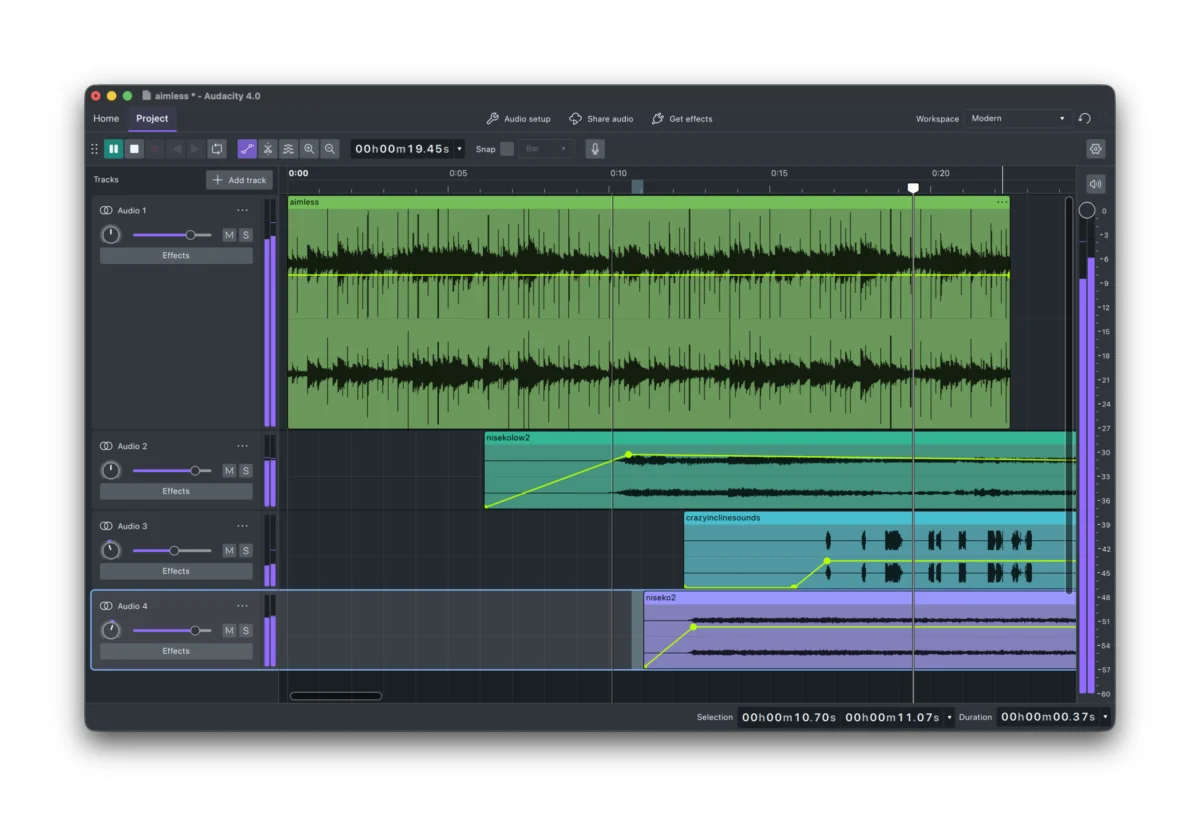
Technological advancements have also played a pivotal role. Digital audio workstations (DAWs) and specialized software now make it significantly easier for musicians to experiment with and implement microtonal tunings. This accessibility contrasts sharply with the formidable technical challenges faced by Vicentino, who had to rely on custom-built instruments and the meticulous craftsmanship of instrument makers.
Bridging Centuries: The Microtonal Guitar
A compelling contemporary parallel to Vicentino’s work can be found in the innovations of musicians like Tolgahan Çoğulu. Çoğulu, a Turkish guitarist and instrument maker, has developed a revolutionary microtonal guitar. This instrument, meticulously designed and acoustically engineered, allows for precise intonation across a wide spectrum of microtonal scales, including those relevant to Arabic and Persian music, as well as historical Western temperaments.
Çoğulu’s work is not merely a technical feat; it represents a deep engagement with musical practice and cultural heritage. His microtonal guitar allows musicians to explore tunings that were historically prevalent in various musical traditions, tunings that were often flattened or standardized by the imposition of Western 12-tone systems. By providing an instrument that can accurately render these diverse tunings, Çoğulu facilitates a richer and more authentic engagement with these musical idioms. His efforts embody a form of cultural exchange, moving beyond mere appropriation to a genuine understanding and recreation of musical traditions.
The exploration of Balinese gamelan music on the microtonal guitar serves as a powerful illustration of this principle. This is not simply about replicating sounds but about engaging with the underlying principles and cultural context of the music, fostering a deeper appreciation and a more meaningful artistic dialogue.
The Interplay of Theory and Practice
Vicentino’s endeavor, while pioneering, also raises important questions about the relationship between theoretical abstraction and musical practice. The article implicitly acknowledges that Vicentino, like many modern musicians, was "messing around with some theory, abstracted from its context." This can be likened to a contemporary musician loading a tuning file into software without a deep understanding of its historical or cultural implications. However, Vicentino’s genius lay in his ability to translate these theoretical explorations into compelling musical compositions.
The enduring appeal of Vicentino’s work lies in its ability to bridge the gap between historical exploration and contemporary relevance. Musicians today, armed with advanced technology, can revisit Vicentino’s 31-EDO and explore its potential within their own creative frameworks. The ability to easily implement various tuning systems in DAWs like Ableton Live, or on synthesizers like the Sequential Prophet series, democratizes microtonal experimentation. This is particularly significant for musicians from traditions like Arabic or Persian music, whose rich microtonal systems have often been constrained by Western tuning standards.
The Broader Implications of Microtonal Exploration
The implications of microtonal exploration extend beyond mere novelty. It challenges our fundamental understanding of musical structure, harmony, and melody. By moving beyond the confines of 12-tone equal temperament, composers and performers can unlock new sonic possibilities, fostering greater diversity and innovation in the musical landscape. This pursuit also necessitates a critical examination of how dominant musical paradigms, such as 12-tone equal temperament, have shaped our listening habits and potentially limited our appreciation for the vast spectrum of musical expression.
The ongoing dialogue surrounding microtonality is not confined to academic circles. Events like the "Exploring tuning systems" meetup in Berlin, hosted at Ableton’s offices, demonstrate a growing interest within the music technology and production community. These gatherings provide platforms for musicians, developers, and theorists to share insights, showcase new instruments and software, and foster collaboration.
Conclusion: A Timeless Pursuit of Sonic Depth
Nicola Vicentino’s 16th-century foray into 31-equal temperament, driven by a desire to recapture the expressive depth of ancient Greek music, stands as a testament to the enduring human quest for expanded sonic horizons. His Archicembalo, a marvel of Renaissance engineering, was more than an instrument; it was a manifesto for a richer, more nuanced musical language. Today, as technology empowers a new generation of musicians to explore microtonality with unprecedented ease, Vicentino’s legacy continues to inspire. From the intricate polyphony of his madrigals to the groundbreaking innovations of contemporary microtonal guitarists, the exploration of intervals beyond the familiar semitone offers a pathway to a more diverse, expressive, and culturally resonant musical future. The journey from Vicenza to the digital realm underscores a fundamental truth: the pursuit of sonic depth and emotional resonance knows no temporal or technical boundaries.