Aveline Kirana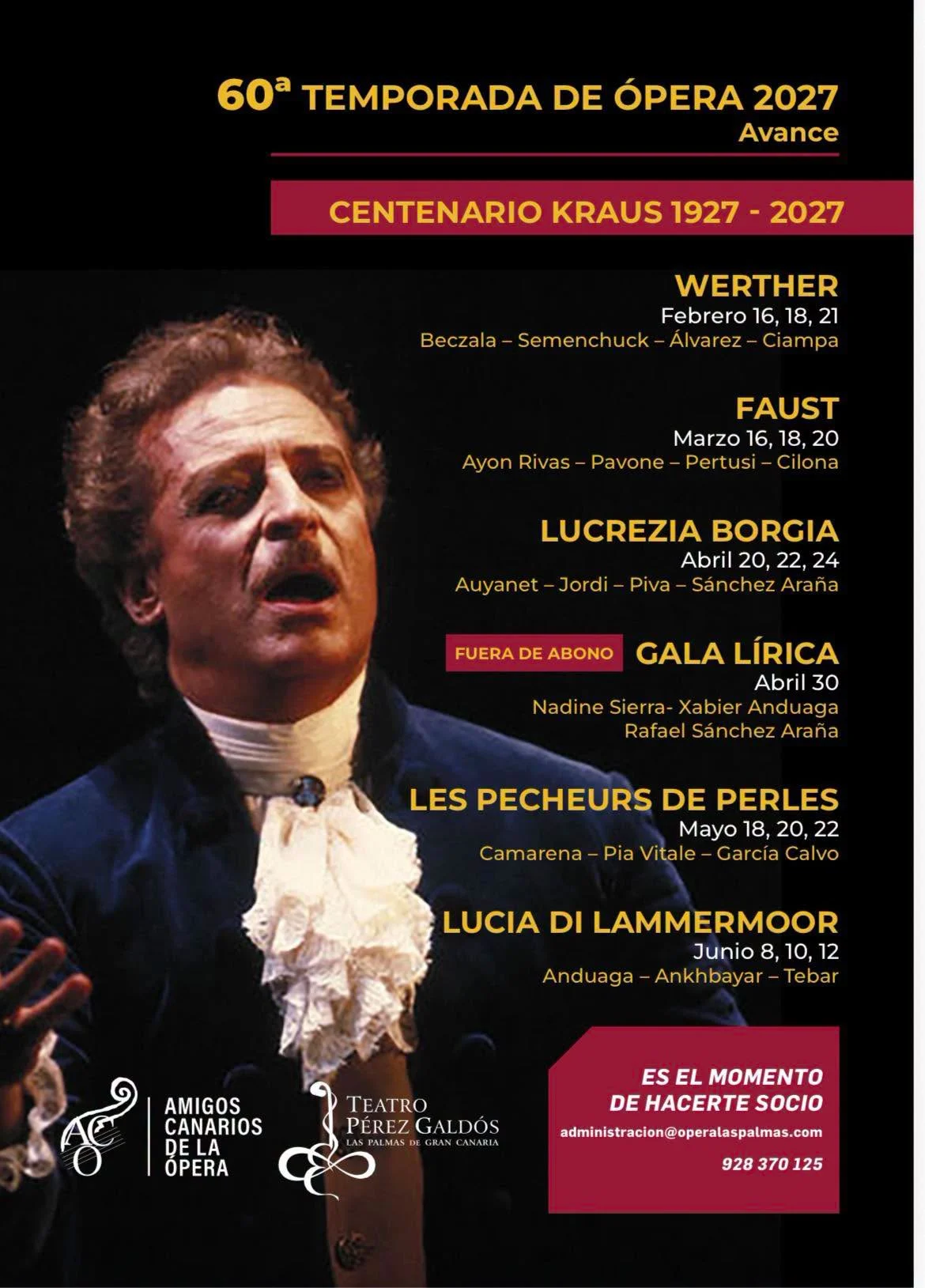
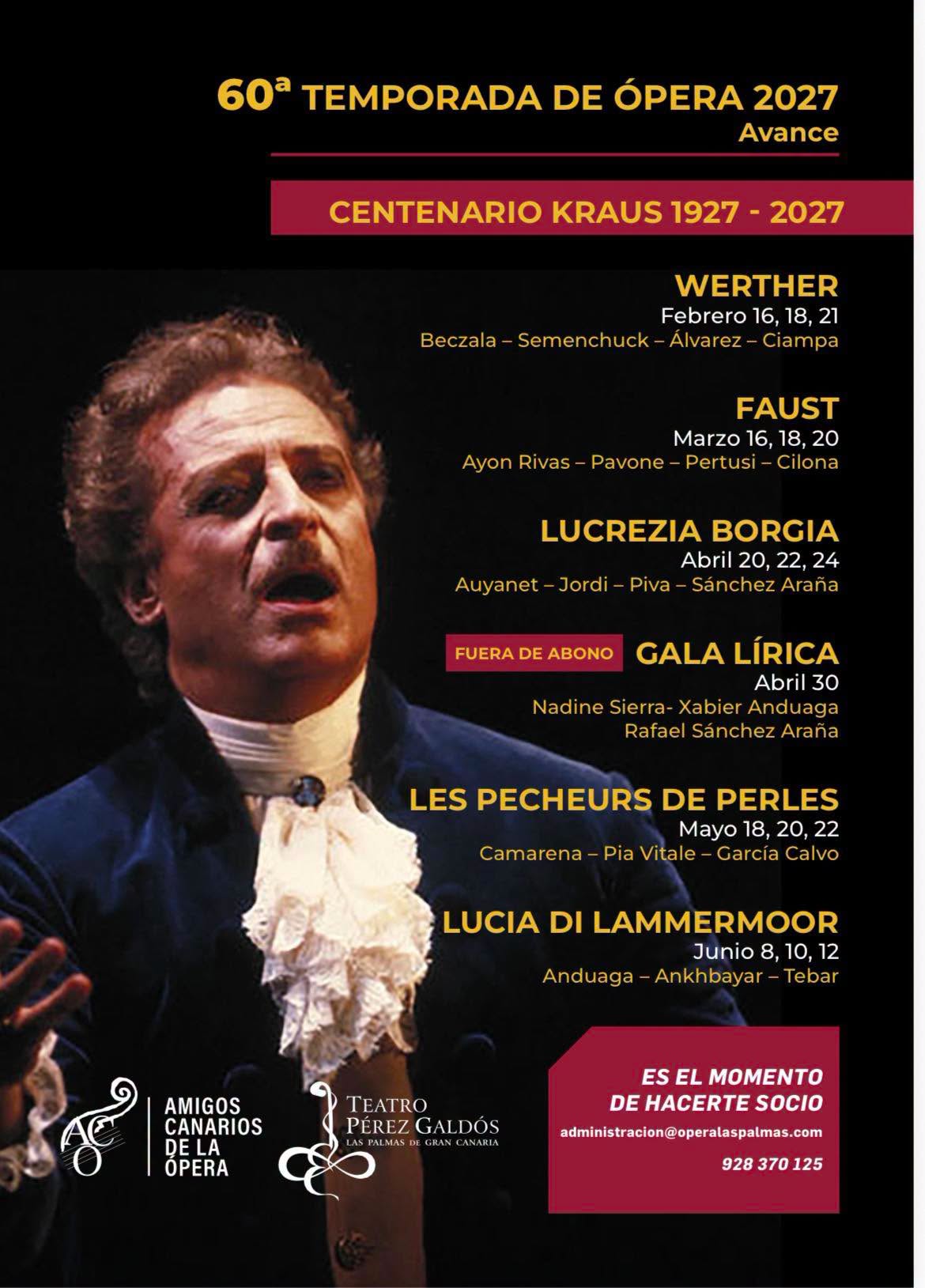
The Ópera de Las Palmas de Gran Canaria has unveiled its highly anticipated 2027 season, a landmark program meticulously curated to honor the centennial of the legendary Canarian tenor, Alfredo Kraus. This commemorative season promises a rich tapestry of operatic masterpieces, featuring a stellar cast of international and emerging artists, under the baton of acclaimed conductors. The programming not only pays homage to Kraus’s profound legacy but also underscores the Ópera de Las Palmas’ commitment to presenting world-class operatic productions to its audiences.
A Season of Reverence and Artistic Excellence
The 2027 season is poised to be a significant cultural event, drawing operatic enthusiasts from around the globe. The decision to dedicate the entire season to Alfredo Kraus, one of the 20th century’s most celebrated tenors, is a fitting tribute to a native son whose voice and artistry left an indelible mark on the international opera scene. Kraus, born in Las Palmas de Gran Canaria in 1927, was renowned for his exquisite tone, impeccable technique, and profound dramatic interpretations, particularly in the French and Italian lyric repertoire. The Ópera de Las Palmas, as an institution deeply connected to the tenor’s roots, aims to reignite interest in his artistry and introduce his significant contributions to a new generation.
The season will commence with a powerful rendition of Jules Massenet’s Werther. This emotionally charged opera, based on Goethe’s epistolary novel, will feature the celebrated tenor Piotr Beczala in the title role, renowned for his sensitive portrayals of operatic heroes. He will be joined by mezzo-soprano Ekaterina Semenchuk as Charlotte and baritone Carlos Alvarez as Albert. The production will be conducted by Francesco Ivan Ciampa, a conductor known for his nuanced interpretations of the French repertoire. Performances are scheduled from February 16 to February 21, 2027, setting a compelling and emotionally resonant tone for the entire season. Werther, with its exploration of unrequited love and existential angst, offers a profound thematic starting point, echoing some of the introspective qualities found in Kraus’s own repertoire.
A Journey Through Operatic Masterpieces
Following the premiere of Werther, the Ópera de Las Palmas will present Charles Gounod’s iconic masterpiece, Faust. This ambitious production will be led by the highly regarded tenor Ivan Ayon-Rivas, who will embody the titular Faust. He will be complemented by the talents of soprano Claudia Pavone as the innocent Marguerite and bass Michele Pertusi as the formidable Mephistopheles. The renowned Giulio Cilona will conduct the orchestra, promising a performance steeped in dramatic intensity and musical brilliance. The dates for Faust are set from March 16 to March 20, 2027. Faust, with its grand scale and philosophical undertones, represents a significant work in the operatic canon and a staple in the repertoire of many great tenors, including Kraus.
The season continues its exploration of bel canto with Gaetano Donizetti’s Lucrezia Borgia. Soprano Yolanda Auyanet is slated to star as the infamous Duchess, a role that demands exceptional vocal agility and dramatic prowess. She will be joined by tenor Ismael Jordi as Gennaro and mezzo-soprano Caterina Piva as Orsini. The esteemed Rafael Sánchez-Araña will conduct this production, scheduled for April 20 to April 24, 2027. Lucrezia Borgia is a testament to Donizetti’s mastery of vocal writing and dramatic storytelling, offering a showcase for virtuosic singing and compelling characterizations.
A Star-Studded Gala and a Parisian Gem
A highlight of the 2027 season will undoubtedly be a special gala concert on April 30, 2027. This celebratory event will feature the luminous soprano Nadine Sierra and the rising tenor star Xabier Anduaga. Under the baton of Rafael Sánchez-Araña, this gala promises an evening of unforgettable arias and duets, likely drawing from the repertoire most cherished by Alfredo Kraus. Such a gala serves not only as a musical celebration but also as a focal point for the centennial commemorations, bringing together prominent artists to honor the tenor’s legacy.
The season will then transport audiences to the exotic world of Georges Bizet’s Les pêcheurs de perles (The Pearl Fishers). This romantic opera, set in ancient Ceylon, will be led by the acclaimed tenor Javier Camarena, celebrated for his lyrical interpretations, and soprano Francesca Pia Vitale. The orchestra will be conducted by Guillermo García Calvo. Performances are scheduled from May 18 to May 22, 2027. Les pêcheurs de perles, with its beautiful melodies and evocative atmosphere, is a beloved opera that offers a different stylistic flavor to the season, showcasing Bizet’s operatic genius.
A Bel Canto Climax
The 2027 season will culminate with another Donizetti masterpiece, Lucia di Lammermoor. This tragic opera, a cornerstone of the bel canto repertoire, will feature Xabier Anduaga in the demanding role of Edgardo. He will be joined by Ankhbayar Enkhbold, though the role for Enkhbold is not specified in the initial announcement. Ramon Tebar will conduct this production, which runs from June 8 to June 12, 2027. Lucia di Lammermoor is renowned for its dramatic intensity, psychological depth, and the iconic "mad scene," a true test for any soprano, and Edgardo’s passionate pleas and eventual despair are equally crucial to the opera’s tragic arc.
Context and Significance of the Centennial
Alfredo Kraus’s career spanned over four decades, during which he graced the stages of the world’s most prestigious opera houses, including La Scala, the Metropolitan Opera, and the Royal Opera House, Covent Garden. His signature roles included Werther, Faust, Nemorino in Donizetti’s L’elisir d’amore, and Rodolfo in Puccini’s La bohème. He was particularly lauded for his interpretations of French lyric roles, where his refined vocalism and profound musicality shone through. His dedication to vocal purity and his intellectual approach to character development set a benchmark for generations of singers.
The celebration of his centennial by the Ópera de Las Palmas de Gran Canaria is more than just a series of performances; it is an opportunity to contextualize his artistic achievements within the broader history of opera. The selection of operas – Werther, Faust, Lucrezia Borgia, and Lucia di Lammermoor – all feature prominently in the repertoire that either Kraus himself championed or that aligns with the stylistic and vocal demands he so masterfully met. Les pêcheurs de perles, while perhaps not a direct signature role for Kraus, represents a significant work within the French operatic tradition he so admired.
Supporting Data and Artistic Lineage
The casting for the 2027 season reflects a deliberate choice to blend established international stars with promising emerging talents. Piotr Beczala, Ekaterina Semenchuk, Carlos Alvarez, Claudia Pavone, Michele Pertusi, Yolanda Auyanet, Ismael Jordi, Caterina Piva, Nadine Sierra, Xabier Anduaga, Javier Camarena, and Francesca Pia Vitale represent a formidable ensemble of operatic artists. Their collective resumes boast performances at leading opera houses worldwide, and their participation in this centennial season underscores the significance of the tribute.
The conductors chosen – Francesco Ivan Ciampa, Giulio Cilona, Rafael Sánchez-Araña, Guillermo García Calvo, and Ramon Tebar – are all respected figures in the operatic world, known for their musical insight and their ability to elicit stellar performances from orchestras and singers alike. Their expertise will be crucial in bringing these demanding scores to life in a manner befitting the occasion.
Broader Impact and Implications
The Ópera de Las Palmas’ 2027 season has the potential to significantly boost cultural tourism to Gran Canaria. The allure of a centennial celebration of a world-renowned tenor, combined with a program of classic operas featuring top-tier artists, is likely to attract a discerning international audience. This influx of visitors can provide a substantial economic benefit to the island, supporting the local hospitality sector and related industries.
Furthermore, the season serves as an educational platform. By highlighting the works and styles that defined Alfredo Kraus’s career, the Ópera de Las Palmas is implicitly educating audiences about the evolution of operatic performance and the enduring legacy of a singular artist. The programming choices are fact-based, reflecting the repertoire that Kraus was known for or that exemplifies the vocal and interpretive qualities he possessed. This creates a narrative thread throughout the season, linking each production to the spirit of the honoree.
The commitment of the Ópera de Las Palmas to staging these significant productions also speaks to the institution’s own artistic ambition and its role in the international operatic landscape. By successfully mounting a season of this caliber, the opera house solidifies its reputation as a venue for artistic excellence and a significant contributor to the cultural heritage of the Canary Islands and beyond. The success of such a season can also inspire local artists and aspiring musicians, fostering a new generation of talent within the Canary Islands, directly inspired by the achievements of their most famous operatic son. The long-term implication is a strengthened cultural identity and a sustained appreciation for classical music and operatic art.




![Sijya announces Leather and Brass [Retrofitted] EP, shares Do I Know [Rachika Nayar Edit]: Listen](https://empire-music.net/wp-content/uploads/2026/09/sijya-announces-leather-and-brass-retrofitted-ep-shares-do-i-know-rachika-nayar-edit-listen.webp)