 Mia Khoirunisa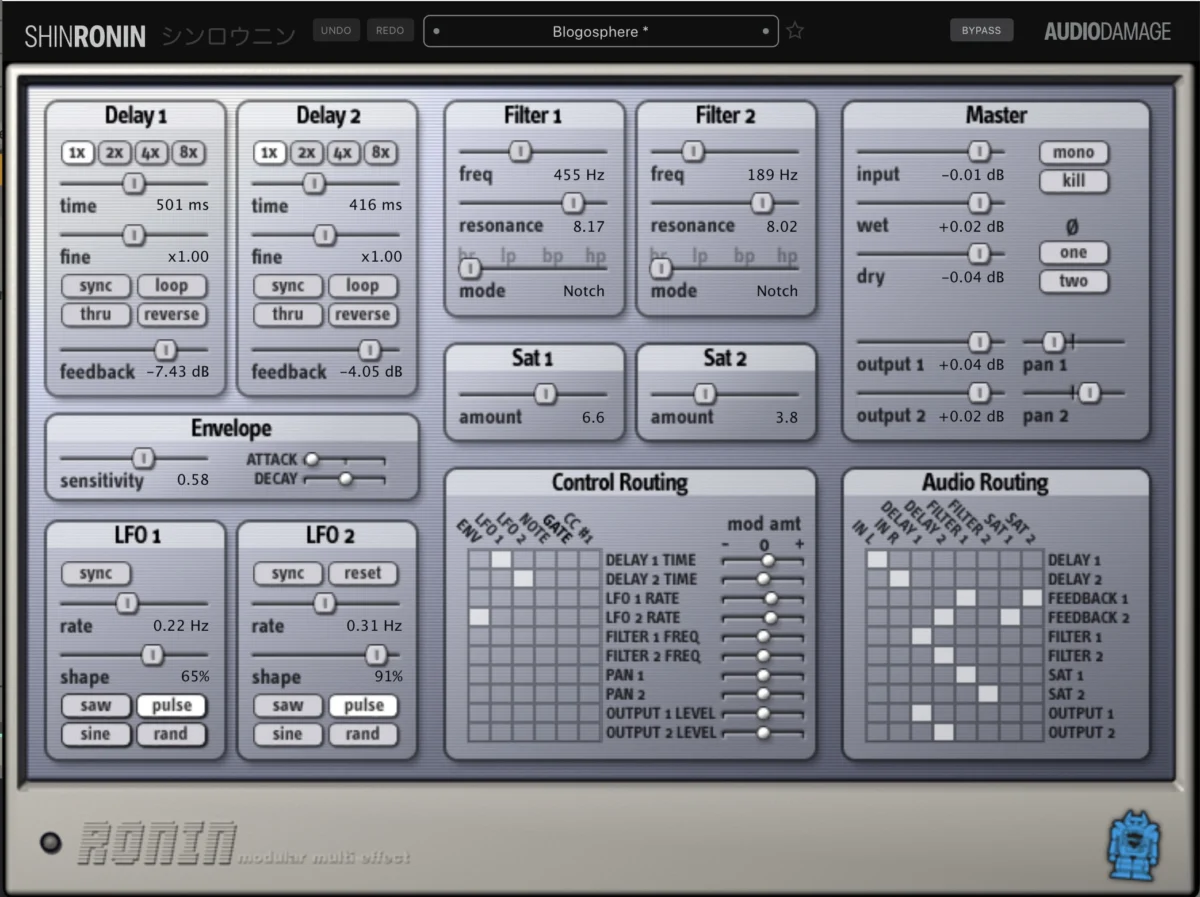
In a move that harkens back to the pioneering days of digital audio manipulation, Audio Damage has resurrected one of its seminal creations, the Ronin filter-delay plugin, as ShinRonin. First launched in 2003, a period characterized by a less constrained approach to software development, Ronin offered users an unprecedented level of control over its audio processing, encouraging experimental sound design and even the intentional creation of sonic chaos. ShinRonin, now available as a free download, faithfully recreates the original’s ethos while being meticulously updated for modern operating systems and plugin formats, including CLAP, VST3, AAX, AU, and LV2. This release is a significant event for sound designers and electronic musicians, offering a potent tool that prioritizes creative exploration over safety nets.
A Glimpse into the Dawn of Digital Audio Experimentation
The year 2003 marked a different era in software development, particularly within the burgeoning field of digital audio plugins. Developers were often less concerned with pre-empting user error and more focused on unlocking the raw potential of digital signal processing (DSP). Audio Damage, then a relative newcomer, embodied this spirit with its Ronin plugin. Unlike contemporary effects that often guided users along carefully curated paths, Ronin provided a more open-ended environment, akin to handing a budding artist a palette of potent, potentially volatile colors.
The comparison to early Jim Henson animations, where raw, unbridled creativity often resulted in delightful, albeit sometimes chaotic, outcomes, aptly captures Ronin’s essence. It was a tool that allowed for "running with scissors" in the sonic realm, enabling users to create complex feedback loops, self-oscillating frequencies, and other sonic textures that could range from exquisitely beautiful to wonderfully destructive. This inherent openness, a hallmark of the plugin’s design philosophy, is precisely what Audio Damage has sought to preserve and celebrate with the ShinRonin rebirth.
The Core of ShinRonin: Uncompromising Digital Processing
ShinRonin’s appeal lies in its straightforward implementation of digital filters and delay lines. The developers have deliberately avoided emulating analog circuitry or imposing rigid, "safe" control parameters. Instead, users are presented with pure digital processing, allowing for a direct and unadulterated interaction with the sound. This approach facilitates the creation of a wide spectrum of audio effects, from subtle, clean delay and filter applications to rich, modulated, and expansive spatial soundscapes. When pushed, these core elements can morph into entirely unique timbres, rewarding users who are willing to explore the edges of the plugin’s capabilities.
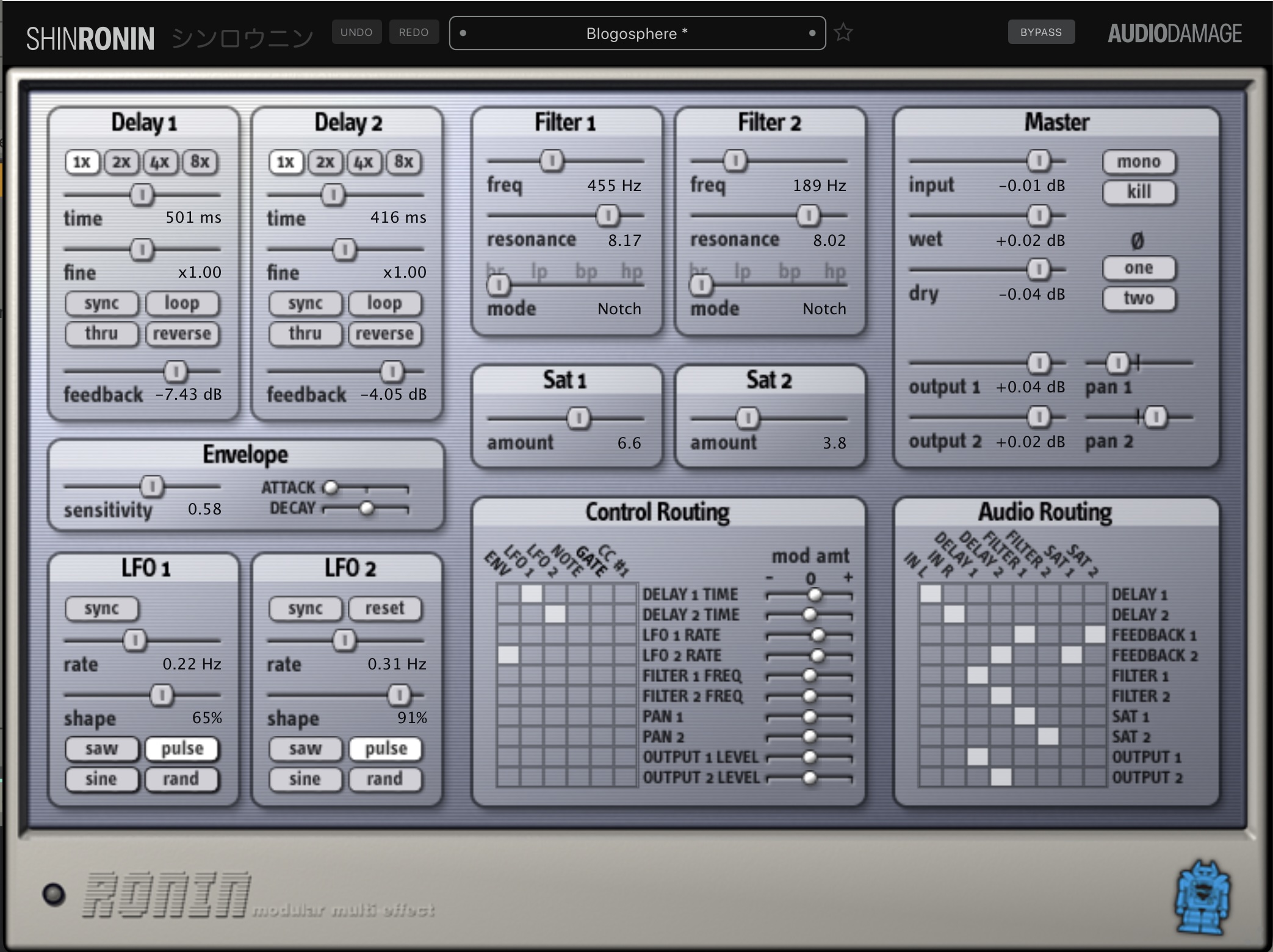
The plugin is engineered for accessibility, featuring a robust set of tools that enable both nuanced control and wild experimentation. Key components include:
- Dual Delay Lines: Offering distinct temporal manipulation capabilities for each channel.
- Dual Filters: Each with multiple operational modes, providing versatile tonal shaping.
- Envelope Controls: Allowing for dynamic modulation of parameters based on the input signal’s amplitude.
- Dual LFOs (Low-Frequency Oscillators): Enabling complex, rhythmic, and evolving modulation patterns.
- Saturation Controls: Two distinct amounts of saturation are available, emulating the characteristic grit and warmth of stompbox effects.
- Control Matrix: A pivotal feature, this matrix allows for intricate modulation routing. It permits both positive and negative modulation amounts for virtually every parameter, opening up a vast landscape of interconnected sonic behavior.
- Audio Routing Matrix: This separate matrix provides additional flexibility, including specific inputs for the filter circuits, enabling further creative signal chaining and feedback possibilities.
The inclusion of a control matrix with extensive positive and negative modulation capabilities is a "stroke of genius," as noted in the original assessment. This element is crucial for understanding why plugins like Ronin were both loved and, perhaps, feared by some developers. The ability to freely route any parameter to modulate any other, with directional control, is the engine that drives the plugin’s potential for complex and unexpected sonic outcomes.
The "Wilkin’s Coffee" Analogy: Embracing the Chaos
The "Wilkin’s Coffee" analogy, referencing early, often surreal, Jim Henson commercials, is particularly apt. These advertisements embraced a whimsical, sometimes unsettling, yet undeniably creative spirit. Similarly, ShinRonin encourages users to embrace a similar level of sonic exploration. The inherent possibility of creating feedback loops and self-oscillating sounds, while potentially leading to undesirable noise for some, is precisely the point for those seeking to push the boundaries of sound design. This is not a plugin designed for passive background processing; it is an instrument for active, often experimental, sonic sculpting.
The developers at Audio Damage, in their initial conception of Ronin and in their decision to revive it as ShinRonin, clearly understood the appeal of such uninhibited creative tools. While many modern plugin developers opt for more curated user experiences to prevent accidental sonic damage, Audio Damage has consistently championed a philosophy of empowering users with powerful, sometimes unpredictable, tools. This approach resonates with a significant segment of the audio production community that actively seeks out plugins capable of generating unique and groundbreaking sounds.
A Legacy of Innovation: Audio Damage’s Continued Contribution
Audio Damage has a long-standing reputation for producing innovative and often idiosyncratic audio software. While the article acknowledges that the author may have fallen behind in covering their more recent releases, it firmly reiterates the quality and forward-thinking nature of their current product line. The revival of Ronin as ShinRonin serves as a testament to the enduring appeal of their early design principles and their commitment to making these classic tools accessible to a new generation of users.
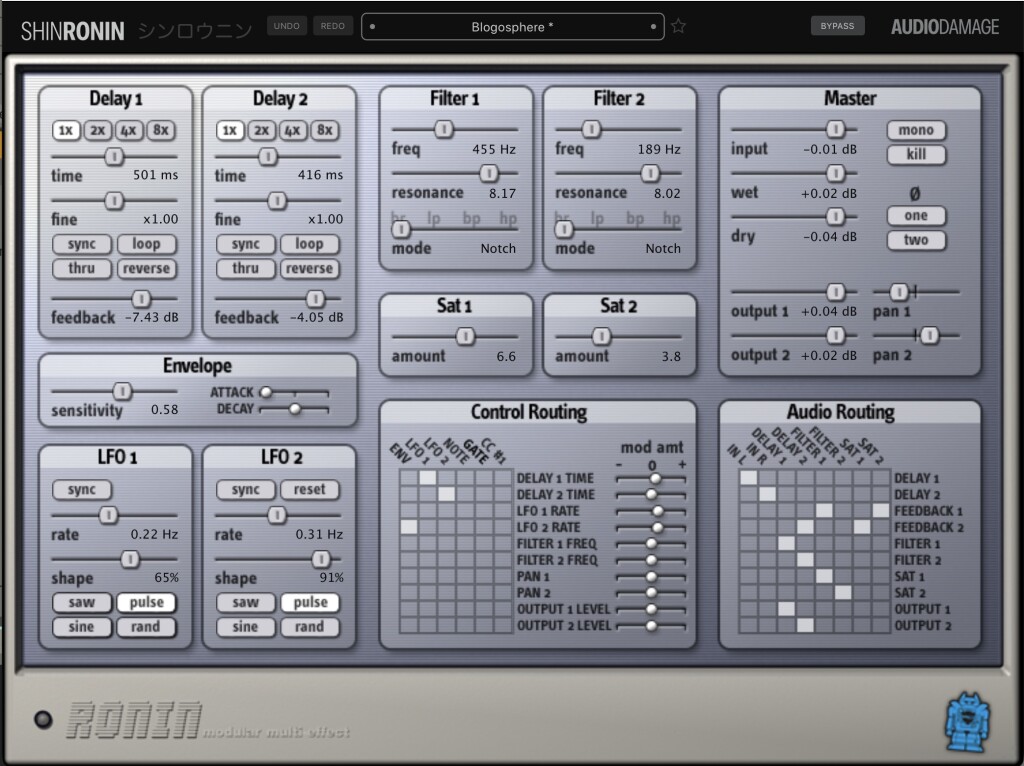
The fact that ShinRonin is offered as a free plugin is particularly noteworthy. In an industry where powerful creative tools often come with substantial price tags, Audio Damage’s decision to provide this versatile and historically significant plugin without charge is a generous offering. It democratizes access to a piece of digital audio history and equips musicians and sound designers with a powerful creative engine, regardless of their budget.
Modernization for a New Era
ShinRonin’s resurrection is not merely a nostalgic throwback. It represents a thoughtful modernization of a beloved classic. The core DSP engine and the user interface remain faithful to the 2003 original, preserving its unique character and workflow. However, the plugin has been thoroughly updated to function seamlessly on contemporary computing platforms and within modern digital audio workstations (DAWs). This includes comprehensive support for:
- Windows: Ensuring compatibility with the vast majority of PC-based music production environments.
- macOS: Catering to the significant Mac user base in the creative industries.
- Linux: A crucial inclusion for open-source enthusiasts and those working within the Linux audio ecosystem.
- Plugin Formats: Full support for CLAP, VST3, AAX, AU, and LV2 ensures maximum compatibility across a wide range of DAWs and host applications.
This broad compatibility means that the same creative possibilities that were once confined to a specific era of computing are now available to anyone with a modern DAW. The inclusion of CLAP ( a new, open-source plugin API) alongside established formats like VST3 and AAX demonstrates Audio Damage’s commitment to supporting both current and emerging industry standards.
The Future of Creative Sound Design
The enduring appeal of ShinRonin begs the question of what comes next. The article muses on the possibility of a "SuperRonin" effect, perhaps incorporating more advanced comb filtering techniques or other novel processing. This suggests a continuing interest within the Audio Damage camp and among its users for tools that offer deep sonic manipulation and the potential for truly original sound creation.
Ultimately, ShinRonin is more than just a plugin; it’s an invitation to explore. It represents a philosophy of creative empowerment, reminding users that sometimes the most exciting discoveries are made when the boundaries are pushed, and the results are allowed to unfold organically. The fact that a piece of software from 2003 can still feel so relevant and exciting in 2026 underscores the timeless nature of well-designed creative tools and the enduring human desire to experiment and innovate. The availability of such a potent and historically significant tool for free is, as the original assessment put it, "a steal." It is a valuable addition to any sound designer’s toolkit and a compelling reminder of the playful, experimental spirit that continues to drive innovation in the world of digital audio.