Jia Lissa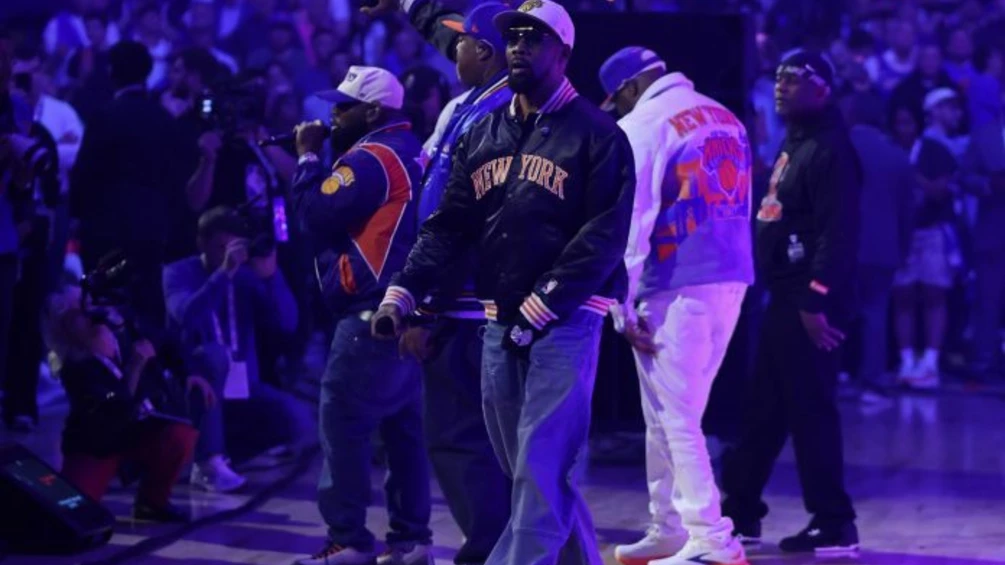
New York City’s legendary hip-hop collective, Wu-Tang Clan, commanded the spotlight during the halftime show of Game Four of this year’s NBA Finals, a pivotal contest between the hometown New York Knicks and the San Antonio Spurs. The performance unfolded at the iconic Madison Square Garden, a venue synonymous with both sporting glory and cultural milestones, providing an unexpected surge of energy to a crowd left reeling by the Knicks’ unprecedented first-half deficit.
The Grand Stage: Madison Square Garden and the NBA Finals Pressure Cooker
Madison Square Garden, often revered as "The World’s Most Famous Arena" and the "Mecca of Basketball," bore witness to a palpable tension as Game Four commenced. The NBA Finals represent the pinnacle of professional basketball, a global spectacle drawing millions of viewers and intense media scrutiny. Each game is a high-stakes affair, capable of shaping legacies and etching moments into sporting history. For the Knicks, playing on their home court, the pressure to perform was immense, particularly with the series poised at a crucial juncture. While the specific matchup between the Knicks and Spurs in the NBA Finals is a rare occurrence, the intensity of any Finals series involving a New York team at MSG is undeniable, creating an atmosphere that few other venues can replicate. The anticipation for Game Four was particularly acute, as a victory for the Knicks could push them to a commanding 3-1 series lead, placing them on the precipice of their first championship in decades, while a loss would allow the Spurs to even the series, shifting momentum dramatically.
A City’s Hope Dwindles: The First Half Collapse
The initial half of Game Four painted a grim picture for the New York faithful. From tip-off, the San Antonio Spurs, known for their disciplined execution and methodical offense, asserted their dominance. Their strategic ball movement, stifling defense, and clinical shooting carved through the Knicks’ defenses, creating an ever-widening gap on the scoreboard. By the end of the first quarter, the Spurs had established a significant lead, and their relentless assault continued into the second period. The Knicks, appearing disjointed and overwhelmed, struggled to find their rhythm, missing shots and committing uncharacteristic turnovers. The roar of the Madison Square Garden crowd, initially brimming with optimism, gradually gave way to a somber quietude, punctuated by groans of frustration. As the halftime buzzer sounded, the scoreboard displayed a staggering 27-point lead for the San Antonio Spurs, leaving the Knicks trailing significantly and their championship hopes seemingly hanging by a thread. The mood among the tens of thousands of fans in attendance, and countless more watching worldwide, was one of profound disappointment and disbelief. Analysts on the broadcast panels were already dissecting the Knicks’ shortcomings and contemplating the seemingly insurmountable challenge ahead.
Wu-Tang Clan Ignites the Halftime Spectacle
It was into this atmosphere of palpable despair that the Wu-Tang Clan emerged. The iconic nine-member (originally ten, following the passing of Ol’ Dirty Bastard) collective, hailing from Staten Island, New York, stepped onto the court-side stage, ready to inject a dose of raw, unadulterated energy. Comprising legends such as RZA, GZA, Method Man, Raekwon, Ghostface Killah, Inspectah Deck, U-God, Masta Killa, and Cappadonna, the group represents the very essence of New York hip-hop, their sound deeply ingrained in the city’s cultural fabric since their seminal 1993 debut, ‘Enter the Wu-Tang (36 Chambers)’. Their presence at the NBA Finals halftime show was a testament to their enduring appeal and their ability to transcend musical genres and demographics.
The setlist was a rapid-fire assault of their most iconic tracks, designed to ignite a dormant crowd and remind them of New York’s indomitable spirit. The thunderous bass and intricate rhymes of ‘Wu-Tang Clan Ain’t Nuthing Ta F’ Wit’ immediately commanded attention, its defiant energy a stark contrast to the earlier game’s narrative. This was swiftly followed by the timeless anthem ‘C.R.E.A.M. (Cash Rules Everything Around Me)’, a track that resonates with its poignant social commentary and undeniable groove, compelling the audience to chant along. The performance culminated with ‘Method Man’, showcasing the charismatic frontman’s lyrical prowess and stage presence. Despite the brevity of the halftime slot, Wu-Tang Clan delivered a high-octane, emotionally charged performance, transforming the arena’s despondent atmosphere. The vibrant visual projections, synchronized lighting, and the sheer collective force of the group provided a much-needed jolt of adrenaline, momentarily allowing fans to forget the dismal scoreboard and immerse themselves in the unyielding spirit of New York. The performance served as a powerful reminder of the city’s resilience and its deep cultural roots, perhaps subtly echoing the very fighting spirit the Knicks would need to summon.
From Despair to Triumph: The Second Half Surge
The intermission, punctuated by the Wu-Tang Clan’s electrifying performance, proved to be a pivotal turning point. Whether it was the raw energy of the hip-hop legends, a fiery locker room address from the coaching staff, or simply the collective will of the players, the Knicks emerged from the tunnel for the second half a completely transformed team. The early minutes of the third quarter saw a renewed defensive intensity, as the Knicks began to disrupt the Spurs’ precision offense. Steals led to fast breaks, and suddenly, shots that had clanked off the rim in the first half began to fall with confident swishes. The crowd, sensing a shift in momentum, roared back to life, their cheers growing louder with every defensive stop and every basket.
The deficit, once seemingly insurmountable at 27 points, began to shrink methodically. The Knicks employed a relentless full-court press, forcing turnovers and capitalizing on every opportunity. Key players, who had been quiet in the first half, stepped up with clutch plays, hitting crucial three-pointers and driving aggressively to the basket. The collective effort was palpable, a testament to their resilience and determination. By the end of the third quarter, the gap had been significantly narrowed, and the Spurs, who had appeared so dominant, now found themselves facing a relentless onslaught and a resurgent crowd. The psychological battle had turned decisively in New York’s favor.
The Anatomy of a Historic Comeback
The fourth quarter was a masterclass in basketball drama. With every possession, the tension mounted, the lead exchanging hands or shrinking to mere points. The Knicks, fueled by the deafening roar of Madison Square Garden, continued their improbable comeback. Defensive stops were met with thunderous applause, and offensive plays that chipped away at the Spurs’ lead sent waves of euphoria through the arena. The coaching staff made crucial adjustments, and the players executed flawlessly under immense pressure. The final minutes of the game were a blur of intense action, strategic timeouts, and nail-biting possessions. With seconds ticking down and the score tied, the Knicks orchestrated a final, decisive play, culminating in a game-winning shot that sent the arena into an absolute frenzy. The final score, 107-106 in favor of the New York Knicks, secured not only a crucial victory but also one of the greatest comeback wins in NBA Finals history. The magnitude of overcoming a 27-point deficit in such a high-stakes environment underscores the extraordinary nature of the team’s resilience and mental fortitude.
This historic win moved the Knicks to a commanding 3-1 lead in the best-of-seven series, placing them just one victory away from an NBA championship. Such comebacks, especially in the Finals, are exceedingly rare. Statistical data on NBA Finals comebacks indicates that overcoming a deficit of 20+ points in a single game, let alone 27, is an anomaly, a testament to the sheer will and strategic execution displayed by the Knicks in the second half. This particular comeback instantly carved its place into the annals of NBA lore, becoming a defining moment not just for the series, but for the franchise itself.
The Cultural Intersection: Hip-Hop and Hoops
The intersection of hip-hop and basketball has long been a symbiotic relationship, and Wu-Tang Clan’s halftime performance at the NBA Finals served as a powerful reaffirmation of this cultural connection. Hip-hop, born in the Bronx, is intrinsically linked to the urban landscape and the aspirations it represents, mirroring the grit and determination often found on the basketball court. Wu-Tang Clan, with their raw narratives of struggle and triumph, embody a spirit that resonates deeply with the competitive ethos of sports. Their music has provided soundtracks for generations of athletes, and their presence at such a high-profile sporting event underscores their lasting cultural relevance.
The decision to feature Wu-Tang Clan was a strategic masterstroke by the NBA and event organizers. It not only catered to a diverse audience but also tapped into the very soul of New York City, a city that prides itself on its unique blend of art, music, and sports. For many, Wu-Tang Clan’s performance was more than just entertainment; it was a cultural statement, a celebration of New York’s enduring influence on global culture. Their ability to energize a despondent crowd highlights the profound impact music can have on collective morale, potentially contributing to the shift in atmosphere that seemed to galvanize the Knicks.
Implications for the Series and Beyond
The outcome of Game Four carries profound implications for the remainder of the NBA Finals. For the New York Knicks, securing a 3-1 series lead provides an enormous psychological advantage. History suggests that teams holding a 3-1 lead in the NBA Finals win the series approximately 97% of the time, placing the Knicks firmly in control of their destiny. This historic comeback victory, in particular, will undoubtedly bolster their confidence and reinforce a belief in their ability to overcome adversity. The narrative of resilience will become a powerful motivator as they approach Game Five, with the opportunity to clinch the championship.
Conversely, for the San Antonio Spurs, this loss is a significant blow, both tactically and psychologically. To squander a 27-point lead in the NBA Finals is a demoralizing experience, forcing them to confront doubts about their ability to close out games under pressure. They now face the daunting task of winning three consecutive games against a confident opponent, two of which would likely be on the road. The Spurs’ coaching staff will be tasked with rallying their team and instilling renewed belief, a challenge made even greater by the dramatic nature of their Game Four defeat.
Beyond the immediate series implications, this game and its halftime show will be remembered for years to come. For the NBA, it showcased the league’s ability to merge elite athletic competition with high-caliber entertainment, drawing in a broader audience and reinforcing its position as a global entertainment juggernaut. For Wu-Tang Clan, their performance on such a massive stage further solidified their legendary status and introduced their timeless music to a new generation of fans who may not have been familiar with their extensive catalog. The event also highlighted the enduring power of Madison Square Garden as a venue capable of hosting moments that transcend sport and culture.
Wu-Tang’s Enduring Legacy and Future Ventures
The Wu-Tang Clan’s appearance at the NBA Finals is just one facet of their ongoing cultural impact. The group’s classic debut album, ‘Enter The Wu-Tang (36 Chambers)’, which was the subject of a recent DJ Mag feature exploring how it "made hip-hop eternal," continues to be celebrated as a groundbreaking work that redefined the sound and aesthetic of hip-hop. Its influence is evident across generations of artists, cementing its place in music history. The group’s distinctive style, complex lyrical narratives, and pioneering production techniques have left an indelible mark on popular culture.
In a testament to their enduring relevance and commitment to their global fanbase, the Wu-Tang Clan recently concluded what was described as "their final run of European tour dates," part of "The Final Chamber 2026 tour global dates." This extensive tour, spanning continents, indicates the group’s desire to connect with their vast international following one last time on such a grand scale. Their performance at the NBA Finals, therefore, also serves as a poignant reminder of their journey, their impact, and their commitment to delivering electrifying performances, whether on a concert stage or at one of the biggest sporting events in the world. The synergy between their legendary status and the historic comeback of the Knicks created a truly unforgettable night, where the spirit of New York, embodied by both its iconic basketball team and its pioneering hip-hop collective, shone brightest.