Nayara Elvina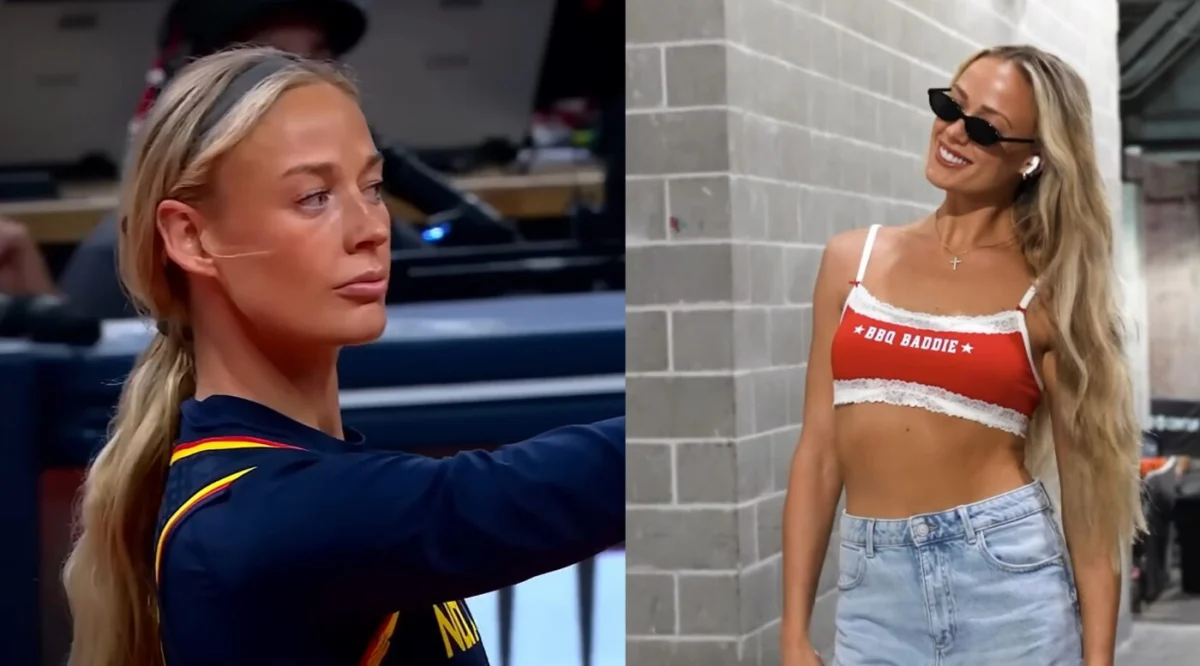
Longtime sports media personality Colin Cowherd has generated widespread discussion across digital platforms following a recent exchange on The Colin Cowherd Podcast with Indiana Fever guard Sophie Cunningham. The interview, which touched upon Cunningham’s rising profile, athletic style, and public persona, quickly became a focal point of sports and entertainment commentary due to a direct and unconventional observation made by the host regarding the athlete’s public image.
The incident highlights the evolving intersection of women’s professional sports, player branding, traditional sports media norms, and digital age discourse. As the WNBA experiences unprecedented surges in viewership, media attention, and commercial viability, the ways in which female athletes are discussed by legacy media figures continue to face heightened public scrutiny.
The Interview Context and the Remark
During the episode of The Colin Cowherd Podcast, Cowherd and Cunningham discussed her role within the Indiana Fever organization, her emergence as a fan-favorite competitor, and her growing social media presence. Cunningham, known for her physical style of play and willingness to advocate for teammates—including star guard Caitlin Clark—has cultivated a distinct brand that bridges competitive toughness with fashion and lifestyle content.
Toward the middle of the segment, Cowherd paused before introducing a descriptive characterization of the player. After Cunningham encouraged him to speak candidly, Cowherd stated, “You are viewed a little bit, and I don’t know any other term, as the league’s… sex symbol.”
Recognizing the potential sensitivity of the phrase, Cowherd acknowledged the awkwardness of the remark and questioned whether his observation might be perceived as offensive. Cunningham, however, deflected the tension with humor, noting that she had anticipated a more controversial topic, such as league governance or broader structural debates within professional basketball.
“Hey, that is way better. I thought you were gonna go completely different with this, so I’ll take it,” Cunningham responded.
Elaborating on his observation, Cowherd attempted to clarify his rationale, pointing to the duality of her public presentation: “You lean into it a little bit. You are tough. You’ll fight anybody. You’ll taunt anybody. But you’ll make sure you’re coming into the arena like, ‘I look good, and I want you to know I look good,’ and I don’t know if that’s semi-offensive. But how do you view that?”
Cunningham addressed the comment directly, stating that she took no offense and viewed her embrace of traditional femininity as an asset rather than a contradiction to her athletic competitiveness.
“It’s not for me,” Cunningham said. “The reason why I really lean into that is, first of all, I have always been super girly. Since I was a little girl, I’ve always loved to dress up. I love dresses. I love high heels. I love all of that. You can be girly and you can go out and kick someone’s a**. I love that combination.”
Chronology of the WNBA’s Media and Cultural Surge
To understand the context of this media exchange, it is necessary to examine the rapid evolution of the WNBA’s media landscape over recent seasons.
In recent years, the league has experienced record-breaking attendance figures, multi-million-dollar television viewership milestones, and unprecedented digital engagement. The arrival of high-profile collegiate stars, most notably Caitlin Clark during the 2024 WNBA draft class, catalyzed a massive influx of new fans to the sport.
As audience numbers swelled, media coverage of the league expanded beyond traditional sports networks into general interest podcasts, lifestyle platforms, and digital commentary channels. This shift brought athletes like Sophie Cunningham—a veteran player valued for her intensity, locker-room leadership, and active off-court media presence—into broader mainstream visibility. Cunningham’s personal brand, which balances competitive grit on the hardwood with fashion-forward tunnel-walk outfits and multimedia projects, exemplifies the modern professional athlete who leverages social media to build independent commercial value.
The podcast episode featuring Cowherd and Cunningham was recorded and distributed during a period of heightened media scrutiny surrounding how legacy sports broadcasters cover women’s professional leagues, balancing traditional sports analysis with broader cultural commentary.
Public and Social Media Reaction
Following the release of the podcast clip, excerpts circulated widely across social media platforms, including X (formerly Twitter). The clip elicited a diverse array of responses from sports fans, media analysts, and digital commentators.
A segment of viewers expressed discomfort with Cowherd’s choice of terminology, characterizing the phrasing as unprofessional or outdated given contemporary standards of sports journalism. Critics on social media questioned the relevance of discussing a professional athlete’s physical appearance or labeling them in such terms during a sports-focused interview.
Conversely, other observers noted that because Cunningham herself accepted the premise good-naturedly and used the moment to articulate her views on femininity and athleticism, the controversy was overstated. Supporters of the athlete highlighted her agency in the conversation, emphasizing that Cunningham successfully used the platform to reinforce her message that athletic excellence and traditional femininity are not mutually exclusive.
The discourse also reignited broader conversations regarding the historical objectification of female athletes in sports media versus the modern autonomy athletes possess in defining their own personal brands and public image.
Analytical Implications for Sports Broadcasting
Media analysts studying the incident point to several broader implications for sports journalism and podcasting:
- The Evolution of Interview Standards in Digital Media: Unlike traditional, highly regulated television broadcasts, contemporary podcasts often rely on a conversational, unscripted format. While this format allows for more organic dialogue, it also increases the likelihood of spontaneous, potentially controversial remarks that bypass standard editorial filters.
- Athlete Branding and Autonomy: Modern athletes increasingly operate as independent media entities with their own podcasts, sponsorships, and substantial digital followings. This autonomy allows players like Cunningham to navigate off-topic or potentially awkward lines of questioning with practiced poise and direct communication.
- The Gendered Lens in Sports Media: Observers note that while male athletes are frequently evaluated primarily on performance, competitive intensity, and leadership, female athletes in rapidly commercialized leagues often navigate dual expectations regarding athletic performance and public presentation. The public reaction to Cowherd’s comments underscores the sensitivity surrounding how media figures frame female competitors.
As the WNBA continues its trajectory of unprecedented growth and mainstream integration, interactions between legacy media commentators and professional athletes will likely remain a subject of intense public observation and analytical discussion. Both Cowherd and Cunningham have moved forward from the segment, but the episode remains a notable touchstone in ongoing dialogues about media ethics, athlete branding, and the changing culture of sports broadcasting.