 Aveline Kirana
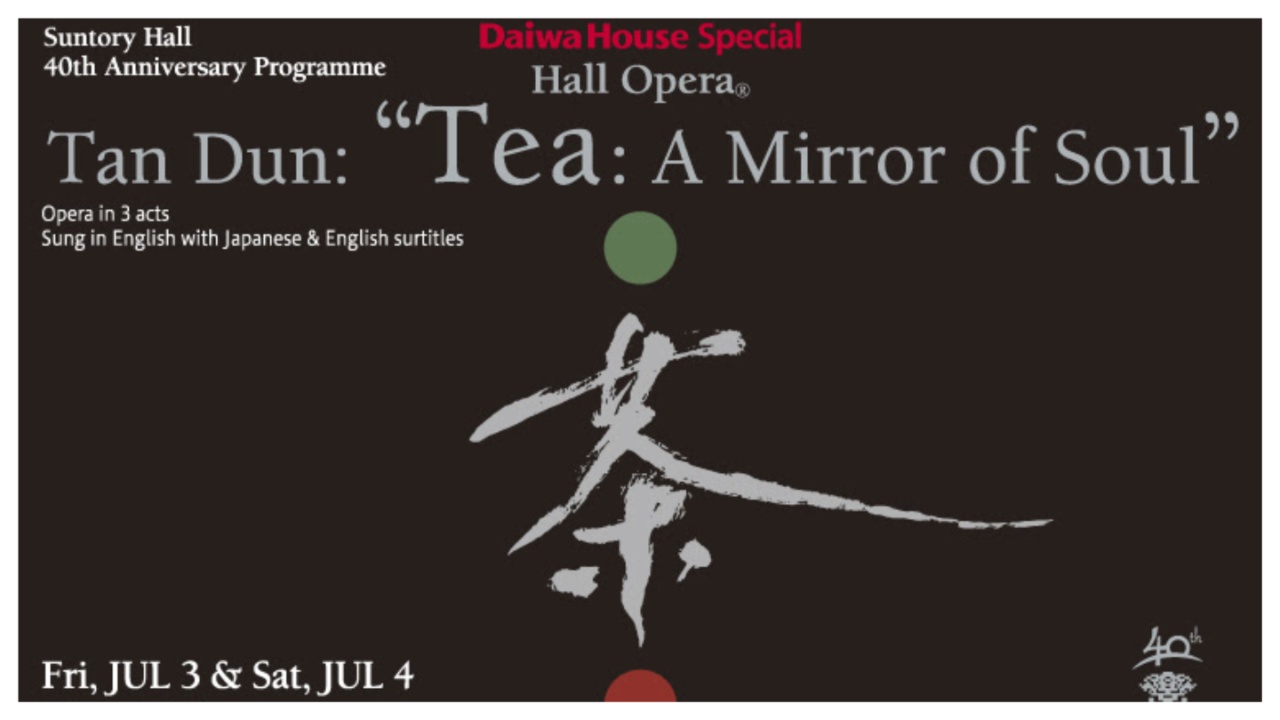
Hall Opera is set to grace its 40th anniversary season with a significant and culturally rich presentation of Tan Dun’s acclaimed opera, TEA – A Mirror of Soul. This production marks a momentous occasion, celebrating not only the longevity of Hall Opera but also the enduring impact of Tan Dun’s groundbreaking work on the international operatic stage. The opera, which first captivated audiences at its world premiere in Suntory Hall in 2002, has since embarked on a global journey, enchanting opera enthusiasts across continents. This upcoming performance at Suntory Hall holds particular significance as it represents the first staging of the opera in its original venue since its revival in 2006, further underscoring its historical resonance. Adding to the prestige of this event, the renowned composer himself, Tan Dun, will be at the helm, conducting the Tokyo Philharmonic Orchestra. The artistic vision for this production will be helmed by director Sherwood Hu, with Kumi Sakurai responsible for the intricate and evocative costume design, promising a visually stunning interpretation of this profound work.
A Landmark Opera’s Return to its Genesis
The selection of TEA – A Mirror of Soul for Hall Opera’s 40th anniversary is a testament to the opera’s critical acclaim and its ability to transcend cultural boundaries. Tan Dun, a composer celebrated for his innovative fusion of Eastern and Western musical traditions, has crafted a work that delves into the philosophical and spiritual depths of the ancient Japanese tea ceremony. The opera, inspired by the classic tale of a young samurai seeking enlightenment through the discipline of tea, explores themes of life, death, love, and the search for inner peace. Its premiere at Suntory Hall in 2002 was a watershed moment, introducing a contemporary opera that resonated with a universal human desire for understanding and transcendence.
Since its debut, TEA – A Mirror of Soul has been performed in numerous prestigious venues worldwide, including the Metropolitan Opera in New York, the Royal Opera House in London, and the Beijing National Centre for the Performing Arts. Each production has offered a unique lens through which to view its intricate narrative and evocative score. The opera’s enduring appeal lies in its ability to weave together a compelling story with Tan Dun’s signature musical language, which often incorporates natural sounds and unconventional instrumentation, creating an immersive and deeply affecting theatrical experience. The upcoming performances at Suntory Hall, therefore, are not just a revival but a homecoming for a work that has profoundly shaped the contemporary opera landscape.
A Stellar Cast and Orchestral Powerhouse
The cast assembled for this significant production is a carefully curated ensemble of talented vocalists, poised to bring the complex characters of TEA – A Mirror of Soul to life. Leading the principal roles are Mártyn Herczeg, Lucy Fitz Gibbon, Motoki Ishii, Apollo Wong, and Ying Deng. Each artist brings a unique vocal and interpretive prowess to the production, promising a nuanced and emotionally charged performance. Their collective talents, under the guidance of director Sherwood Hu, are expected to illuminate the spiritual and dramatic arc of the opera.
Providing the rich sonic tapestry for the opera will be the esteemed Tokyo Philharmonic Orchestra. This renowned ensemble, with its deep understanding of orchestral repertoire and its commitment to artistic excellence, is ideally suited to convey the intricate textures and powerful dynamics of Tan Dun’s score. The synergy between the soloists, the orchestra, and the composer’s directorship is anticipated to create a truly exceptional musical experience. The opera will be sung in English, a deliberate choice to broaden its accessibility, and will be further enhanced by Japanese and English surtitles, ensuring that the lyrical and philosophical nuances of the libretto are fully appreciated by the diverse audience. Diana Liao’s thoughtful English translation will be instrumental in conveying the poetic and profound nature of the original text.
A Glimpse into the Creative Team
Sherwood Hu, the director of this production, brings a wealth of experience in staging operatic works that are both visually compelling and dramatically profound. His directorial approach is often characterized by a keen understanding of character development and a commitment to creating immersive theatrical environments. His collaboration with Tan Dun on TEA – A Mirror of Soul promises a fresh and insightful interpretation of the opera’s spiritual and emotional core.
Complementing the directorial vision is the masterful costume design by Kumi Sakurai. Sakurai’s work is renowned for its ability to translate thematic elements into striking visual statements. For TEA – A Mirror of Soul, her costumes are expected to not only reflect the historical and cultural context of the opera but also to visually embody the inner journeys of the characters and the symbolic significance of the tea ceremony. The costumes will undoubtedly play a crucial role in enhancing the overall aesthetic and emotional impact of the production, contributing to the immersive quality that defines Tan Dun’s operatic works.
Thematic Resonance and Philosophical Depth
TEA – A Mirror of Soul is more than just an opera; it is a profound exploration of Zen Buddhist philosophy and the introspective nature of the Japanese tea ceremony. The opera draws inspiration from the classic tale of a young samurai who, tormented by his past, seeks solace and enlightenment through the rigorous discipline of the tea ceremony. The opera delves into the samurai’s encounters with various spiritual figures and his internal struggles as he navigates the path towards self-discovery and inner peace. Tan Dun masterfully uses music to evoke the stillness, mindfulness, and contemplative atmosphere associated with the tea ceremony, while simultaneously conveying the dramatic intensity of the samurai’s quest.
The opera’s structure and musical language are deeply intertwined with its thematic concerns. Tan Dun employs a rich palette of sounds, often incorporating traditional East Asian instruments alongside Western orchestral forces. The use of percussive elements, the subtle interplay of melodies, and the incorporation of vocal techniques that mimic natural sounds all contribute to the opera’s unique sonic identity. This approach not only creates a captivating auditory experience but also serves to underscore the philosophical underpinnings of the narrative, inviting the audience to engage in a similar process of reflection and introspection. The opera’s title itself, "A Mirror of Soul," suggests a reflection of the inner self, a concept central to both the tea ceremony and the human quest for meaning.
Chronology of TEA – A Mirror of Soul
The journey of TEA – A Mirror of Soul from conception to its current acclaimed status can be traced through a series of significant milestones:
- Early 2000s: Composition of TEA – A Mirror of Soul by Tan Dun, drawing inspiration from classical Japanese literature and Zen Buddhist philosophy.
- 2002: World Premiere at Suntory Hall, Tokyo, conducted by Tan Dun. The opera receives critical acclaim for its innovative score and profound thematic content.
- 2003-2005: International performances and tours, introducing the opera to audiences in major opera houses across North America, Europe, and Asia. These performances solidify its reputation as a significant work of contemporary opera.
- 2006: A notable revival of the opera, potentially at Suntory Hall or another significant venue, demonstrating its continued relevance and artistic merit. This revival further cemented its place in the operatic repertoire.
- Ongoing: Continued performances and reinterpretations of TEA – A Mirror of Soul in various international settings, showcasing its enduring appeal and adaptability.
- Present: Hall Opera selects TEA – A Mirror of Soul as a centerpiece of its 40th-anniversary season, marking a significant return to its original premiere venue, Suntory Hall, with the composer conducting.
This timeline highlights the opera’s consistent presence and growing influence in the global opera scene, underscoring its importance as a work that continues to resonate with audiences and artists alike.
Supporting Data and Broader Context
Tan Dun’s TEA – A Mirror of Soul is part of a broader trend in contemporary opera that seeks to bridge Eastern and Western artistic traditions. Composers like Tan Dun, Bright Sheng, and Kaija Saariaho have been instrumental in creating works that draw from diverse cultural influences, enriching the operatic landscape with new perspectives and sounds. The opera’s focus on the tea ceremony also taps into a growing global interest in mindfulness, meditation, and Eastern philosophies, making its themes particularly relevant in today’s fast-paced world.
The success of TEA – A Mirror of Soul can be further contextualized by the increasing internationalization of opera. Major opera houses are actively programming works from diverse cultural backgrounds, and audiences are becoming more receptive to operatic narratives that explore universal human experiences through different cultural lenses. The opera’s sung language being English, coupled with comprehensive surtitles, facilitates broader accessibility, allowing a wider audience to connect with its profound message. The choice of the Tokyo Philharmonic Orchestra, a world-class ensemble, also speaks to the opera’s high artistic standards and its significance within the global classical music community.
Official Responses and Anticipated Impact
While specific official statements from Hall Opera or Suntory Hall regarding this particular production have not been released in the provided text, the decision to present TEA – A Mirror of Soul for a 40th-anniversary season speaks volumes. It indicates a strategic programming choice aimed at celebrating artistic excellence and innovation. The return to Suntory Hall, the opera’s birthplace, under the baton of its composer, suggests a deep respect for the work’s legacy and a desire to offer audiences a definitive and authentic experience.
The anticipation surrounding this production is likely to be high, given the opera’s established reputation and the caliber of the creative team. The performances are expected to draw a diverse audience, including seasoned opera aficionados, fans of Tan Dun’s music, and those interested in Japanese culture and Zen philosophy. The opera’s ability to provoke introspection and offer a contemplative experience is particularly valuable in an era often characterized by rapid change and sensory overload. This production offers a potent reminder of the power of art to foster understanding, promote inner reflection, and celebrate the enduring human quest for meaning.
Broader Impact and Implications
The presentation of TEA – A Mirror of Soul by Hall Opera for its 40th anniversary season carries several significant implications for the operatic community and beyond. Firstly, it underscores Hall Opera’s commitment to showcasing significant contemporary works that have left an indelible mark on the genre. By revisiting this acclaimed opera, Hall Opera not only honors its past but also signals its forward-looking programming, emphasizing its role in nurturing and presenting important artistic achievements.
Secondly, the return of the opera to Suntory Hall, with Tan Dun conducting, provides a unique opportunity to revisit a work in its seminal performance space and under the composer’s direct guidance. This can lead to a deeper understanding of the opera’s original intent and artistic nuances, potentially offering fresh insights for both seasoned opera-goers and newcomers. The collaboration between a renowned international opera company like Hall Opera and a prestigious venue like Suntory Hall, alongside the Tokyo Philharmonic Orchestra, highlights the interconnectedness of the global arts scene and the collaborative spirit that drives significant artistic endeavors.
Furthermore, TEA – A Mirror of Soul serves as a powerful example of cultural dialogue through art. Tan Dun’s masterful integration of Eastern philosophical concepts and musical traditions with Western operatic structures has paved the way for greater cross-cultural appreciation in the arts. This production can foster a deeper understanding and appreciation of Japanese culture and Zen Buddhism among a global audience, contributing to a richer and more diverse artistic landscape. The opera’s enduring themes of self-discovery, mindfulness, and the search for inner peace are universally relevant, offering a timely message of contemplation and spiritual exploration in a world often preoccupied with external pursuits. The success of this production could also inspire future collaborations and the creation of more works that bridge cultural divides, further enriching the global operatic repertoire.