Nayara Elvina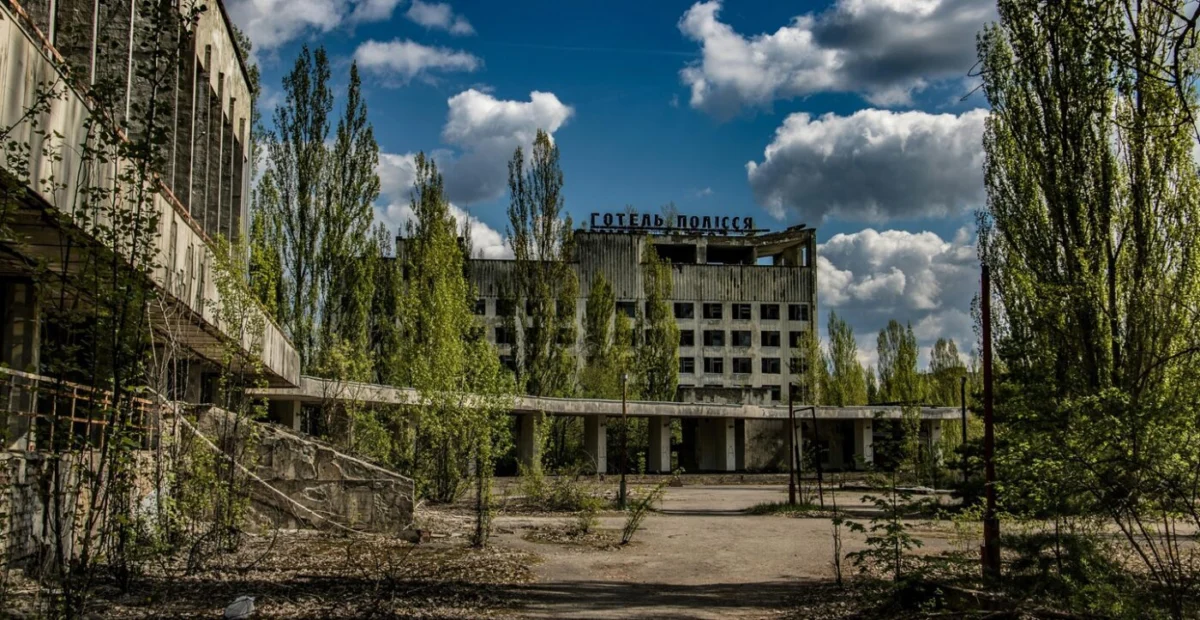
Nearly four decades after the catastrophic explosion at the Chernobyl Nuclear Power Plant, the site of the world’s most severe nuclear disaster has undergone a transformation that continues to defy scientific expectations. What was once a bustling industrial hub and is now a radioactive wasteland has transitioned into an accidental ecological sanctuary. Recent longitudinal studies and field observations confirm that the Chernobyl Exclusion Zone (CEZ), a roughly 1,000-square-mile restricted area spanning the border of Ukraine and Belarus, is now teeming with a diverse array of wildlife, including large mammals that were once rare or absent from the region.
The resurgence of nature in the shadow of the Unit 4 reactor provides a profound look into the resilience of the natural world and the complex relationship between environmental pollutants and human interference. While the radiation levels in many parts of the zone remain hazardous to humans, the absence of human activity—specifically hunting, agriculture, and urban development—has created a "human-free" vacuum that has allowed flora and fauna to flourish in ways that were previously deemed impossible.
The Historical Context of the Chernobyl Disaster
To understand the current state of the CEZ, one must look back to the events of April 26, 1986. During a late-night safety test at the Chernobyl Nuclear Power Plant in northern Ukraine, a combination of design flaws and operator errors led to a massive power surge. This resulted in a steam explosion and a subsequent open-air graphite fire that burned for ten days, releasing massive quantities of radioactive isotopes into the atmosphere.
The fallout, which included Iodine-131, Cesium-137, and Strontium-90, contaminated large swaths of Europe, with the immediate vicinity of the plant receiving the highest doses. In the days following the explosion, Soviet authorities established a 30-kilometer (18.6-mile) radius exclusion zone, forcibly evacuating more than 115,000 people from the city of Pripyat and surrounding villages. In subsequent years, the zone was expanded, and the total number of resettled individuals reached approximately 350,000.
In the immediate aftermath, the environment suffered visible trauma. A nearby pine forest turned ginger-brown and died from acute radiation poisoning, earning it the moniker "The Red Forest." However, as the short-lived isotopes decayed and the initial shock to the ecosystem subsided, the landscape began a slow process of reclamation.
A Thriving Megafauna Population
For years, it was assumed that the CEZ would remain a biological desert. However, recent data suggests the opposite. Research led by ecologists such as Svitlana Kudrenko and international teams of biologists has documented a significant increase in the populations of large mammals. The zone is now home to elk, roe deer, red deer, wild boar, Eurasian lynx, and brown bears—species that had not been seen in the region for nearly a century prior to the accident.
One of the most striking examples of this resurgence is the grey wolf. Studies have indicated that the wolf population within the Chernobyl Exclusion Zone is seven times higher than in comparable non-radioactive nature reserves in the region. This is attributed almost entirely to the lack of human presence. In most European landscapes, wolves are subjected to hunting pressures and habitat fragmentation; in Chernobyl, they roam the abandoned streets of Pripyat and the surrounding forests without interference.
Furthermore, the CEZ has become a vital habitat for the Przewalski’s horse, an endangered species native to the steppes of Central Asia. In 1998, 31 individuals were released into the zone as part of a conservation effort. Despite the radiation, the population has grown steadily, with researchers estimating that over 150 horses now roam the Ukrainian side of the zone, with additional herds established across the border in Belarus.
The Scientific Paradox: Radiation vs. Human Disturbance
The central question facing scientists is why these animals are thriving despite radiation levels that are, in some areas, six times higher than the limit considered safe for human exposure. Current estimates suggest that parts of the immediate area may not be habitable for humans for another 20,000 years due to the persistence of transuranic elements.
Tim Mousseau, a professor of biological sciences at the University of South Carolina, has spent decades studying the effects of radiation on Chernobyl’s wildlife. He notes that while radiation certainly causes physiological damage—including increased rates of cataracts, smaller brain sizes in birds, and certain genetic mutations—the "benefit" of human absence appears to outweigh the "cost" of radiation for many large mammal species.
"It is very clear that large protected regions like the Chernobyl Exclusion Zone provide the requirements for mammals like moose, deer, wolves, and wild horses to escape from hunting pressures and other human disturbances," Mousseau stated in an interview with ABC News.
The primary drivers of wildlife decline globally are habitat loss, hunting, and industrial activity. By removing these factors, the CEZ has inadvertently become a laboratory for "rewilding." The animals are not necessarily immune to radiation, but they are living long enough to reproduce and maintain stable population densities because they are no longer being killed by cars or hunters.
The Wolf Study: Genetic Adaptation and Cancer Research
Perhaps the most groundbreaking recent discovery involves the genetic makeup of the Chernobyl wolves. A 2024 study led by Cara Love, an evolutionary biologist and ecotoxicologist at Princeton University, focused on how these predators have adapted to chronic radiation exposure.
Love and her team entered the CEZ to trap wolves and fit them with specialized GPS collars equipped with radiation dosimeters. They also collected blood samples to analyze the animals’ genomic responses to cancer-causing radiation. The findings were startling: the wolves were exposed to upwards of 11.28 millirem of radiation daily for their entire lives—more than six times the legal safety limit for a human worker.
The research revealed that the Chernobyl wolves possess altered immune systems, similar to cancer patients undergoing radiation treatment. Most significantly, the researchers identified specific regions of the wolf genome that seem resilient to increased cancer risk. The wolves appear to have developed protective mutations in genes associated with cancer progression, effectively evolving a biological defense mechanism against the invisible threat of radiation.
This discovery has profound implications for human medicine. By identifying the specific genetic mutations that allow these wolves to survive and thrive despite high-dose radiation, oncology researchers may be able to pinpoint similar pathways in humans. This could lead to new preventative treatments or genetic therapies for cancer patients, turning the site of a nuclear nightmare into a source of life-saving medical insight.
The Mixed Impact on Smaller Species
While the narrative of a "wildlife paradise" holds true for many large mammals, the impact of radiation is not uniform across all species. Research into smaller organisms paints a more complex picture. Studies on birds, particularly barn swallows, have shown higher frequencies of partial albinism, tumors, and reproductive failures in high-radiation "hotspots" within the zone.
Similarly, populations of soil invertebrates, such as spiders and butterflies, have shown declines in certain areas. This suggests that while larger, mobile animals can move between contaminated and "cleaner" patches of the forest, smaller organisms with limited ranges are more susceptible to the cumulative effects of ionizing radiation.
Furthermore, the decomposition of organic matter in the CEZ has slowed down. Scientists have observed that fallen leaves and dead trees in the most contaminated areas do not rot at the normal rate because the fungi, bacteria, and insects responsible for decomposition are hindered by the radiation. This leads to a buildup of dry leaf litter, which increases the risk of catastrophic forest fires that could potentially redistribute radioactive particles into the air.
Broader Implications and Future Outlook
The current state of Chernobyl serves as a stark reminder of the "human footprint." The fact that nature thrives more effectively in a radioactive wasteland than in a modern inhabited countryside suggests that routine human activity—agriculture, traffic, and urban sprawl—is more detrimental to biodiversity than one of the worst environmental disasters in history.
The CEZ is now officially recognized by Ukraine as a radiological and environmental biosphere reserve. It serves as a critical corridor for wildlife movement across Eastern Europe. However, the region remains fragile. The ongoing geopolitical instability and military activity in the region have raised concerns about the safety of the containment structures and the potential for new environmental disruptions.
As researchers continue to monitor the zone, Chernobyl remains a unique "living laboratory." It offers a rare opportunity to study evolutionary biology in real-time and to observe how ecosystems recover from extreme anthropogenic stress. Whether the genetic adaptations seen in wolves and other species will be enough to sustain these populations over centuries remains to be seen, but for now, the exclusion zone stands as a testament to nature’s enduring capacity to adapt and overcome.
In the words of many scientists studying the area, Chernobyl is no longer just a site of tragedy; it is a window into a future where nature reclaims what was lost, providing hope that even the most damaged environments can find a path toward renewal. The lessons learned from the wolves, horses, and forests of Chernobyl may one day protect human health and guide global conservation efforts, proving that even from the ashes of a nuclear meltdown, significant scientific and ecological progress can emerge.