 Nana Wu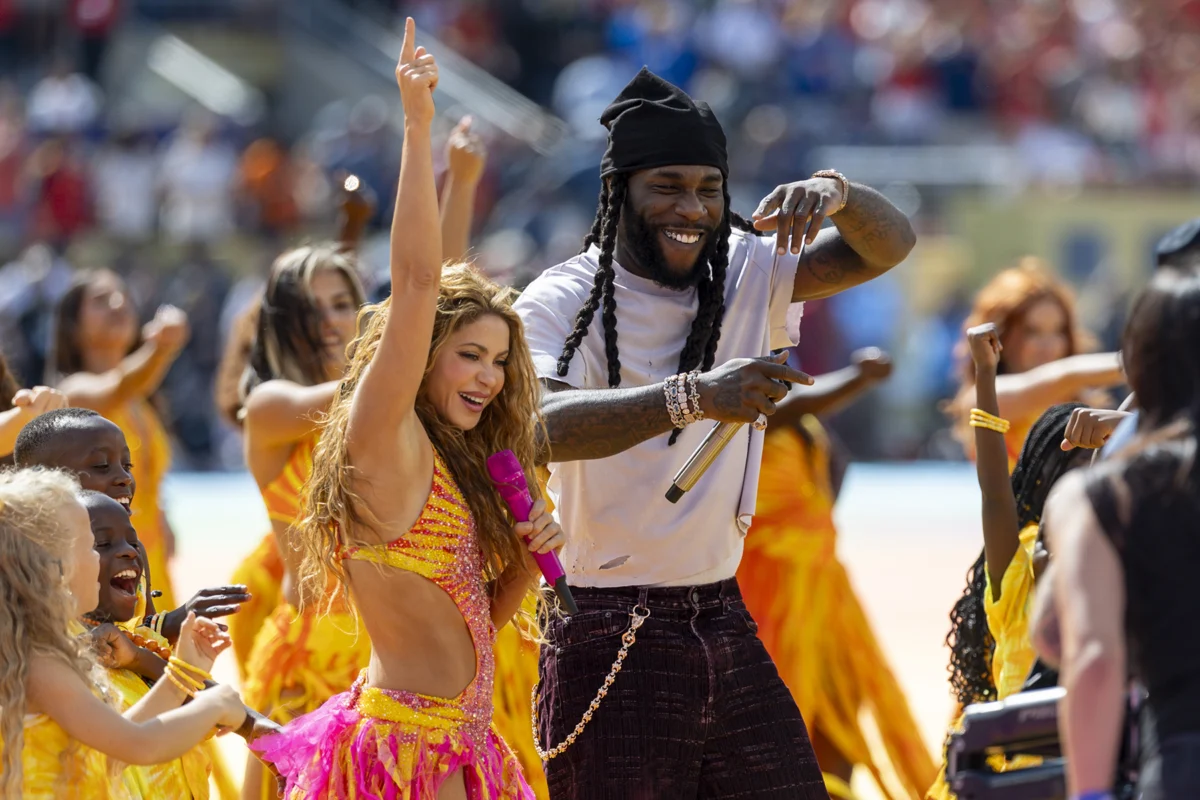
The highly anticipated official song for the FIFA World Cup 2026, "Dai Dai," a vibrant collaboration between Colombian superstar Shakira and Nigerian Afrobeats sensation Burna Boy, has officially ascended to the top of the Billboard Latin Airplay chart, marking yet another significant achievement in its already illustrious journey. The track, which has captivated audiences worldwide since its debut, vaulted from No. 4 to the No. 1 position on the chart dated July 25, 2026. This monumental success not only underscores the song’s immense popularity but also highlights the unparalleled power of the FIFA World Cup as a global cultural catalyst.
For Shakira, "Dai Dai" represents her 25th career No. 1 on the Latin Airplay chart, further solidifying her legacy as a dominant force in Latin music and extending her record as the female artist with the most chart-toppers in the chart’s 32-year history. Her consistent ability to produce global hits and connect with diverse audiences remains unmatched, reinforcing her status as an icon. The track also signifies a triumphant return to the summit for Shakira after more than a year, following the one-week reign of "Soltera" in January 2025, and notably, her first solo chart coronation since "Loba" in late 2009. Meanwhile, for Burna Boy, this achievement is a landmark moment, marking his inaugural No. 1 on any Latin chart, a testament to his burgeoning global appeal and the increasing penetration of Afrobeats into mainstream music landscapes.
The Anthem’s Global Journey: From Kick-off to Chart-Topper
"Dai Dai (FIFA World Cup Official Song 2026)" embarked on its extraordinary trajectory long before its Latin Airplay triumph. The song was unveiled with much fanfare ahead of the FIFA World Cup 2026, a tournament of unprecedented scale, being the first to feature 48 teams and co-hosted across three nations: the United States, Canada, and Mexico. The official anthem, a blend of Latin rhythms, Afrobeats melodies, and universal themes of unity and celebration, was strategically designed to resonate with the diverse global audience of the World Cup.
The song’s official premiere performance took place during the tournament’s spectacular opening ceremony in Mexico City on June 11, 2026. This initial showcase immediately garnered immense attention, setting the stage for its rapid ascent across various global music charts. Fans and critics alike praised the synergy between Shakira’s iconic vocal delivery and Burna Boy’s distinct energy, creating an infectious sound that encapsulated the spirit of the world’s most watched sporting event.
The momentum continued to build throughout the tournament, culminating in a historic performance at the FIFA World Cup Final match on July 19, 2026. Staged at the newly minted New York New Jersey Stadium in East Rutherford, NJ, the halftime show featured Shakira and Burna Boy delivering an electrifying rendition of "Dai Dai" to a live audience of tens of thousands and an estimated global television viewership in the hundreds of millions. This performance marked the World Cup’s first-ever halftime show, a significant cultural milestone that further cemented the song’s place in popular consciousness and undoubtedly contributed to its subsequent chart surges. The visual spectacle of the halftime show, coupled with the song’s undeniable catchiness, propelled "Dai Dai" into an even higher echelon of global recognition, directly influencing its impressive gain of 25% in audience impressions to 7.3 million across the 152 Latin-reporting stations in the United States during the July 10-16 tracking week, according to Luminate.
A Confluence of Global Superstars: Shakira and Burna Boy
The collaboration between Shakira and Burna Boy is a masterclass in cross-cultural artistic fusion, bringing together two artists who are titans in their respective genres and global music.
Shakira Isabel Mebarak Ripoll, known mononymously as Shakira, has been a global force for decades. Her career, spanning from the early 1990s, has seen her transcend linguistic and cultural barriers, becoming one of the best-selling music artists of all time with over 80 million records sold worldwide. Her distinctive blend of Latin pop, rock, and traditional Colombian and Middle Eastern influences has created a unique sound. Shakira is no stranger to the World Cup stage, having delivered some of the most memorable anthems in the tournament’s history, including "Waka Waka (This Time for Africa)" for the 2010 FIFA World Cup and "La La La (Brazil 2014)" for the 2014 edition. Her involvement invariably brings an unparalleled level of energy, passion, and global appeal, making her a perennial favorite for such high-profile collaborations. Her record-extending 25th No. 1 on Latin Airplay reaffirms her enduring relevance and unparalleled connection with the Latin music audience.
Damini Ebunoluwa Ogulu, professionally known as Burna Boy, represents the vanguard of the Afrobeats movement, which has steadily grown into a global phenomenon. Hailing from Nigeria, Burna Boy’s music is characterized by its rich blend of Afro-fusion, reggae, dancehall, and R&B, delivered with profound lyrical depth and a commanding stage presence. His rise to international stardom has been meteoric, earning him a Grammy Award for Best Global Music Album and numerous accolades that reflect his impact on contemporary music. "Dai Dai" marks a pivotal moment for Burna Boy, delivering his first chart-topper on any Latin chart and showcasing his versatility and ability to seamlessly integrate into diverse musical landscapes. This achievement not only elevates his individual career but also signifies the continued expansion of Afrobeats’ global reach and its increasing influence on popular culture. Previously, Burna Boy made his mark on Billboard rankings with L.I.F.E.: Leaving An Impact For Eternity, which entered the top 10 of the Reggae Albums chart. Furthermore, "Dai Dai" is his second chart-topper of 2026, following his featured appearance on Gunna’s "wgft," which dominated Rhythmic Airplay for four weeks in January, demonstrating his prowess across different genres and formats.
Unpacking the Chart Success and Global Dominance
The success of "Dai Dai" on the Latin Airplay chart is a result of consistent radio play across Latin-reporting stations in the United States, measured by audience impressions. The 25% surge in impressions, translating to 7.3 million listeners, highlights the immediate and powerful impact of the World Cup final halftime performance. While the Latin Airplay chart is a crucial indicator of popularity within the Latin music sphere, "Dai Dai" has demonstrated a much broader global reach.
The song has garnered an impressive total of 10 No. 1 positions on various Billboard charts worldwide, reflecting its universal appeal. Its global momentum began shortly after its June 11 premiere at the opening ceremony. The list of its global No. 1s by peak date paints a picture of its widespread acceptance:
- June 27, 2026: Billboard Colombia Hot 100 (four weeks at No. 1)
- June 27, 2026: Switzerland Songs (four weeks at No. 1)
- July 4, 2026: Billboard Global Excl. U.S. (three weeks at No. 1)
- July 4, 2026: Austria Songs (two weeks at No. 1)
- July 11, 2026: Billboard Argentina Hot 100 (one week at No. 1)
- July 11, 2026: Luxembourg Songs (two weeks at No. 1)
- July 18, 2026: Billboard Global 200 (two weeks at No. 1)
- July 18, 2026: Germany Songs (one week at No. 1)
- July 18, 2026: Belgium Songs (one week at No. 1)
- July 25, 2026: Latin Airplay (one week at No. 1, so far)
This extensive list of chart-topping achievements underscores the song’s ability to transcend geographical and cultural boundaries, becoming a truly global anthem. The Billboard Global 200 and Global Excl. U.S. charts, in particular, serve as key benchmarks for international popularity, indicating that "Dai Dai" resonated strongly across continents, beyond just the Latin market.
Industry Resonance and Cultural Implications
The success of "Dai Dai" carries significant implications for the music industry and cultural exchange. Representatives from FIFA would likely express immense satisfaction with the song’s performance, viewing it as a powerful tool to engage fans and enhance the overall experience of the World Cup. A hypothetical FIFA spokesperson might comment on the anthem’s role in "uniting fans from diverse backgrounds, reflecting the inclusive spirit of the tournament and its unprecedented global reach across three host nations."
Record label executives involved in the project would undoubtedly celebrate the strategic success of the collaboration. An inferred statement from a label executive could highlight "the seamless blend of Shakira’s iconic appeal with Burna Boy’s dynamic energy, proving that authentic cross-genre and cross-cultural collaborations are key to creating truly global, impactful music." They would likely emphasize the meticulous planning and execution that went into positioning "Dai Dai" as a defining soundtrack for the 2026 World Cup.
Music industry analysts would likely point to "Dai Dai" as a prime example of how major global events, such as the FIFA World Cup, serve as unparalleled platforms for launching and sustaining musical hits. The song’s success further validates the growing influence of both Latin music and Afrobeats on the global stage. It demonstrates that collaborations between artists from different cultural backgrounds can create music with universal appeal, fostering greater understanding and appreciation of diverse musical traditions. The blend of Spanish, English, and potentially Yoruba or Pidgin English elements in "Dai Dai" would be seen as a deliberate and successful strategy to maximize its listenership across continents.
The Unprecedented Stage of FIFA World Cup 2026
The backdrop to "Dai Dai"’s success is the FIFA World Cup 2026 itself, a tournament poised to be the largest and most inclusive in history. With 48 participating national teams, an increase from the previous 32, the tournament is being co-hosted by the United States, Canada, and Mexico. This multi-national hosting arrangement not only expands the geographical footprint of the event but also amplifies its cultural significance, bringing together diverse populations under the banner of football. The decision to host the World Cup across North America underscores a commitment to fostering unity and celebrating global diversity, values perfectly embodied by "Dai Dai." The tournament’s scale provides an immense platform for cultural exchange, and the official anthem plays a crucial role in setting the tone and creating a lasting sonic memory for millions of fans.
Looking Ahead: Sustaining Momentum
While the FIFA World Cup concluded on July 19, the trajectory of "Dai Dai"’s chart domination remains a subject of keen observation. The timing of its World Cup final halftime-show performance on July 19, falling within the July 17-23 tracking week, suggests that its impact on airplay, streams, and sales globally may continue to be felt in subsequent chart cycles. The immense exposure from such a high-profile event often translates into sustained interest, with new listeners discovering the track and existing fans revisiting it.
However, as the excitement of the tournament fades, there is also the possibility that the song’s momentum may begin to wane, particularly in the tracking periods following the event’s conclusion. The challenge for "Dai Dai" and its artists will be to transition from a World Cup anthem to a standalone global hit, capable of maintaining its appeal independently of the sporting event. Given the track record of both Shakira and Burna Boy, and the song’s undeniable quality, its lasting legacy appears strong. "Dai Dai" has already etched itself into the annals of World Cup history, serving as a vibrant soundtrack to a truly global celebration and showcasing the power of music to unite the world.
All charts dated July 25, 2026, will update on Billboard.com on July 21. For comprehensive chart news and updates, readers can follow @billboard and @billboardcharts on X (formerly Twitter) and Instagram. For detailed chart rules and explanations, Billboard’s official guidelines are available online.