 Nayara Elvina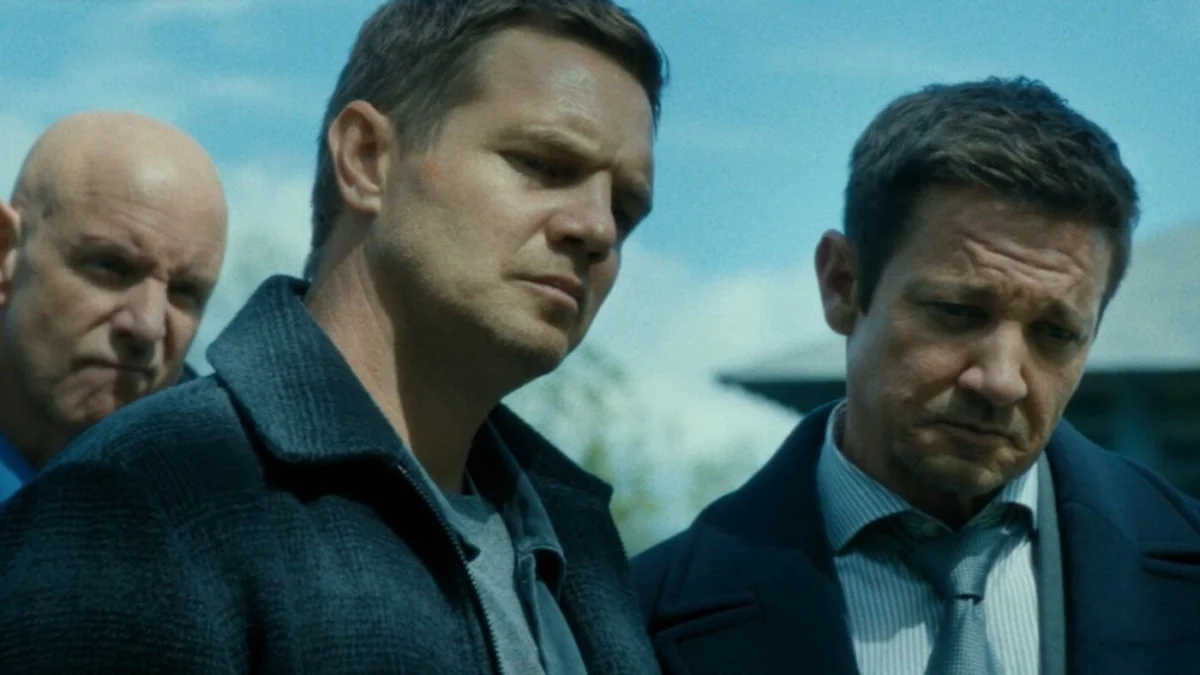
Taylor Sheridan, the prolific creator behind some of modern television’s most watched dramas, including Yellowstone and Tulsa King, has expanded his creative portfolio into the realm of non-fiction with the release of a survival manual titled How to Not Die in Prison. Published by Simon & Schuster on June 23, the book serves as both a practical guide for the incarcerated and a stark reflection of the gritty realism Sheridan strives for in his scripted productions. The release of the book coincides with revelations regarding the production of Sheridan’s series Mayor of Kingstown, where the commitment to authenticity reportedly led to a medical emergency on set involving a former inmate serving as a background actor.
The publication of How to Not Die in Prison marks a departure for Sheridan, who is primarily known for his screenwriting and directing. Co-authored with Tom Nelson, a former inmate who provided the firsthand accounts and technical knowledge necessary for the project, the book is described by its publisher as a "darkly funny survival guide" to life within the American maximum-security prison system. While Sheridan acknowledges in the book’s introduction that he has never served time, he cites a long-standing "morbid curiosity" regarding the social hierarchies and survival mechanisms that emerge within correctional facilities—a curiosity that heavily informed the development of Mayor of Kingstown.
The Production Realism of Mayor of Kingstown
The intersection of Sheridan’s research and his production methods was most visibly demonstrated during the filming of Mayor of Kingstown, a series starring Jeremy Renner that explores the "prison-industrial complex" in a fictional Michigan town. To ensure the show’s atmosphere remained grounded in reality, Sheridan insisted on filming at authentic locations and hiring individuals with lived experience in the justice system.
Much of the series was filmed in Kingston, Ontario, a city known for its high density of correctional facilities. Production utilized the Kingston Penitentiary, a former maximum-security prison that was decommissioned in 2013 after nearly 180 years of operation. By filming within the limestone walls of a genuine historical prison, Sheridan aimed to evoke a visceral reaction from both the audience and the cast.
However, this pursuit of authenticity had unintended psychological consequences. During the filming of a scene depicting the "initiation" of a new inmate—specifically a character accused of crimes against children—the atmosphere became so intense that several background actors, who were themselves former inmates, were unable to continue. Sheridan details in his new book that one extra suffered a panic attack of such severity that paramedics were called to the set, and the individual was subsequently transported to a hospital for treatment.
According to Sheridan’s account, two other former inmates requested to leave the set immediately following the incident, voluntarily forfeiting their Screen Actors Guild (SAG) pay for the day. Sheridan noted that the reenactment of prison violence was so evocative of their past experiences that the distinction between performance and reality blurred, highlighting the profound psychological trauma often associated with long-term incarceration.
Analysis of "How to Not Die in Prison"
The book co-authored by Sheridan and Nelson functions as a comprehensive manual for navigating the volatile environment of a maximum-security facility. It covers a wide array of topics ranging from the administrative to the tactical. Key sections of the book include:
- Tactical Survival: Instructions on how to navigate high-stress events such as prison riots, lockdowns, and targeted hits.
- Social Hierarchies: A breakdown of the "politics" of the yard and how to avoid entanglements that lead to solitary confinement.
- Daily Living: Practical advice on maintaining mental health, securing prison employment, and improvising tools or meals, including the ubiquitous "prison ramen."
- Alleged Craftsmanship: The book includes descriptions of how inmates (allegedly) manufacture shivs and administer tattoos using improvised equipment.
The collaboration between Sheridan and Nelson highlights a growing trend in media where creators seek out "subject matter experts" from marginalized or overlooked populations to provide a layer of grit that traditional research cannot replicate. For Sheridan, the book is an extension of his world-building philosophy, which prioritizes the "truth" of a setting over the comfort of the performers.
Contextualizing the Prison-Industrial Complex in Media
Sheridan’s focus on the prison system comes at a time when the "prison-industrial complex" is a subject of intense public and academic scrutiny. In the United States, as of 2023, approximately 1.9 million individuals are incarcerated in various federal, state, and local facilities. The U.S. continues to have one of the highest incarceration rates in the world, a statistic that provides the backdrop for the themes explored in Mayor of Kingstown.
The series itself has been praised by critics for its refusal to romanticize the justice system. Unlike traditional police procedurals that focus on the "solving" of crimes, Sheridan’s work focuses on the "management" of crime and the cyclical nature of poverty, violence, and imprisonment. The show’s renewal for a fifth and final season suggests a sustained appetite for this brand of uncompromising storytelling, even as it pushes the boundaries of what actors and crew members are asked to endure.
The Psychological Impact of Re-traumatization
The incident on the set of Mayor of Kingstown raises significant questions regarding the ethics of using former inmates in the production of violent media. Clinical psychologists specializing in post-traumatic stress disorder (PTSD) note that "re-exposure" to traumatic environments—such as a prison cell or the sounds of a cell block—can trigger intense physiological responses.
For individuals who have spent years or decades in high-stress environments, the brain’s "fight or flight" response can remain hyper-sensitized. When Sheridan’s production recreated a violent initiation within the walls of a real prison, it provided the specific sensory triggers—echoing metal doors, cramped quarters, and simulated aggression—that are known to cause flashbacks and panic attacks.
Industry experts suggest that while Sheridan’s results on screen are undeniably powerful, the incident serves as a cautionary tale for production companies. As the demand for realism increases, the necessity for "trauma-informed" production practices becomes more critical, particularly when working with vulnerable populations who are essentially being asked to relive their worst life experiences for the sake of entertainment.
Timeline of Taylor Sheridan’s Prison-Related Projects
To understand the evolution of Sheridan’s interest in this subject, it is necessary to look at the chronology of his recent work:
- 2021: Mayor of Kingstown premieres on Paramount+, marking Sheridan’s first major deep dive into the correctional system.
- 2022-2023: Production for subsequent seasons moves to various locations, including the Pittsburgh area and Kingston, Ontario, deepening the show’s commitment to industrial, atmospheric settings.
- June 23: How to Not Die in Prison is released by Simon & Schuster, codifying the research gathered during the production of his television series.
- Current Status: Mayor of Kingstown is confirmed to be entering its final production cycle, with Sheridan expected to wrap up the narrative arcs concerning the McLusky family and the Kingstown prison system.
Industry Reaction and Implications
The literary and television industries have reacted with a mixture of fascination and caution to Sheridan’s latest ventures. While Simon & Schuster has marketed the book as a "no-bulls***" guide, some critics have questioned the utility of a survival guide written by a billionaire Hollywood producer, despite the involvement of a co-author with genuine experience.
However, the commercial success of Sheridan’s "Taylor Sheridan Universe" (TSU) suggests that his audience values his brand of hyper-masculine, grounded realism. The anecdote regarding the hospitalized extra has, in some circles, been used to bolster the show’s reputation for being "too real for TV," a marketing angle that appeals to viewers seeking an alternative to more polished, sanitized network dramas.
From a broader perspective, Sheridan’s work continues to influence how the American West and the American justice system are portrayed. By moving from the ranch lands of Montana in Yellowstone to the prison cells of Michigan in Mayor of Kingstown, Sheridan is mapping the various "frontiers" of modern American life—places where the law is often secondary to the personal codes of the individuals who inhabit them.
As Mayor of Kingstown nears its conclusion, the legacy of the production will likely be defined by its uncompromising depiction of a system that many would prefer to keep out of sight. How to Not Die in Prison serves as a companion piece to that legacy, offering a grim, practical look at the reality behind the drama, while reminding the industry that the cost of such realism is often paid by those who have already sacrificed years to the systems being portrayed.