Johan Budi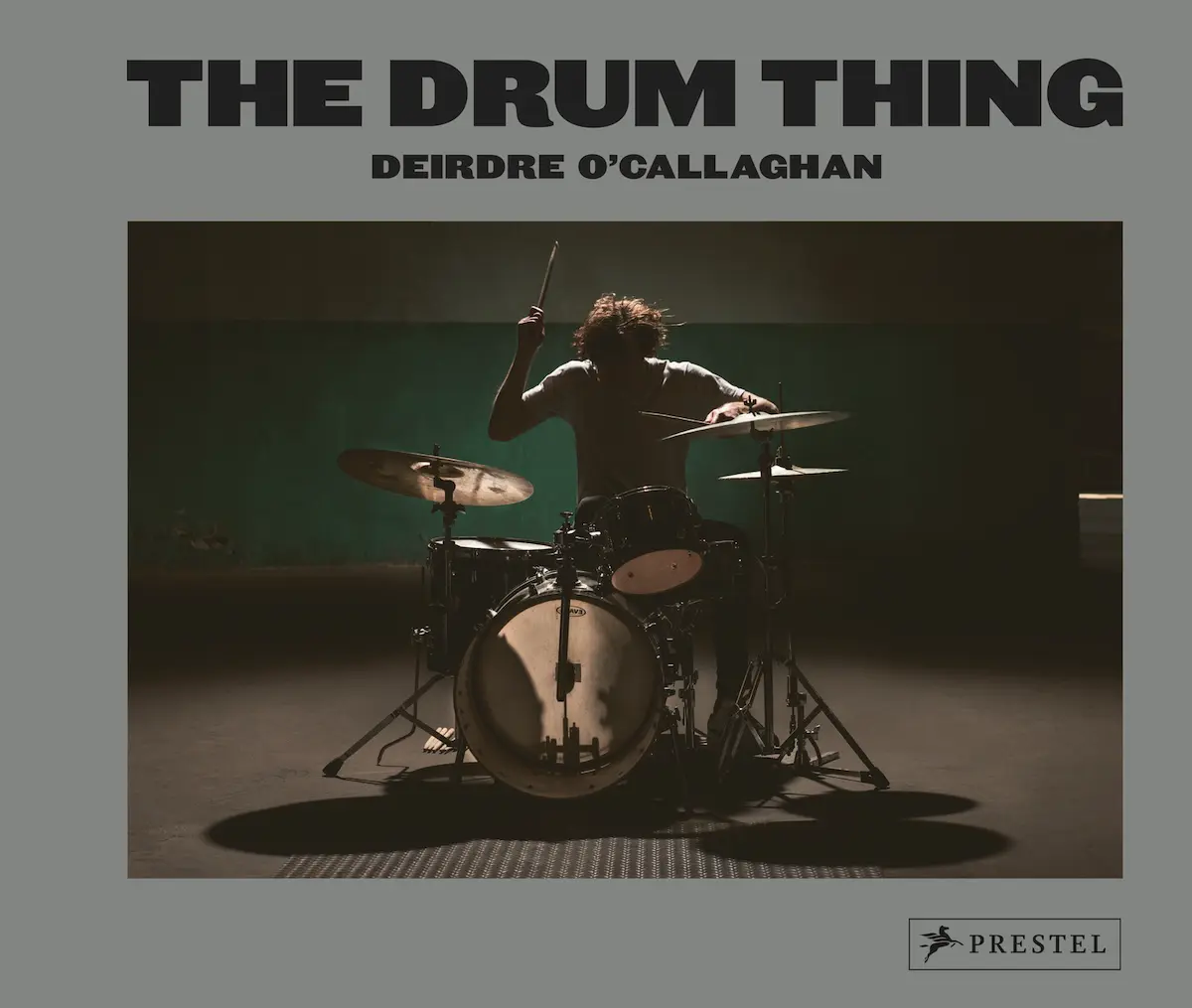
Deirdre O’Callaghan’s acclaimed visual documentary of the world’s most influential percussionists, originally released in 2016, has returned to bookshelves in a newly minted compact edition published by Prestel. Featuring nearly one hundred drummers spanning diverse musical genres—with a particularly robust representation of jazz legends—the 256-page hardcover volume offers an intimate look at the private environments of musicians who typically occupy the background of the stage. Rather than capturing performers mid-performance under the harsh glare of concert lighting, O’Callaghan intentionally chose to photograph her subjects within their most personal domains, ranging from cluttered home basements and secluded recording studios to quiet residential bedrooms.
This comprehensive photographic catalog is priced at £35 and carries the ISBN 978-3-7913-9413-8. It serves not merely as a collection of portraits, but as an anthropological and psychological study of rhythm, space, and identity. Through deliberate framing and a keen eye for environmental detail, the book bridges the gap between the public persona of the professional musician and the private sanctuary where their craft is conceived, practiced, and refined.
Evolution of a Visual Project: From Magazine Spread to Global Archive
The genesis of The Drum Thing traces back decades, rooted in the photographer’s personal journey and artistic evolution. Born in Ireland, O’Callaghan departed her native country at the age of 18, eventually relocating to London where she immersed herself in the city’s vibrant cultural landscape. It was during her early twenties that she developed a serious and dedicated interest in photography, a medium that would eventually define her professional trajectory.
The project that would ultimately become The Drum Thing did not begin as an expansive book concept. Instead, it originated as a modest magazine feature assignment for which O’Callaghan photographed eight prominent drummers. However, the scope of the endeavor shifted dramatically following a fateful encounter at London’s legendary jazz venue, Ronnie Scott’s Jazz Club. There, she met the charismatic and influential jazz drummer Roy Haynes. Captivated by his presence and the historical weight of his career, O’Callaghan realized that a mere magazine spread was entirely inadequate to capture the vast and diverse ecosystem of modern drumming.
To expand her vision, O’Callaghan partnered with Sarah Lowe, the wife of Jim Sclavunos—the accomplished drummer for Nick Cave and the Bad Seeds. Together, the pair meticulously formulated a contact list of iconic, innovative, and under-appreciated percussionists across multiple genres. This collaborative effort laid the foundation for years of fieldwork, travel, and portraiture that culminated in the original 2016 publication and its current reissue.
The Psychology of Percussion: Environment as Portrait
In various retrospective interviews discussing the historical and artistic development of the volume, O’Callaghan has emphasized the transformative power of shifting the photographic location from the stage to the home. According to the photographer, entering a musician’s private domain fundamentally alters the dynamic of the portrait session, stripping away theatrical artifice and revealing authentic character.
"Once I started going into their own environments, everything changed," O’Callaghan noted in an online retrospective interview. "With drummers especially, the question of where you keep your kit says everything. The space reflects the person’s personality and their relationship to the instrument."
This philosophy is vividly demonstrated throughout the pages of the book, where each studio, basement, or bedroom functions as an extension of the drummer’s psychological profile and creative process. Among the standout subjects in the collection is the late, avant-garde jazz master Milford Graves. O’Callaghan has frequently cited her visit to Graves’s workspace as a career highlight, describing the environment as resembling a "wizard’s lair" overflowing with organic artifacts, custom percussion instruments, and endless objects of scientific and artistic curiosity.
Methodologically, O’Callaghan rejects the tenets of candid, fly-on-the-wall street photography in favor of deliberate, structured portraiture. "My natural approach is always to set up rather than shoot on the fly," she explained. "There was no question of sneaking around corners grabbing shots. That’s not my style." This methodical pacing ensures that every subject is afforded agency, resulting in compositions that feel respectful, dignified, and compositionally rigorous.
Contextualizing O’Callaghan’s Documentary Legacy
The Drum Thing is not an isolated anomaly in O’Callaghan’s career, but rather a logical continuation of a lifelong artistic commitment to documenting insular communities and marginalized social groups. Her previous long-term photography projects share a thematic preoccupation with human habitat, social dignity, and shared environments.
For her debut book, Hide That Can, O’Callaghan dedicated four intensive years to photographing the male residents of Arlington House, a massive and historically significant homeless hostel located in the Camden district of London. That project established her reputation as a documentary photographer capable of building profound trust with her subjects, capturing vulnerability without exploitation.
This deep-rooted documentary ethos informs the curation of The Drum Thing. While music photography is frequently criticized for prioritizing sensationalism, pyrotechnics, and youthful excess, O’Callaghan’s approach grants older, veteran musicians the same visual reverence typically reserved for classical maestros or high-fashion models.
Perspectives from the Rhythm Section: Quotes and Commentary
Complementing the striking visual imagery are written contributions from the drummers themselves. The book features interviews of varying lengths and degrees of analytical depth, offering a rare window into the philosophical, technical, and psychological realities of life behind the drum kit.
The commentary provided by the subjects ranges from philosophical reductionism to deeply technical self-reflection. Patrick Carney, the powerhouse drummer for the garage rock duo The Black Keys, offers a democratizing perspective on musical aptitude, remarking, "Anybody has the capacity to be a great drummer."
In stark contrast, veteran R&B and soul session icon James Gadson reflects on the more mystifying, intangible aspects of rhythm and groove, recalling, "People used to say… either you got it, or you don’t." Gadson’s observation speaks to the deeply ingrained industry folklore surrounding innate swing and pocket placement—qualities that many believe cannot be entirely taught through formal instruction.
Other contributors provide profound historical and artistic insights. Lenny White, a monumental figure in the history of fusion jazz and a veteran of Miles Davis’s legendary band, shares observations regarding the rigorous creative standards of the jazz innovator. Meanwhile, contemporary vanguard percussionist Tyshawn Sorey offers a cerebral reflection on his own musical identity. Recalling advice he received earlier in his career—"You’re like a young old guy"—Sorey conceptualizes his role not merely as a timekeeper who maintains tempo, but as a sophisticated orchestrator of sound and space.
Aesthetic Debate and Critical Reception
While the text provides valuable context and personal anecdotes, the core engine of The Drum Thing remains its striking photographic plates. The publication has reignited discussions regarding aesthetic choices in contemporary music photography, particularly concerning the use of color versus monochrome imagery and the ethics of photographic staging.
Art historical traditions have long associated serious art photography with black-and-white processing, a medium historically preferred by documentary purists for its ability to abstract reality, emphasize tonal contrast, and minimize distractions. O’Callaghan’s decision to shoot in vibrant color, coupled with her intentional framing and environmental direction, creates an aesthetic that some traditional critics find overly produced or staged. However, proponents argue that color is essential for capturing the tactile reality of modern musicians’ spaces—the varied hues of drum wraps, the patina of aging cymbals, the colorful clutter of sheet music, and the idiosyncratic decor of domestic workspaces.
Regardless of stylistic debates among fine art critics, the publication has found a receptive and enthusiastic audience among musicians, musicologists, and devoted fans of percussive arts. The compact edition makes this rich visual archive accessible to a broader demographic of readers, ensuring that the legacy of these foundational rhythm-makers is preserved in a format that is both lavishly produced and comprehensively researched.
Broader Impact and Cultural Implications
The release of the compact edition of The Drum Thing arrives at a time of renewed academic and cultural interest in the mechanics of popular music production. For decades, music journalism, biography, and photography have overwhelmingly centered on lead vocalists, guitar heroes, and charismatic front figures, frequently reducing the rhythm section to anonymous sidemen.
By centering the book entirely on drummers—and by contextualizing them within their private habitats—O’Callaghan’s work performs a vital act of cultural reclamation. It challenges the hierarchical star system of the music industry, asserting that the physical spaces where time is kept, beats are invented, and grooves are perfected are just as worthy of architectural and artistic preservation as any legendary concert hall or recording studio.
As physical books increasingly compete with digital archives, publications like The Drum Thing demonstrate the enduring value of curated, high-end print journalism and documentary photography. By immortalizing these nearly one hundred artists, Prestel and Deirdre O’Callaghan have secured a permanent place in the historiography of modern music, offering a definitive visual testament to those who provide the foundational pulse of global culture.